Notice of the Beijing Municipal People’s Government on Printing and Distributing the Emergency Plan for Heavy Air Pollution in Beijing (Revised in 2023)

Jing Zheng Fa [2023] No.22

District People’s governments, municipal government commissions, offices and bureaus, and municipal institutions:

  The Emergency Plan for Heavy Air Pollution in Beijing (revised in 2023) is hereby printed and distributed to you, please earnestly organize and implement it according to the actual situation.

the people’s government of beijing city    

October 22, 2023  

  (This piece is publicly released)

Emergency Plan for Heavy Air Pollution in Beijing (revised in 2023)

catalogue

  1 General rules

  1.1 Purpose and basis of compilation

  1.2 Scope of application

  1.3 emergency plan system

  2 Organization and responsibilities

  2.1 Heavy air pollution in emergency headquarters and its offices.

  2.2 emergency headquarters member units with heavy air pollution.

  3 early warning

  3.1 Early warning classification

  3.2 Early warning release

  4 Early warning response

  4.1 Response classification

  4.2 Command and dispatch

  4.3 Response measures

  4.4 Response Termination

  5 summary evaluation

  6 emergency support

  6.1 Monitoring and forecasting capability guarantee

  6.2 Supporting measures to ensure

  6.3 Measures to implement the guarantee

  6.4 emergency duty

  6.5 publicity and guidance

  6.6 Public supervision

  7 Plan management

  7.1 Plan formulation and revision

  7.2 Plan implementation 

  Attachment: 1. List of emergency headquarters members with heavy air pollution in Beijing.

  2. List of members of emergency headquarters Office of Beijing Heavy Air Pollution.

  3. Heavy air pollution in Beijing, emergency headquarters and office responsibilities.

  4. Responsibilities of emergency headquarters member units with heavy air pollution in Beijing.

  1 General rules

  1.1 Purpose and basis of compilation

  In order to further improve the emergency mechanism of heavy air pollution, effectively slow down the pollution level, protect public health, and adhere to scientific, accurate and legal pollution control, according to the People’s Republic of China (PRC) Air Pollution Prevention Law, Beijing Air Pollution Prevention Regulations and other laws, regulations and documents, in accordance with the unified requirements of the Ministry of Ecology and Environment, combined with the actual situation of this city, on the basis of improving the Beijing Emergency Plan for Heavy Air Pollution (revised in 2018), Beijing is formulated.

  1.2 Scope of application

  This plan is applicable to the emergency work of forecasting the possible occurrence of heavy pollution weather within the administrative area of Beijing.

  Timely release health protection tips for short-term heavy pollution that does not meet the early warning start-up conditions or heavy air pollution caused by ozone. Heavy air pollution caused by dust storms shall be implemented in accordance with the Emergency Plan for Sandstorm Weather in Beijing (revised in 2022).

  1.3 emergency plan system

  The emergency plan for heavy air pollution in this city includes three levels: city, district and street (township). The municipal emergency plan includes this plan, and the emergency sub-plan or implementation plan formulated by the relevant departments and units of the city; District-level emergency plans include emergency plans or implementation plans for heavy air pollution formulated by district governments (including Beijing Economic and Technological Development Zone Administrative Committee, the same below) and relevant district departments and units; Street (township) emergency plans include emergency plans or work measures for heavy air pollution formulated by street offices (township governments) and enterprises and construction sites under their jurisdiction.

  2 Organization and responsibilities

  2.1 Heavy air pollution in emergency headquarters and its offices.

  The Municipal Emergency Committee (hereinafter referred to as the Municipal Emergency Committee) consists of the emergency headquarters (hereinafter referred to as the Headquarters) with heavy air pollution, and works under the unified leadership of the Municipal Emergency Committee. The commander-in-chief of the headquarters is the executive deputy mayor of the municipal government, the deputy commander-in-chief is the deputy mayor and deputy secretary-general of the municipal government in charge of ecological environment work, and the executive deputy commander-in-chief is the director of the Municipal Bureau of Ecological Environment; The headquarters office is located in the Municipal Bureau of Ecology and Environment, and the director of the office is the director of the Municipal Bureau of Ecology and Environment. See Annexes 1, 2 and 3 for the list of members of the headquarters, the list of members of the headquarters office, and the responsibilities of the headquarters and office.

  2.2 emergency headquarters member units with heavy air pollution.

  The members of the headquarters are composed of the Propaganda Department of the Municipal Party Committee, the Supervision Office of the Municipal Government, the Municipal Education Commission, the Municipal Economic and Information Bureau, the Municipal Bureau of Ecology and Environment, the Municipal Housing and Urban-Rural Development Committee, the Municipal Urban Management Committee, the Municipal Traffic Commission, the Municipal Water Affairs Bureau, the Municipal Health and Wellness Committee, the Municipal State-owned Assets Supervision and Administration Commission, the Municipal Landscaping Bureau, the Municipal Bureau of Organs Affairs, the Public Security Management Corps of the Municipal Public Security Bureau (the Municipal Fireworks Office), the Public Security Traffic Management Bureau of the Municipal Public Security Bureau, the Municipal Urban Management See Annex 4 for the division of responsibilities of each member unit.

  3 early warning

  3.1 Early warning classification

  According to the classification method of Technical Regulation of Ambient Air Quality Index (AQI) (Trial) (HJ633—2012), according to the relevant regulations of the Ministry of Ecology and Environment on the unified adjustment of early warning starting standards in key areas, and based on the air quality prediction results, the early warning of heavy air pollution is divided into three levels, from light to heavy, namely yellow warning, orange warning and red warning.

  (1) Yellow warning: when it is predicted that the daily average value of the city’s air quality index is > 200 or > 150 for 48 hours or more, and the high-level warning conditions are not met.

  (2) orange warning: when it is predicted that the daily average value of the city’s air quality index > 200 lasts for 48 hours or the daily average value > 150 lasts for 72 hours or more, and the high-level warning conditions are not met.

  (3) Red Warning: It is predicted that the daily average value of the city’s air quality index > 200 lasts for 72 hours and the daily average value > 300 lasts for 24 hours or more.

  When the Ministry of Ecology and Environment uniformly adjusts the start-up standard of early warning of heavy air pollution, it shall be implemented according to the new start-up standard.

  3.2 Early warning release

  3.2.1 Early warning started

  The red and orange warning shall be put forward by the headquarters office to the municipal emergency office, and the municipal emergency office shall report to the director of the municipal emergency Committee and the commander-in-chief of the headquarters for approval and then organize the release, and the headquarters office shall issue the instructions on early warning and response measures. The yellow warning shall be approved by the director of the headquarters office, and the headquarters office shall organize the release and issue instructions on early warning and response measures. In principle, early warning instructions are issued 24 hours in advance.

  The headquarters office, the Propaganda Department of the Municipal Party Committee and the Municipal Emergency Early Warning Information Release Center timely release early warning information through television, radio, newspapers, internet, mobile phones and other channels, so as to facilitate the public to know the early warning situation in time and strengthen their own health protection.

  3.2.2 Early warning adjustment and cancellation

  The headquarters office can put forward early warning adjustment suggestions according to the change of pollution degree and the latest forecast results, and raise or lower the early warning level in a timely manner after being submitted for approval according to the early warning start-up procedure.

  When predicting or monitoring the improvement of air quality to below the corresponding level of early warning start-up standard, or receiving the information of regional emergency linkage early warning released by the Ministry of Ecology and Environment, the early warning will be lifted or the early warning level will be lowered. When the early warning is lifted on schedule, it will not be submitted for approval separately, and the command office will directly issue a lifting instruction.

  3.2.3 Regional emergency response

  Upon receiving the warning message of regional emergency linkage issued by the Ministry of Ecology and Environment, the corresponding level of early warning shall be started in time according to the requirements and procedures to carry out regional emergency linkage.

  4 Early warning response

  4.1 Response classification

  Graded response is implemented in heavily polluted weather, corresponding to the early warning grading, and the early warning response is divided into three grades, from low to high, namely, tertiary response, secondary response and primary response.

  (1) When a yellow warning is issued, a three-level response is started.

  (2) When the orange warning is issued, the secondary response is started.

  (3) When a red warning is issued, the first-level response is started.

  4.2 Command and dispatch

  (1) When a yellow warning is issued, the director of the headquarters office or the executive deputy director shall organize command and dispatch according to the needs of emergency response, and deploy emergency response to heavy air pollution.

  (2) When an orange warning is issued, the commander-in-chief or deputy commander-in-chief of the headquarters shall organize command and dispatch according to the needs of emergency response and deploy emergency response to heavy air pollution.

  (3) When a red warning is issued, the commander-in-chief or deputy commander-in-chief of the headquarters shall organize command and dispatch according to the needs of emergency response and deploy emergency response to heavy air pollution. When necessary, the director of the Municipal Emergency Committee shall command and dispatch.

  4.3 Response measures

  After receiving the instruction of early warning and response measures, all members of the headquarters should immediately organize the response work, notify the relevant enterprises and construction sites as soon as possible, and supervise and inspect at the same time to ensure the effective implementation of various emergency emission reduction measures.

  4.3.1 Yellow Warning (Level 3 Response)

  (1) Health protection and guidance measures

  ① Children, the elderly and patients with respiratory tract, cardiovascular and cerebrovascular diseases and other chronic diseases should stay indoors as far as possible and avoid outdoor activities.

  ② Primary and secondary schools, secondary vocational schools and kindergartens should reduce outdoor activities in a timely manner according to the local air pollution situation.

  (3) The departments of ecological environment, sanitation and health, education and district governments should strengthen the publicity of popular science knowledge on emergency response to heavy air pollution and health protection according to the requirements of industry and territorial management.

  (2) Initiative emission reduction measures

  ① The public should travel by public transport as much as possible to reduce the number of motor vehicles on the road; Turn off the engine in time when parking, so as to reduce the idle running time of the vehicle.

  (2) increase the dust control measures for construction sites, exposed ground, material stacking and other places.

  ③ Strengthen road cleaning and reduce road dust pollution.

  ④ No open-air barbecue.

  ⑤ Reduce the use of solvent-based coatings, adhesives, cleaning agents, inks and other solvent-based raw and auxiliary materials and products containing volatile organic compounds.

  (3) Mandatory emission reduction measures

  On the premise of ensuring the normal operation of the city:

  (1) on the basis of routine work, the key roads are cleaned once a day or more.

  (2) The construction site shall stop outdoor painting, slope protection and shotcrete, building demolition, cutting, earthwork, anti-corrosion of road facilities, asphalt pavement and other construction operations according to the performance classification.

  ③ Enterprises included in the emergency emission reduction list during the yellow warning period of heavy air pollution shall implement differentiated emission reduction measures according to the performance classification of key industries in heavy polluted weather.

  4.3.2 orange warning (secondary response)

  (1) Health protection and guidance measures

  ① Children, the elderly and patients with respiratory tract, cardiovascular and cerebrovascular diseases and other chronic diseases should stay indoors as far as possible and avoid outdoor activities; The general population reduces outdoor activities.

  ② Primary and secondary schools, secondary vocational schools and kindergartens should reduce or stop outdoor activities in due course according to the air pollution situation in their territories.

  ③ Medical and health institutions should strengthen the protection propaganda and medical guidance for patients with respiratory diseases.

  (2) Initiative emission reduction measures

  ① The public should travel by public transport as much as possible to reduce the number of motor vehicles on the road; Turn off the engine in time when parking, so as to reduce the idle running time of the vehicle.

  ② Enterprises should arrange transportation reasonably, reduce the use of heavy-duty fuel (gas) trucks, and try to use national six or pure electric and hydrogen fuel cell vehicles for transportation.

  (3) Strengthen dust control measures on construction sites, bare ground, material stacking and other places.

  (4) Strengthen road cleaning and reduce road dust pollution.

  ⑤ Minimize the use of solvent-based coatings, adhesives, cleaning agents, inks and other solvent-based raw and auxiliary materials and products containing volatile organic compounds.

  ⑥ Enterprises and institutions can shift their peak hours to and from work according to air pollution.

  (3) Mandatory emission reduction measures

  On the premise of ensuring the normal operation of the city:

  (1) on the basis of routine work, the key roads are cleaned once a day or more.

  (2) According to the performance classification, the construction site will stop outdoor painting, slope protection and shotcrete, building demolition, cutting, earthwork, road facilities anticorrosion, road asphalt pavement and other construction operations, and stop using non-road mobile machinery (except pure electric and hydrogen fuel cell machinery).

  (3) On the basis of the implementation of regional traffic restriction measures during the peak hours of working days, light gasoline vehicles (including driving school coaches) with national emission standards 1 and 2 are prohibited from driving on the road.

  (4) construction waste, muck, gravel transport vehicles are prohibited from driving on the road (except pure electric and hydrogen fuel cell vehicles).

  ⑤ The national four emission standard diesel trucks with license plates (including temporary license plates) issued by this Municipality stop driving on the road (except those confirmed by relevant administrative departments to ensure the transportation of production and living materials in this Municipality and the whole vehicle to transport fresh agricultural products).

  ⑥ For enterprises included in the emergency emission reduction list during the orange warning period of heavy air pollution, stop using off-road mobile machinery (except pure electric and hydrogen fuel cell machinery), and implement differentiated emission reduction measures according to the performance classification of key industries in heavy polluted weather.

  ⑦ Fireworks and firecrackers and open-air barbecues are prohibited.

  4.3.3 Red Warning (Level 1 Response)

  (1) Health protection and guidance measures

  ① Children, the elderly and patients with respiratory tract, cardiovascular and cerebrovascular diseases and other chronic diseases should stay indoors as far as possible and avoid outdoor activities; The general population tries to avoid outdoor activities.

  (2) outdoor duty, homework and other personnel to do health protection measures.

  ③ Primary and secondary schools, secondary vocational schools and kindergartens should stop outdoor activities in due course according to the air pollution situation in their territories.

  (4) medical and health institutions organize experts to carry out health protection consultation and explain protection knowledge, and strengthen emergency duty and medical support for patients with related diseases.

  (2) Initiative emission reduction measures

  ① The public should travel by public transport as much as possible to reduce the number of motor vehicles on the road; Turn off the engine in time when parking, so as to reduce the idle running time of the vehicle.

  ② Enterprises should arrange transportation reasonably, reduce the use of heavy-duty fuel (gas) trucks, and try to use national six or pure electric and hydrogen fuel cell vehicles for transportation.

  (3) Strengthen dust control measures on construction sites, bare ground, material stacking and other places.

  (4) Strengthen road cleaning and reduce road dust pollution.

  ⑤ Air pollutant discharge units will further improve the efficiency of air pollution control facilities on the basis of ensuring discharge standards.

  ⑥ Minimize the use of solvent-based coatings, adhesives, cleaning agents, inks and other solvent-based raw and auxiliary materials and products containing volatile organic compounds.

  ⑦ Enterprises and institutions can adopt flexible working methods such as off-peak commuting, off-duty and telecommuting according to air pollution.

  (3) Mandatory emission reduction measures

  On the premise of ensuring the normal operation of the city:

  (1) on the basis of routine work, the key roads are cleaned once a day or more.

  (2) According to the performance classification, the construction site will stop outdoor painting, slope protection and shotcrete, building demolition, cutting, earthwork, road facilities anticorrosion, road asphalt pavement and other construction operations, and stop using non-road mobile machinery (except pure electric and hydrogen fuel cell machinery).

  (3) Light gasoline vehicles (including driving school coaches) with national emission standards 1 and 2 are prohibited from driving on the road; Motor vehicles with emission standards of Grade III and above (including driving school coaches) run at odd and even numbers (except pure electric and hydrogen fuel cell vehicles), of which the official vehicles in this city will stop driving on the basis of odd and even numbers, and then 30% of the total number of vehicles will be stopped.

  (4) construction waste, muck, gravel transport vehicles are prohibited from driving on the road (except pure electric and hydrogen fuel cell vehicles).

  ⑤ The national four emission standard diesel trucks with license plates (including temporary license plates) issued by this Municipality stop driving on the road (except those confirmed by relevant administrative departments to ensure the transportation of production and living materials in this Municipality and the whole vehicle to transport fresh agricultural products).

  ⑥ For enterprises included in the emergency emission reduction list during the red warning period of heavy air pollution, stop using off-road mobile machinery (except pure electric and hydrogen fuel cell machinery), and implement differentiated emission reduction measures according to the performance classification of key industries in heavy polluted weather.

  ⑦ Fireworks and firecrackers and open-air barbecues are prohibited.

  ⑧ Coordinate and increase the power transfer to reduce the power generation load in this city.

  4.4 Response Termination

  The response is terminated when the early warning is lifted.

  5 summary evaluation

  After the response is terminated, all members of the headquarters shall submit a summary of the implementation of emergency measures in their respective industries and areas to the headquarters office in a timely manner. The headquarters office organizes summary and evaluation work as appropriate.

  6 emergency support

  6.1 Monitoring and forecasting capability guarantee

  The Municipal Bureau of Ecology and Environment and the Municipal Meteorological Bureau will hold daily air quality consultation meetings, and increase the frequency of consultation meetings according to the air quality forecast. Strengthen the capacity building of air quality forecasting and early warning, forecast the results accurately and accurately, and continuously improve the monitoring and forecasting level.

  6.2 Supporting measures to ensure

  Develop and update the list. The implementation of inventory emergency management, the competent departments of various industries should organize the formulation of emergency emission reduction lists and lists for safeguarding people’s livelihood, the normal operation of the city and major events during the early warning of heavy air pollution, and report them to the municipal government for approval before implementation, and update them regularly, and report them to the headquarters office for the record.

  Accurately implement emergency emission reduction measures. While implementing the relevant national performance rating documents, the Municipal Bureau of Ecology and Environment, the Municipal Housing and Urban-Rural Construction Committee and other departments should, in combination with the actual situation of this Municipality, jointly formulate and improve the performance rating requirements of enterprises, construction sites and other industries in this Municipality. Departments in charge of various industries shall, in accordance with the performance rating requirements, organize enterprises and construction sites in the industry to carry out performance rating work; The performance rating results shall be dynamically adjusted, and those that do not meet the performance rating requirements shall be downgraded in time. At the same time, urge enterprises listed in the emergency emission reduction list to formulate emergency plans according to the principle of "one factory, one policy", clarify emergency emission reduction measures under different levels of early warning, and implement them in detail in specific production lines, production links and production facilities to ensure operability, monitoring and verification.

  6.3 Measures to implement the guarantee

  All members of the headquarters should strengthen the law enforcement inspection of the implementation of emergency measures during the early warning period, and find illegal acts and deal with them severely according to law. Each street (township) should strengthen the function of territorial supervision, organize law enforcement forces in the jurisdiction, carry out on-site law enforcement inspections in a targeted manner, and promptly urge rectification or punishment according to law when problems are found. The municipal government supervision office and the Municipal Bureau of Ecology and Environment should strengthen the supervision and inspection of the implementation of emergency measures. If the emergency measures are not effectively implemented due to ineffective work, low efficiency, absence of performance, etc., the relevant units and personnel shall be investigated for responsibility according to relevant regulations.

  6.4 emergency duty

  All members of the headquarters should improve the emergency duty system combining daily and emergency to ensure the smooth operation of the emergency duty system. When the yellow warning is issued, all member units should keep ready for duty; When the orange warning is issued, all member units should strengthen on-the-job duty; In case of red warning, all member units should be on duty all day (including holidays). During the red warning period, the headquarters office can transfer the personnel of relevant member units to work together to carry out emergency command, coordination and dispatch, inspection and supervision.

  6.5 publicity and guidance

  The Propaganda Department of the Municipal Party Committee shall, jointly with the member units of the headquarters, make full use of all kinds of media to strengthen the emergency propaganda and guidance of heavy air pollution. It is necessary to intensify the interpretation of the causes of heavy air pollution, timely release information on the response to heavy air pollution to the society, actively respond to social concerns, and strive for the understanding and support of all sectors of society. Advocate citizens’ low-carbon life and green travel, reduce the use of raw materials and products containing volatile organic compounds, refuse open-air barbecue and open-air incineration, do not set off fireworks and firecrackers, make civilized sacrifices, actively participate in the prevention and control of air pollution, and create a good atmosphere for the whole society to jointly deal with heavy air pollution.

  6.6 Public supervision

  All members of the headquarters should expand public participation channels and consciously accept public supervision. It is necessary to release the air quality status in a timely manner, publish emergency sub-plans, emergency emission reduction lists and lists to ensure people’s livelihood, normal urban operation and major events (except for classified enterprises and projects), and publicize emergency measures to protect the public’s right to know and participate. It is necessary to guide the public to supervise the implementation of various emergency measures according to law and encourage the reporting of various environmental problems and hidden dangers (reporting telephone number 12345).

  7 Plan management

  7.1 Plan formulation and revision

  Each member unit of the headquarters shall, in accordance with the overall requirements of the Emergency Plan, study and formulate emergency sub-plans for heavy air pollution in combination with the actual situation of departments and jurisdictions, report them to the headquarters office for the record within 15 working days after the release of the Emergency Plan, and announce their implementation to the public. All districts and streets (towns and villages) should, on the basis of the municipal emergency plan, refine the start-up process of early warning response at all levels, the implementation plan of specific initiatives and compulsory measures for early warning at different levels and the specific division of labor.

  When the laws, regulations, rules and standards on which this plan is based have undergone major changes, or the headquarters and its responsibilities have undergone major adjustments, or major problems have been found in the actual response, it will be revised in time.

  7.2 Plan implementation

  The Emergency Plan shall be implemented as of the date of promulgation, and the Emergency Plan for Heavy Air Pollution in Beijing (revised in 2018) (Beijing Zhengfa [2018] No.24) shall be abolished at the same time.

Annex 1

List of emergency headquarters Members with Heavy Air Pollution in Beijing

  Commander-in-Chief: Executive Vice Mayor Xia Linmao

  Deputy Commander: Vice Mayor Tan Xuxiang

  Deputy Secretary-General of Cheng Jianhua Municipal Government

  Executive Deputy Commander: Chen Tian, Director of Ecological Environment Bureau.

  Member: Yu Junsheng, Deputy Secretary-General of Municipal Party Committee and Deputy Minister of Propaganda Department.

  Deputy Director of General Office of Zhao Haidong Municipal Government

  Director of Liyi Municipal Education Commission

  Mao Dongjun, Deputy Director of Economic and Information Bureau.

  Deputy Director of Yu Jianhua Municipal Bureau of Ecology and Environment

  Deputy Director of Ding Sheng Housing and Urban-Rural Development Committee

  Deputy Director of Nanbin City Management Committee

  Deputy director of Li yaning Municipal Transportation Commission

  Deputy Director of Yifeng Water Affairs Bureau

  Deputy Director of Li Ang Municipal Health and Wellness Committee

  Deputy Director of Li Hongquan SASAC

  Wang Jinzeng, Deputy Director of the Bureau of Landscaping and Greening

  Liu Hanzhu, Deputy Director of Municipal Organs Affairs Bureau

  Wang Weiji, Deputy Chief of Public Security Management Corps of Public Security Bureau

  Deputy Director of Public Security Traffic Management Bureau of Zhaoxin Public Security Bureau

  Wen Tianwu, Deputy Director of Urban Management Law Enforcement Bureau

  First-class inspector of Liuqiang Meteorological Bureau

  Li Yan, executive deputy head of Dongcheng District

  Deputy head of Xicheng District, Chen Dapeng

  Nie Jieying, Executive Deputy Head of Chaoyang District

  Executive Deputy Head of Haidian District, Carol Lam

  Deputy head of Fengtai District, Konggangcheng

  Li Xianxia, executive deputy head of Shijingshan District

  Chen Junsheng, deputy head of Mentougou District

  Liu Jinhui, deputy head of Fangshan District

  Yao Weilong, deputy head of Tongzhou District

  Du Yue, deputy head of Shunyi District

  Guo Qingyao, deputy head of Changping District

  Di Yang, deputy head of Daxing District

  Yu Jishun, executive deputy head of Pinggu District

  Yu Jiaming, deputy head of Huairou District

  Ma Chao, deputy head of Miyun District

  Zhuan Sun Yongqi, deputy head of Yanqing District

  Shi Wei, Deputy Director of Beijing Economic and Technological Development Zone Management Committee

Annex 2

List of members of emergency headquarters office of heavy air pollution in Beijing

  Director: Chen Tian, Director of Ecological Environment Bureau.

  Executive Deputy Director: Deputy Director of Yu Jianhua Municipal Bureau of Ecology and Environment

  Deputy Director: Director of Li Yi Municipal Education Commission

  Mao Dongjun, Deputy Director of Economic and Information Bureau.

  Deputy Director of Ding Sheng Housing and Urban-Rural Development Committee

  Deputy Director of Nanbin City Management Committee

  Deputy director of Li yaning Municipal Transportation Commission

  Deputy Director of Li Ang Municipal Health and Wellness Committee

  Deputy Director of Li Hongquan SASAC

  Liu Hanzhu, Deputy Director of Municipal Organs Affairs Bureau

  Deputy Director of Public Security Traffic Management Bureau of Zhaoxin Public Security Bureau

  Wen Tianwu, Deputy Director of Urban Management Law Enforcement Bureau

  First-class inspector of Liuqiang Meteorological Bureau

Annex 3

Heavy air pollution in Beijing, emergency headquarters and office responsibilities

  I. Responsibility of emergency headquarters for Heavy Air Pollution in Beijing

  1. Actively implement People’s Republic of China (PRC) Emergency Response Law, People’s Republic of China (PRC) Air Pollution Prevention Law, Beijing Measures for Implementing People’s Republic of China (PRC) Emergency Response Law, Beijing Air Pollution Prevention Regulations and other relevant laws and regulations;

  2. To study and formulate policies, measures and guidance for this Municipality to deal with heavy air pollution;

  3 responsible for the specific command of the city’s heavy air pollution emergency disposal work, according to the law to command and coordinate the district government to do a good job;

  4 responsible for directing and coordinating the organization and implementation of the Emergency Plan, and supervising and inspecting the implementation of the emergency work of heavy air pollution by relevant municipal departments and district governments;

  5. Analyze and summarize the response to heavy air pollution in this city, and formulate work plans and annual plans;

  6. Organize and carry out the construction management of the emergency team under the command and the emergency material reserve guarantee;

  7. To undertake other tasks assigned by the Municipal Emergency Committee and the Environmental Pollution Prevention and Control Working Group of the Municipal Ecological Civilization Committee.

  II. Responsibilities of emergency headquarters Office of Heavy Air Pollution in Beijing

  1. Organize and implement the decision of emergency headquarters Municipality on heavy air pollution, and coordinate and urge member units to do emergency work related to heavy air pollution;

  2. To undertake the emergency duty work of heavy air pollution in emergency headquarters;

  3. Collect and analyze work information and report important information in time;

  4. Organize the emergency risk assessment and control of heavy air pollution in this city, and the investigation and rectification of hidden dangers;

  5 responsible for organizing the release of yellow warning, put forward the suggestion of issuing red and orange warning to the municipal emergency office, and lift the warning;

  6. Cooperate with relevant departments to do a good job in the press release of heavy air pollution in emergency headquarters;

  7. Organize the formulation (revision) of special and departmental emergency plans related to the functions of emergency headquarters, and guide member units to formulate (revision) emergency sub-plans for heavy air pollution;

  8. Organize emergency drills for heavy air pollution in this city;

  9. Organize emergency publicity, education and training on heavy air pollution in this city;

  10 responsible for the construction and management of emergency headquarters emergency command technology system for heavy air pollution;

  11 responsible for contacting the emergency headquarters expert advisory group on heavy air pollution;

  12. To undertake the daily work of heavy air pollution in emergency headquarters.

Annex 4

Responsibilities of emergency headquarters member units with heavy air pollution in Beijing

  I. Municipal Bureau of Ecology and Environment

  1. To undertake the responsibilities of the emergency headquarters office of heavy air pollution;

  2. Responsible for air quality forecasting, real-time release of live air quality information, timely release of air quality forecasting information, and participation in regional consultations organized by the Ministry of Ecology and Environment;

  3. Be responsible for formulating guidelines for enterprise performance grading in this Municipality in conjunction with relevant municipal departments;

  4 in conjunction with the relevant departments to organize the inspection of the implementation of emergency emission reduction measures during the early warning of heavy air pollution.

  Second, the Municipal Communications Commission

  1. Prepare the emergency sub-plan for heavy air pollution in this department, refine the decomposition tasks, and be responsible for organizing the implementation when heavy air pollution occurs;

  2 in conjunction with the Municipal Bureau of Ecology and Environment to develop performance rating indicators for automobile maintenance industry enterprises, and organize the performance rating; Formulate the emergency emission reduction list of enterprises in the automobile maintenance industry during the early warning of heavy air pollution, and organize the formulation of the "one factory, one policy" emergency plan; In conjunction with relevant departments, guide the district governments to formulate corresponding district-level lists;

  3. Formulate the emergency emission reduction list of highway construction projects during the early warning of heavy air pollution, and guide the district governments to formulate corresponding district-level lists;

  4. Make a list of automobile maintenance industry enterprises and highway construction projects to ensure people’s livelihood, normal urban operation and major activities during the early warning period of heavy air pollution;

  5. Organize enterprises in the automobile maintenance industry to implement differentiated emission reduction measures according to the emergency emission reduction list;

  6. Organize the construction and maintenance of expressways and general highways at or above the county level, and implement measures such as stopping outdoor painting and painting, slope protection and shotcreting, building demolition, cutting, earthwork, road facilities anticorrosion, road asphalt pavement and stopping the use of non-road mobile machinery (except pure electric and hydrogen fuel cell machinery) in accordance with the emergency emission reduction list; Cooperate with the implementation of measures to prohibit heavy vehicles such as construction waste, muck and gravel transportation from driving on the road;

  7. In conjunction with the Public Security Traffic Management Bureau of the Municipal Public Security Bureau, formulate the Notice on Taking Temporary Traffic Management Measures to Deal with Heavy Air Pollution;

  8 responsible for the timely organization of public transport security;

  9. According to the requirements of different early warning levels, be responsible for implementing measures such as stopping some vehicles with high pollution emissions;

  10. Increase the cleaning frequency of expressways and general highways at or above the county level;

  11. Supervise the implementation of sub-plan measures.

  Three, the Municipal Public Security Bureau Public Security Traffic Management Bureau

  1. Prepare the emergency sub-plan for heavy air pollution in this department, refine the decomposition tasks, and be responsible for organizing the implementation when heavy air pollution occurs;

  2. Establish a filing list management system, and work with relevant units to do a good job of filing official vehicles and social security vehicles that are not subject to restrictions;

  3. Inform the public of the traffic management measures taken during the period of heavy air pollution in a timely manner through media such as beijing communication radio and electronic display screen, be responsible for the supervision and law enforcement of light gasoline vehicles (including driving school coaches) with national I and II emission standards, and diesel trucks with national IV emission standards with license plates (including temporary license plates) that are prohibited from driving on the road, and increase the inspection and law enforcement of vehicles driving on the road in violation of regulations;

  4. Assist the Municipal Transportation Commission in formulating the Notice on Taking Temporary Traffic Management Measures to Deal with Heavy Air Pollution;

  5. Supervise the implementation of sub-plan measures.

  IV. Municipal Bureau of Economy and Information Technology

  1. Prepare the emergency sub-plan for heavy air pollution in this department, refine the decomposition tasks, and be responsible for organizing the implementation when heavy air pollution occurs;

  2 in conjunction with the Municipal Bureau of Ecology and Environment, formulate performance rating indicators for enterprises in the manufacturing industry in this Municipality, and organize the performance rating; Formulate the emergency emission reduction list of manufacturing enterprises during the early warning period of heavy air pollution, and organize the formulation of the "one factory, one policy" emergency plan; In conjunction with relevant departments, guide the district governments to formulate corresponding district-level lists;

  3. Make a list of manufacturing enterprises that guarantee people’s livelihood, normal urban operation and major activities during the early warning period of heavy air pollution;

  4. Organize manufacturing enterprises to implement differentiated emission reduction measures according to the emergency emission reduction list, and stop using off-road mobile machinery (except pure electric and hydrogen fuel cell machinery);

  5. Supervise the implementation of sub-plan measures.

  V. Municipal Housing and Urban-Rural Development Committee

  1. Prepare the emergency sub-plan for heavy air pollution in this department, refine the decomposition tasks, and be responsible for organizing the implementation when heavy air pollution occurs;

  2. Formulate the emergency emission reduction list of concrete mixing station enterprises during the early warning of heavy air pollution, carry out performance rating on concrete mixing station enterprises, and organize the formulation of the "one factory, one policy" emergency plan; In conjunction with relevant departments, guide the district governments to formulate corresponding district-level lists;

  3. Formulate performance rating indicators for construction sites in this Municipality ("Green Brand" site related management regulations), and carry out performance rating for construction projects; Formulate emergency emission reduction lists of housing construction and municipal construction projects during the early warning of heavy air pollution, and guide the district governments to formulate corresponding district-level lists in conjunction with relevant departments;

  4. Make a list of construction projects to protect people’s livelihood, the normal operation of the city and major activities during the early warning of heavy air pollution;

  5. Organize concrete mixing plant enterprises to implement differentiated emission reduction measures according to the emergency emission reduction list, and stop using off-road mobile machinery (except pure electric and hydrogen fuel cell machinery);

  6. Organize housing construction and municipal construction sites to stop outdoor painting, slope protection and shotcreting, building demolition, cutting, earthwork, road facilities anticorrosion, road asphalt pavement and other construction operations, and stop using non-road mobile machinery (except pure electric and hydrogen fuel cell machinery); Cooperate with the implementation of measures to prohibit heavy vehicles such as construction waste, muck and gravel transportation from driving on the road;

  7. Supervise the implementation of sub-plan measures.

  VI. Municipal Water Affairs Bureau

  1. Prepare the emergency sub-plan for heavy air pollution in this department, refine the decomposition tasks, and be responsible for organizing the implementation when heavy air pollution occurs;

  2. Formulate the emergency emission reduction list of water construction projects during the early warning of heavy air pollution, and guide the district governments to formulate corresponding district-level lists;

  3. Make a list of water construction projects to protect people’s livelihood, the normal operation of the city and major activities during the early warning of heavy air pollution;

  4. Organize the water construction site to stop outdoor painting, slope protection and shotcrete, building demolition, cutting, earthwork, road facilities anticorrosion, road asphalt pavement and other construction operations, and stop using non-road mobile machinery (except pure electric and hydrogen fuel cell machinery); Cooperate with the implementation of measures to prohibit heavy vehicles such as construction waste, muck and gravel transportation from driving on the road;

  5. Supervise the implementation of sub-plan measures.

  VII. Municipal Bureau of Landscaping and Greening

  1. Prepare the emergency sub-plan for heavy air pollution in this department, refine the decomposition tasks, and be responsible for organizing the implementation when heavy air pollution occurs;

  2. Formulate the emergency emission reduction list of landscaping construction projects during the early warning of heavy air pollution, and guide the district governments to formulate corresponding district-level lists;

  3. Make a list of landscaping construction projects to protect people’s livelihood, the normal operation of the city and major activities during the early warning of heavy air pollution;

  4. Organize the landscaping construction site to stop outdoor painting, slope protection and shotcrete, building demolition, cutting, earthwork, road facilities anticorrosion, road asphalt pavement and other construction operations, and stop using non-road mobile machinery (except pure electric and hydrogen fuel cell machinery); Cooperate with the implementation of measures to prohibit heavy vehicles such as construction waste, muck and gravel transportation from driving on the road;

  5. Supervise the implementation of sub-plan measures.

  Eight, the city management committee

  1. Prepare the emergency sub-plan for heavy air pollution in this department, refine the decomposition tasks, and be responsible for organizing the implementation when heavy air pollution occurs;

  2. Increase the frequency of road cleaning; Organize the implementation of measures to prohibit heavy vehicles such as construction waste, muck and gravel transportation from driving on the road; Coordinate and increase the external power adjustment during the red warning period to reduce the power generation load of this city;

  3. Supervise the implementation of sub-plan measures.

  IX. Municipal Urban Management and Law Enforcement Bureau

  1. Prepare the emergency sub-plan for heavy air pollution in this department, refine the decomposition tasks, and be responsible for organizing the implementation when heavy air pollution occurs;

  2. Guide the district urban management law enforcement departments to urge the local street (township) comprehensive administrative law enforcement team to investigate and deal with illegal activities such as construction dust, road spillage, open-air barbecue and burning, and unlicensed coal sales according to law, and inspect the shutdown of heavy vehicles such as construction waste, muck and gravel transportation in conjunction with relevant departments;

  3. Supervise the implementation of sub-plan measures.

  X. Municipal Education Commission

  1. Prepare the emergency sub-plan for heavy air pollution in this department, refine the decomposition tasks, and be responsible for organizing the implementation when heavy air pollution occurs;

  2. Strengthen the publicity of students’ health protection knowledge of heavy air pollution, and organize primary and secondary schools, secondary vocational schools and kindergartens to reduce or stop outdoor activities in a timely manner according to the air quality situation in each district;

  3. Supervise the implementation of sub-plan measures.

  XI. Municipal Health and Wellness Commission

  1. Prepare the emergency sub-plan for heavy air pollution in this department, refine the decomposition tasks, and be responsible for organizing the implementation when heavy air pollution occurs;

  2. Organize the publicity of health protection knowledge of heavy air pollution, and be responsible for organizing medical and health institutions to do a good job in diagnosis and treatment of patients with related diseases and emergency duty;

  3. Supervise the implementation of sub-plan measures.

  XII. Municipal Meteorological Bureau

  1. Prepare the emergency sub-plan for heavy air pollution in this department, and be responsible for organizing the implementation when heavy air pollution occurs;

  2 to provide meteorological monitoring and forecasting information to the headquarters and relevant departments, and jointly carry out consultation and forecast of heavy air pollution with the Municipal Bureau of Ecology and Environment.

  Thirteen, the municipal SASAC

  1. Prepare the emergency sub-plan for heavy air pollution in this department, and cooperate with the industry authorities to urge the relevant municipal state-owned enterprises to formulate emergency sub-plans for heavy air pollution;

  2. Cooperate with the industry authorities, and urge the relevant municipal state-owned enterprises to formulate and implement the "one factory, one policy" emergency plan;

  3. Advocate municipal state-owned enterprises to arrange transportation reasonably when warning in orange and red, reduce the use of heavy-duty fuel (gas) trucks, and try to use national six or pure electric and hydrogen fuel cell vehicles for transportation.

  Fourteen, the Municipal Public Security Bureau Public Security Management Corps (Fireworks Office)

  1. Prepare the fireworks ban scheme, refine the decomposition tasks, and be responsible for organizing the implementation when heavy air pollution occurs;

  2 responsible for notifying the Municipal Emergency Management Bureau to organize fireworks wholesale and retail units to stop the distribution and sale of fireworks; Responsible for notifying the public security department to strengthen patrol inspection, and timely discover and stop illegal fireworks and firecrackers;

  3. Supervise the implementation of sub-plan measures.

  Fifteen, the municipal government supervision room

  1. Prepare the supervision sub-plan, and be responsible for organizing the implementation when heavy air pollution occurs;

  2 responsible for the supervision of the implementation of the responsibilities of the member units.

  Sixteen, the Municipal Party Committee Propaganda Department

  1. Prepare publicity sub-plans, and be responsible for organizing the implementation when heavy air pollution occurs;

  2 in conjunction with the Municipal Bureau of Ecology and Environment, formulate performance rating indicators for enterprises in the publication printing industry, and organize the performance rating; Formulate and publish the emergency emission reduction list of enterprises in the publication printing industry during the early warning period of heavy air pollution, and organize the formulation of the "one factory, one policy" emergency plan; In conjunction with the relevant departments of the city, guide the district governments to formulate corresponding district-level lists;

  3. Make a list of publication printing enterprises that guarantee people’s livelihood, the normal operation of the city and major events during the early warning period of heavy air pollution;

  4. Organize publication printing enterprises to implement differentiated emission reduction measures according to the emergency emission reduction list, and stop using off-road mobile machinery (except pure electric and hydrogen fuel cell machinery);

  5. Cooperate with the release of early warning information, and be responsible for organizing media publicity and public opinion guidance;

  6. Supervise the implementation of sub-plan measures.

  Seventeen, the Municipal Bureau of organs.

  1. Prepare the bus stop sub-plan, and be responsible for organizing the implementation when heavy air pollution occurs;

  2. Supervise the implementation of sub-plan measures.

  Eighteen, the district government

  1. Prepare and publicize the emergency sub-plans for heavy air pollution in this area, refine the decomposition tasks, and organize relevant departments and streets (towns) to formulate emergency plans;

  2. Strengthen the publicity of the public’s health protection knowledge of heavy air pollution, and organize and implement various emergency measures such as timely reducing or stopping outdoor activities, motor vehicle restrictions, road cleaning and cleaning, gas-related enterprises and construction sites to implement differentiated emission reduction measures, and prohibiting emissions and burning;

  3. Formulate and publicize the emergency emission reduction list and road cleaning list of enterprises and construction projects during the early warning period of heavy air pollution in this area and update them dynamically; Organize enterprises and construction projects to carry out performance rating, and organize enterprises to formulate "one factory, one policy" emergency plan;

  4. Organize the publicity, training, drills and emergency duty work of sub-plans;

  5. Supervise the implementation of sub-plan measures.

National Medical Products Administration: Accelerate the review and approval of drugs for the treatment of rare diseases

  China news agency, Beijing, September 29 (Reporter Li Yanan) National Medical Products Administration, China, announced on the 29th that as of May 2019, 69 applications for registration of drugs for treating rare diseases had been included in the priority review procedure in order to encourage the research and development of drugs for treating rare diseases. In the next step, we will continue to speed up the review and approval of drugs for the treatment of rare diseases and improve the supply guarantee level of drugs for rare diseases.

  Data map: The doctor is taking medicine for the patient. China News Service reporter Yang Huafeng photo

  The World Health Organization defines rare diseases as 0.65&permil of the total population; To 1 & permit; At present, there are about 6000 to 8000 kinds of rare diseases recognized internationally. According to incomplete statistics, there are more than 20 million patients with rare diseases in China.

  National Medical Products Administration pointed out that in order to encourage the research and development of drugs for the treatment of rare diseases, the Opinions on Solving the Backlog of Drug Registration Applications was revised and implemented in December 2017, giving priority to the review and approval of drug registration applications in 18 situations, including drugs for the treatment of rare diseases. As of May 2019, National Medical Products Administration has included 69 applications for registration of drugs for the treatment of rare diseases in the priority review process, greatly accelerating the process of product development and listing.

  In order to speed up the listing of overseas new drugs urgently needed for clinical use in China, National Medical Products Administration, together with relevant departments, jointly issued the Announcement on Relevant Matters Concerning the Review and Approval of Overseas New Drugs Needed for Clinical Use, which established a special channel for the review and approval of overseas new drugs urgently needed for clinical use, and concluded the treatment of rare drugs included in the special channel within three months.

  According to the news from National Medical Products Administration, two lists of overseas new drugs urgently needed in clinic have been released, including 37 drugs for treating rare diseases. Up to now, there are selepag tablets for the treatment of idiopathic pulmonary hypertension, Elosulfatase-&alpha for the treatment of mucopolysaccharide storage disease; , Fengomode Hydrochloride Capsules for the treatment of multiple sclerosis, Eloizumab for the treatment of hypercholesterolemia, Icazumab for the treatment of paroxysmal nocturnal hemoglobinuria, Terfluramide tablets for the treatment of multiple sclerosis, Nosinasone Sodium Injection for the treatment of spinal muscular atrophy and Edaravone Injection for the treatment of amyotrophic lateral sclerosis were approved for import through this special channel. (End)

More than 1,300 migrant workers from Wan Chuan returned to work after breaking through the "three gates" of returning to work.

On the afternoon of March 7th, the K4598 special train for migrant workers started from Dazhou, loaded with 1,474 returned migrant workers from Dazhou, crossing fields and hills in spring and heading for Huizhou, Guangdong.

Our province is a province with a large population, a large labor export province and a large migrant worker economy province. In 2019, the rural labor force in the province transferred and exported 24.8 million people, and the migrant worker economy reached more than 800 billion yuan in the whole year. Faced with the problem that migrant workers who go out to work and return to work can’t get out of their homes, get on the car doors and get into the factory doors due to the epidemic situation in COVID-19, our province has strengthened overall planning to highlight the key points of protection, and opened up the "three doors" that hinder migrant workers from returning to work, so as to stabilize the current employment situation in the province and help enterprises to return to work and resume production.

In the past few days, from the western Sichuan Plateau to the hills of eastern Sichuan, from the southern Sichuan Economic Zone to the northern Sichuan Basin, from the special train to the special plane, the activities of "point-to-point" escorting migrant workers back to work have been going on almost every day. According to statistics, as of March 8, there were 13.075 million migrant workers in the province, with a return rate of 64.2%.

Man-post docking   Get out of the house and return to work orderly

On the evening of March 6, Longlari of Yanjiaoyun Township, Leibo County, Liangshan Prefecture received a phone call. Aku Niugu, a staff member of the County Migrant Workers Service and Security Center, informed on the phone that there was a special train from Chengdu to Fuzhou on March 10, and he could take the special train back to work to earn money.

"Great!" Long Lari was very happy after answering the phone. He worked in a shipbuilding enterprise in Fujian, and many days of returning to work have been delayed because of the epidemic.

The effective docking of personnel and posts is the first threshold for migrant workers to go out to work smoothly under the influence of the epidemic. The premise of crossing this threshold is to find out the base.

Li Yiman, deputy director of the Provincial Agriculture and Labor Office and director of the Migrant Workers Division of the Department of Human Resources and Social Security, said that after the outbreak, our province acted quickly, organized special personnel to go to the village to find out the willingness of returning migrant workers, counted the number of migrant workers, and made a real account of migrant workers’ work. According to the arrangement, there are more than 20 million migrant workers in the province who plan to return to work after the holiday like Longrila.

Find out the base and dock in an orderly manner.

In mid-February, provincial leaders led a team to communicate with Sichuan migrant workers in Zhejiang, Guangdong and other major provinces, and signed a memorandum of labor cooperation during the epidemic, reaching a consensus on the docking of supply and demand, orderly organization, health monitoring and direct bus service for migrant workers returning to work. Up to now, the provinces (cities) that signed the memorandum of labor cooperation with our province during the epidemic have expanded from Zhejiang and Guangdong to 8 provinces (cities) such as Chongqing and Yunnan.

On February 20th, the first free return train for migrant workers in Guangdong after the Spring Festival departed from Chengdu East to Guangzhou South. 917 Sichuan migrant workers from 18 cities (states) in the province returned to work. Because the base number is clear, this special train takes less than 48 hours from organizing migrant workers to sign up for the train.

"The factory started construction on February 1, but it was affected by the epidemic and could not leave the house." Li Hongying, from Qilichong Village, Yong ‘an Town, Shizhong District, Neijiang City, said with emotion that with the help of the government, she left home and had the opportunity to return to work.

In the province, key enterprises, key areas and labor importing cities and counties have also been effectively docked. On February 24th, seven special vehicles for migrant workers returning to work from Neijiang, Suining, Nanchong, Zigong, Luzhou, Yibin and Guang ‘an, carrying 56 migrant workers, arrived safely at Sichuan Geely Automobile Parts Co., Ltd. in Longquanyi District, Chengdu Economic Development Zone. On February 29th, Chengdu Employment Bureau and Zhongjiang County People’s Social Security Bureau signed a regional labor cooperation agreement on human resources. On that day, 150 Zhongjiang migrant workers took a special bus to Chengdu to report for work at the docked positions.

Huang Xiaodong, member of the Party Committee of the Department of Human Resources and Social Security and director of the Provincial Employment Bureau, said that as of March 7th, the rate of migrant workers returning to work in the province was 62%. Among them, there are 6,025,600 people outside the province, and the return rate is 86.3%; There are 6,647,100 people in the province, and the return rate is 51.1%.

Accompanied by spring breeze   Special car special plane "point-to-point" escort

Affected by the epidemic, transportation in many places was "stopped", and farmers returned to work. How did they get on the car door? "Point-to-point, one-stop" "Spring Breeze Action" to send migrant workers back to their posts safely was immediately launched in our province.

On February 1st, during the "shutdown" of inter-provincial passenger transport across the country, three buses carrying more than 100 returning migrant workers were sent from Luzhou to Zhongshan, Guangdong Province, which was the first "Spring Breeze Action" chartered bus in Sichuan. Every passenger in the car has been tested for normal body temperature, and left detailed information such as telephone number, address and work unit. On the way, the vehicle does not get off the highway, and the driver has to disinfect the vehicle every few hours and check the body temperature for the passengers. Before the departure, the Provincial Department of Transportation coordinated with Guangdong Province and the provincial transportation authorities along the route to determine the passable places and arrival destinations of vehicles.

Accompanied by the spring breeze, return to work safely. As of March 7, the province’s "Spring Breeze Action" has operated a total of 19,700 special vehicles, safely transporting 371,200 migrant workers back to their posts.

Sichuan "Spring Breeze Action" implements unified information collection, unified health service and unified transportation organization, with strict prevention and control throughout the whole process, warm service throughout the whole process, and follow-up supervision throughout the whole process, and gives corresponding subsidies to migrant workers for returning to work, free traffic of vehicles in the provincial expressway network and other policy support. This practice has been well received by the Ministry of Transport and promoted throughout the country.

Point-to-point escort, get off the door and enter the factory door. At 21 o’clock on the evening of February 17th, the first customized train for migrant workers from Chengdu after Sichuan Festival arrived in Hangzhou, Zhejiang Province after a 12-hour journey. The business owners in Hangzhou, who had been waiting for a long time, took their employees home by car.

With the resumption of work and production in various parts of the country, it is urgent to let migrant workers return to their posts as soon as possible. Sichuan has accelerated the pace of transporting migrant workers abroad. After collecting the information about migrant workers, the human and social departments will take the lead in docking the railway departments, run a special train for returning to work, and the transportation department will do a good job in the "last mile" traffic guarantee.

China Railway Chengdu Bureau Group Co., Ltd. actively cooperates with local governments and employment enterprises to open special trains. As of March 7, a total of 44 special trains for returning to work have been opened. Air China, Sichuan Airlines, China Eastern Airlines, Chengdu Airlines, Spring Airlines and other airlines in Sichuan have launched customized charter services and accelerated the resumption of flights suspended due to the epidemic. As of March 7, our province has operated a total of 14 special planes for migrant workers to return to work.

One yard in hand   Healthy return to work and smooth entry into the factory are guaranteed

"The health certificate played a big role. I went to the factory to observe and rest for three days before going to work." On February 20th, with the "Health Declaration Certificate for Migrant Workers in Sichuan Province", Gu Wancai, a migrant worker from Mianyang, got on the special train organized by the government and returned to his work unit, an enterprise in Qingxi Town, Dongguan City, Guangdong Province.

In order to enable migrant workers to travel with peace of mind and health, our province has conducted free health check-ups for migrant workers returning from work in the province since February 5, and issued a health status follow-up record form as needed. On February 17th, with the consent of the provincial government, our province implemented the temporary measures of health declaration and certification for migrant workers and provided free health declaration and certification services. Compared with the health follow-up record form, the use scope of health certificate is extended to the general use in the province, and the platform is established by the provincial big data center to realize the sharing of health certificate data.

"With the health certificate, I went all the way to the factory smoothly." Zhang Changming, a migrant worker in Beichuan County, Mianyang City, has to pay more than 3,000 yuan in mortgage every month, which is under great economic pressure. He said that after the Chinese New Year, due to the epidemic situation, he has been unable to go out. Although the factory informed him to return to work, he also told him to bring a health certificate when he returned to the factory. When he was overwhelmed, on February 17th, our province began to apply for the "Health Declaration Certificate for Migrant Workers in Sichuan Province", which solved the urgent need of Zhang Changming.

Between provinces, our province took the lead in establishing a mutual recognition mechanism of health certificates in China. Guangdong Province, with more than 300 migrant workers from Wan Chuan, and Zhejiang Province, with more than 100 migrant workers from Wan Chuan, are the first two provinces to establish a mutual recognition mechanism for health certificates with our province. At present, our province has established mutual recognition mechanism of health certificates with eight provinces (cities) including Zhejiang, Guangdong, Fujian, Yunnan and Chongqing. With the gradual stabilization of epidemic prevention and control, our province has extended the validity period of health certificates from the initial 3 days to 14 days, further smoothing the road for migrant workers to return to work healthily and smoothly.

Township hospitals and community health service centers, which undertake the task of health examination and health certificate issuance, strictly abide by the first pass of migrant workers’ healthy travel.

"Health centers have arranged family doctors in every village (community) within their jurisdiction, and are responsible for feeding back to the health centers whether there are confirmed patients, suspected cases, fever patients and people in areas with high epidemic incidence in COVID-19. At the same time, the village (community) Committee will review the health status and recent contact history of the applicant in advance and issue a certificate. Finally, the health certificate will be issued after inspection by the health center. " The nurse of Jinbei Township Health Center in Bazhou District, Bazhong City introduced to Fang.

As of March 7th, our province has issued health certificates for 10.47 million migrant workers.

"Migrant workers are the guarantee for enterprises to resume work and production." Huang Xiaodong introduced that our province will continue to promote the safe, healthy and orderly return of migrant workers through measures such as docking supply and demand, optimizing health services and ensuring transportation. (Reporter   Liu Chunhua   Wang Meiling)

Machinist "Haokong" T90 Plus: Choose it for the 618 game book.

  In 618, Zhongda Promotion has been launched. I believe many students have been gearing up to choose a game with strong performance to accompany their college days. At present, there is a game book that is very suitable. It is the T90 Plus-T65T game book of the mechanic [Haokong]. The original price of the standard version is 8599 yuan, and the promotion price is 7299 yuan. During the period of 618, the coupon was reduced by 600 yuan, and the hand price was only 699 yuan. Interested students,

  Purchase link: https://detail.tmall.com/item.htm? spm=a1z10.1-b-s.w16608505-22496919374.1.6b5779c8AT2EZQ&id=585808118485&skuId=4361688173980

  Machinist [Haokong] T90 Plus-T65T adopts a 17.3-inch giant screen with micro-edges, which supports low blue light eye protection. The e-sports version supports a refresh rate of 144Hz. If you are a big fan of FPS or racing games, it is obvious that the e-sports version is more suitable for you. The back of this game book adopts 36 diagonal drawing texture, with 3D back-adjusted V-shaped light strip and 3D electroplated blue light mechanical heart, which makes the whole A-side very competitive.

  Machinist [Haokong] T90 Plus-T65T is equipped with i7-10750H processor, 6 cores and 12 threads, and the turbo frequency can reach 5.0GHz. With GTX1650Ti 4G graphics card, it is not a problem to play the current mainstream games. The high provision of 16G DDR memory can realize that the games can be opened more without being stuck, and the 512G solid-state +1TB mechanical hard disk can store a large number of games.

  It’s no use if the powerful configuration can’t keep up with the heat dissipation. Machinist [Haokong] T90 Plus-T65T adopts a built-in layout of 2+2 copper tubes, and with large-area metal vapor chamber to enhance heat conduction, it can quickly discharge the heat inside the fuselage. In addition, this game also supports a one-button strong cooling mode, which makes the game quickly cool down after opening, bringing excellent smooth experience to the game.

  As a game book, light pollution is naturally indispensable. The mechanic T90 Plus-T65T adopts a full-size keyboard design, providing about 80,000 colors of colorful backlight adjustment, providing monochrome, two-color and custom modes. Players can set lighting rendering at will according to their own preferences.

  In terms of interface, there is an SD card slot and two USB3.1; on the right side of the fuselage; On the left side of the fuselage is a keyhole, a network cable interface, a USB2.0, a microphone and an earphone hole; The back of the fuselage is a power interface, a Type-C, an HDMI and two DP interfaces. The rich interfaces make it unnecessary for players to purchase additional docking stations.

  Generally speaking, Machinist [Haokong] T90 Plus-T65T is a game book specially designed for e-sports players. The processor, graphics card, memory, screen and other configurations meet the needs of mainstream players. Interested students should go to Machinist Tmall flagship store to buy it.

Interpretation of "Announcement of State Taxation Administration of The People’s Republic of China on the Issue of Issuing VAT Invoices for Collecting Travel Tax by Insurance Institutions"

  With the approval of the State Council, from May 1, 2016, the pilot project of changing business tax to value-added tax was launched nationwide. For this reason, insurance institutions will issue VAT invoices when collecting premiums after the reform of the camp. In order not to change the existing operating methods and minimize the impact on taxpayers, State Taxation Administration of The People’s Republic of China issued the Announcement on Issues Concerning Insurance Institutions Collecting Travel Tax and Issuing VAT Invoices, which clarified the invoice issues in the collection and management of travel tax.
  Since May 1, 2016, when issuing VAT invoices, insurance institutions, as travel tax withholding agents, should indicate the information of collecting travel tax in the remarks column of VAT invoices. Specifically, it includes: insurance policy number, tax period (detailed to month), collection of travel tax, late payment fee, total, etc. The VAT invoice can be used as the original accounting voucher for paying travel tax and late payment fee.

  Link: Announcement of State Taxation Administration of The People’s Republic of China on the Issue of Issuing VAT Invoices for Collecting Travel Tax by Insurance Institutions (State Taxation Administration of The People’s Republic of China Announcement No.51, 2016)

In Manzhouli, Inner Mongolia, the trajectory of 54 confirmed cases was announced, and 10 cases were students.

  According to the news released by Manzhouli Municipal People’s Government on December 8, the COVID-19 Epidemic Prevention and Control Command of Manzhouli City, Inner Mongolia announced the track information:

  Confirmed case 320: unemployed, now living in Student Jiayuan Community of Manzhouli City.

  The activity track is mainly in the student Jiayuan community.

  Confirmed case 321: employee, now living in Manzhouli Labor Bureau Community.

  At home on the morning of November 29, I went to the doorman of the community for nucleic acid sampling around 14: 00.

  November 30th — On December 4th, I walked to the doorman of the labor bureau community at around 8: 00 every day for nucleic acid sampling. Nucleic acid samples were taken at the gate at around 11: 00 on December 5.

  Confirmed case 322: migrant worker, now living in area B of Shifuxin Community in Manzhouli.

  November 29th — Centralized isolation on December 4.

  Confirmed case 323: a child, now living in Xiangfujiayuan Community of Manzhouli City.

  At 9: 00 on December 1, the nucleic acid was sampled outdoors in Xiangfujiayuan Community. December 2 — At home on the 5th, medical staff came to take nucleic acid samples.

  Confirmed case 324: unemployed, now living in Fuyi Yaju Community, Manzhouli City.

  December 1st — On the 2 nd, at 9 o’clock every day, I walked to Auto Parts Street for nucleic acid sampling. At 9 o’clock on December 3, nucleic acid sampling was carried out in Fuyi Yaju Community. On December 4 th, I was isolated at home, and I went to Auto Parts Street for nucleic acid sampling at 9 o’clock.

  Confirmed case 325: student, now living in Fuyi Yaju Community, Manzhouli City.

  December 1st — On the 2 nd, I was isolated at home and walked to Auto Parts Street for nucleic acid sampling at 9 o’clock every day. At 9 o’clock on December 3, nucleic acid sampling was carried out in Fuyi Yaju Community. At 9 o’clock on December 4, I went to Auto Parts Street for nucleic acid sampling.

  Confirmed case 326: student, now living in Fuyi Yaju Community, Manzhouli City.

  December 1st — On the 2 nd, at 9 o’clock every day, I walked to Auto Parts Street for nucleic acid sampling. At 9 o’clock on December 3, nucleic acid sampling was carried out in Fuyi Yaju Community. At 9 o’clock on December 4, I went to Auto Parts Street for nucleic acid sampling.

  Confirmed case 327: student, now living in Fuyi Yaju Community, Manzhouli City.

  December 1st — At about 9: 30 on the 4th, the nucleic acid was sampled in Fuyi Yaju Community.

  Confirmed case 328: student, now living in Furong New Village Community, Manzhouli City.

  Centralized isolation on November 29.

  Confirmed case 329: student, now living in Xinjia Road, Beitun, Manzhouli City.

  Centralized isolation on December 1.

  Confirmed case 330: individual, now living in Fuyi Yaju Store, Manzhouli City.

  November 29th — On December 2, I went to the garage of Auto Parts Street for nucleic acid sampling at around 10: 00 every day and returned home at around 10: 30. At about 14: 30, I drove to Yuetai second-hand car dealership and returned home at about 16: 00. On December 3, I went to the courtyard of Fuyi Yaju Community for nucleic acid sampling at around 10: 00, returned home at around 10: 20, drove to Yuetai second-hand car dealership at around 14: 30, and returned home at around 16: 00. On December 4th, I went to the garage of Auto Parts Street for nucleic acid sampling, returned home at about 10: 30, drove to Yuetai second-hand car dealership at about 14: 30, and returned home at about 16: 00. At about 10: 00 on December 5, I sampled nucleic acid at home, drove to Yuetai second-hand car dealership at about 14: 30, and returned home at about 16: 00.

  Confirmed case 331: student, now living in the B area of Shifuxin Community in Manzhouli.

  Centralized isolation on November 29.

  Confirmed case 332: employee, now living in Furong New Village Community, Manzhouli City.

  Centralized isolation on November 29, 2021.

  Confirmed case 333: individual, now living in the East Tower of Gemini Community in Manzhouli City.

  November 28th — At the Municipal People’s Hospital on December 1st. Centralized isolation on December 2.

  Confirmed case 334: Retired, living in Student Jiayuan Community of Manzhouli City.

  December 1st — On the 5th, at 9: 00 every day, I went to the party-mass activity room of Xueyuan Jiayuan Community for nucleic acid sampling.

  Confirmed case 335: unemployed, now living in Student Jiayuan Community of Manzhouli City.

  December 1st — At about 9: 15 on the 5th, the nucleic acid was sampled in the Party-group activity room of Xueyuan Jiayuan Community.

  Confirmed case 336: teacher, now living in the east area of Shangdu International Community in Manzhouli City.

  At 10: 00 on November 29th, I drove to Manzhouli Gymnasium for nucleic acid sampling. December 1st — At 13: 00 on the 5th, I drove to Shangdu International Underground Garage for nucleic acid sampling.

  Confirmed case 337: Retired, now living in Mancheng New World Community, Manzhouli City.

  November 28th — At about 9: 15 on December 5, I walked to the downstairs of Mancheng New World Community for nucleic acid sampling.

  Confirmed case 338: individual, now living in Student Jiayuan Community of Manzhouli City.

  November 29th — On December 4, at about 10 am every day, I went to the activity room of Xueyuan Jiayuan Community for nucleic acid sampling.

  Confirmed case 339: unemployed, now living in B area of Mancheng New World Community in Manzhouli City.

  November 28th — On the 30th, nucleic acid samples were taken at noon every day in Mancheng New World Community, and I stayed at home the rest of the time. Centralized isolation on December 1.

  Confirmed case 340: unemployed, now living in Hui Ze Garden Community of Manzhouli City.

  November 22nd — I stayed at home on December 5.

  Confirmed case 341: unemployed, now living in Modern Garden Community of Manzhouli City.

  December 1st — On the 4th, I sampled nucleic acid in the basement of Modern Garden Community, and stayed at home the rest of the time.

  Confirmed case 342: electrician, now living in the store of Guobin Community in Manzhouli City.

  December 1st — On the 2nd, I worked in the isolation site, and have been to Hua Kai Community, Boya Community and Ambassador Community. On the morning of December 3rd, I was in Hua Kai Community and went to Boya Community in the afternoon. On December 4 th, all day in Boya Community. On the morning of December 5, I was in Boya Community and went to Ambassador Community in the afternoon.

  Confirmed case 343: student, now living in Fuhua Jiayuan Community, Manzhouli City.

  November 29th — On the morning of December 3, I sampled nucleic acid in Fuhuayuan Community and returned home. At noon on December 4, I sampled the nucleic acid in the community and returned home after the end.

  Confirmed case 344: worker, now living in the family building of Agricultural Bank of China in Manzhouli City.

  Centralized isolation on December 2.

  Confirmed case 345: unemployed, now living in Manzhouli Municipal Home Community.

  November 29th — On December 4th, I took nucleic acid samples at the south gate of the municipal home every day, and I didn’t go out after returning home. At 12: 00 on December 5th, the nucleic acid was sampled in the No.5 garage of the municipal home, and I didn’t go out at home. At 11 o’clock on December 6, I went to the south gate of the municipal home for nucleic acid sampling.

  Confirmed case 346: unemployed, now living in Yiyuan Community, Manzhouli City.

  November 29th — I stayed at home on December 5.

  Confirmed case 347: employee, now living in Modern Garden Community of Manzhouli City.

  November 29th — On December 2nd, nucleic acid sampling was conducted in the basement of Modern Garden Community. Centralized isolation at 22: 00 on December 3.

  Confirmed case 348: unemployed, now living in Manzhouli Port Community.

  November 29th — Nucleic acid sampling in port community on December 2. Centralized isolation around 12 noon on December 3.

  Confirmed case 349: cleaning staff, now living in tsinghua campus District, Manzhouli City.

  At about 11: 00 on December 1st, nucleic acid samples were taken in tsinghua campus community, and they were active in the community. December 2 — On the 3rd, I took nucleic acid samples in tsinghua campus Community, and I didn’t go out after returning home. Centralized isolation at 14: 00 on December 4.

  Confirmed case 350: Plumber, now living in Xindong Market Community, Daonan Tiexin Market Community and Daonan Hongxing Jiayuan Community, Manzhouli City.

  The activity track is mainly in Tiexindong Market Community in Daonan, Manzhouli City, Hongxing Home in Daonan and Tiantianshun Store.

  Confirmed case 351: unemployed, now living in Yiyuan Community, Manzhouli City.

  I stayed at home on November 30th. December 1st — On the 2nd, I went to Yiyuan Community for nucleic acid sampling every day, and stayed at home at other times. Centralized isolation on December 3.

  Confirmed case 352: student, now living in Yiyuan Community of Manzhouli City.

  November 28th — I stayed at home on December 2. Centralized isolation on December 3.

  Confirmed case 353: masseur, now living in New Century Community of Manzhouli City.

  November 29th — On 30th and 2nd December, I went to New Century Community for nucleic acid sampling every day, and stayed at home the rest of the time. Centralized isolation on December 3.

  Confirmed case 354: beautician, now living in Yiyuan Community, Manzhouli City.

  November 28th — On the 30th, I went to Yiyuan Community for nucleic acid sampling every day, and stayed at home the rest of the time. December 1st — I stayed at home on the 2nd. Centralized isolation on December 3.

  Confirmed case 355: unemployed, now living in Manzhouli Municipal Home Community.

  November 28th — On December 2nd, I sampled the nucleic acid in the municipal community every day, and stayed at home the rest of the time. Centralized isolation on December 3.

  Confirmed case 356: individual, now living in Fuhuayuan Community, Sandao Street, Manzhouli City.

  November 30th — On December 1st, I went to Fuhuayuan Community for nucleic acid sampling every day, and stayed at home the rest of the time. December 2 — I stayed at home on the 3rd. Centralized isolation on December 4.

  Confirmed case 357: clerk, now living in Oriental Garden Community of Manzhouli City.

  I went to the Oriental Garden Community for nucleic acid sampling on November 29th, and stayed at home the rest of the time. November 30th — I stayed at home on December 1st. December 2 — On the 3 rd, I went to the Oriental Garden Community for nucleic acid sampling every day, and stayed at home the rest of the time. Centralized isolation on December 4.

  Confirmed case 358: Wood worker, now living in Erkang Community, Manzhouli City.

  I went to Erkang Community for nucleic acid sampling on November 29th, and stayed at home the rest of the time. November 30th — I stayed at home on December 2. Centralized isolation on December 3.

  Confirmed case 359: Retired, now living in New World Zone A, Daonan Mancheng, Manzhouli City.

  At about 8 o’clock on November 29, I went to the garage of Building 14, New World, Nanmancheng, and did not go out at home the rest of the time. November 30th — I stayed at home on December 2. Centralized isolation on December 3.

  Confirmed case 360: electrical technician, now living in Yiyuan Community, Manzhouli City.

  At 13: 00 on November 28th, I went to Manzhouli No.3 Middle School Gymnasium for nucleic acid sampling, and at 14: 00, I went to Blue Sky Bath Center. I went to Yiyuan Community for nucleic acid sampling at around 18: 00 on December 1, and stayed at home the rest of the time.

  Confirmed case 361: worker, now living in a semi-underground store in Jinyuan New Village Community, Manzhouli City.

  At 18: 24 on November 25th, I arrived at Zi Han Fruit and Vegetable Store and then at Wanyuan Supermarket. At 17: 50 on November 26, I went shopping in Guotai Min ‘an, and then went to Wugu Noodle Shop. At 8: 48 on November 27th, I was in Yuxin Store. I went to Mission Hills site in the morning and stayed at home the rest of the time. At 9: 08 on November 28th, I shopped at Zhongyi Cereals, Oils, Fruits and Vegetables Store. Centralized isolation on November 29.

  Confirmed case 362: individual, now living in the post family building in Shinan District of Manzhouli.

  At 9: 00 on November 26th — At 21: 30, I arrived at Guoranguo Fresh Fruit Snack House. At 8: 30 on November 27th, I arrived at Guoran Fruit Snack House, at 11: 00 at Zhangqingjia Fruit Wholesale Store, the warehouse of Wuxing Company, and then at Lvyuan Fruit Wholesale Store next door, at 14: 00 at the fruit wholesale store next to the gas station, and at 15: 30 at Lvyuan Fruit Wholesale Store. November 28th — I went to Erkang Community for nucleic acid sampling every day on December 1st, and stayed at home the rest of the time. Centralized isolation on December 3.

  Confirmed case 363: unemployed, now living in Shangdongcheng Community, Manzhouli City.

  At 12: 30 on November 28th, I went to Manzhouli No.3 Middle School for nucleic acid sampling, and stayed at home the rest of the time. November 29th — On December 2nd, I went to Shangdong Community for nucleic acid sampling every day, and stayed at home the rest of the time. Centralized isolation on December 4.

  Confirmed case 364: unemployed, now living in Student Jiayuan Community of Manzhouli City.

  The activity track is mainly in the student Jiayuan community and the party-mass activity room of the student Jiayuan.

  Confirmed case 365: unemployed, now living in Student Jiayuan Community of Manzhouli City.

  November 27th — On December 1 ST, I went to Xuezi Jiayuan Community for nucleic acid sampling at around 10: 00 every day, and stayed at home the rest of the time. Centralized isolation on December 2.

  Confirmed case 366: unemployed, now living in B area of Mancheng New World Community in Shinan District of Manzhouli.

  The activity track is mainly in Mancheng New World Community in the South District.

  Confirmed case 367: unemployed, now living in B area of Mancheng New World Community in Manzhouli City.

  The activity track is mainly in Mancheng New World Community in the South District.

  Confirmed case 368: taxi driver, now living in Haojing Garden Community of Manzhouli City.

  The activity track is mainly in Haojing Garden Community, Dongxing Community Sports Museum and Jinbiao Gas Station of Logistics Center.

  Confirmed case 369: student, now living in the second phase of Triumph City Community in Manzhouli City.

  The activity track is mainly in the second phase of Triumph City Community.

  Confirmed case 370: student, now living in Student Jiayuan Community of Manzhouli City.

  The activity track is mainly in the student Jiayuan community.

  Confirmed case 371: Retired, living in Student Jiayuan Community of Manzhouli City.

  The activity track is mainly in the student Jiayuan community.

  Confirmed case 372: unemployed, now living in Student Jiayuan Community of Manzhouli City.

  The activity track is mainly in the student Jiayuan community.

  Confirmed case 373: unemployed, now living in area B of Mancheng New World Community in Manzhouli City.

  The activity track is mainly in Mancheng New World Community.

Geng Hujun, a "Star Shepherd": Keep a steady footing and polish the background of the struggle of space researchers.

one

CCTV News:"If the satellite is compared to a kite, ‘ Measurement and control ’ It’s the kite string that people are touching. Therefore, some people call us ‘ Shepherd ’ 。”

After the successful launch of Tiangong-2 in 2016, Geng Hujun, one of the "animal husbandry people", gave a vivid metaphor for his career when interviewed by the media.

Geng Hujun is currently the Deputy Chief Engineer of the 54th Research Institute of China Electronics Technology Corporation and the Deputy Director of the Remote Control and Telemetry Department. After graduating from xidian university in 1993, he joined China Electronics Technology Corporation and became a member of the China Aerospace Measurement and Control Team.

After more than 20 years of fighting in the space TT&C research front, Geng Hujun and his colleagues have continuously filled the gaps in TT&C technology and witnessed the dazzling achievements of the space industry. It is necessary to look far into space, but also to be down-to-earth. Geng Hujun explained the romantic realism feelings of a scientific researcher with the blood and initial heart of serving the country scientifically and the courage to overcome difficulties.

People who fly the "Chang ‘e kite"

TT&C communication system is one of the eight systems of manned spaceflight project, which is the nervous system of space TT&C network and communication between heaven and earth. It is the link between ground and spacecraft, ground TT&C center and TT&C station, and plays an important role in manned spaceflight mission.

Expanding the direction of aerospace TT&C specialty and striving for more equipment development tasks are the core of the work. Fifty-four institutes undertake all the development tasks of domestic and foreign land monitoring and control stations, accounting for almost half of all the monitoring and control equipment for manned space flight.

In 2010, Chang ‘e II flew into space with the eyes of the whole world. The location of the measurement and control system is related to the flight orbit of Chang ‘e-2. In order to avoid areas with heavy electromagnetic pollution, Geng Hujun and his colleagues often stay for months in remote and uninhabited places such as the Gobi Mountains.

one

In the Chang ‘e II mission, Geng Hujun led the team to complete the transformation tasks of the S/X band unified measurement and control system at Kashgar Station, the S band unified measurement and control system at Qingdao Station, the 50-meter-diameter radio telescope antenna and the data receiving subsystem and data transmission system of the ground application system. "These monitoring stations should be able to monitor the flight process of Chang ‘e II and master its orbital position at all times. Wherever the station is suitable, we will go to work. " Yan hujun said.

Under the leadership of Geng Hujun, the 18-meter single receiving station of Kashgar Station, which was originally built for the Chang ‘e-1 mission and only had the single S-band receiving ability, was transformed into a complete set of full-function measurement and control stations. These innovations have greatly improved China’s measurement and control technology, and filled the domestic gaps in measurement and control capabilities and measurement and control frequency bands.

Guarding "Goddess" Flying in Space

On September 15th, 2016, the Long March II FT2 carrier rocket carrying Tiangong-2 Space Laboratory was ignited and launched at Jiuquan Satellite Launch Center.

"When Tiangong-2 was launched, our communication measurement and control equipment accurately guided Tiangong-2 into the scheduled orbit. After Tiangong-2 was successfully launched, our equipment accurately controlled it to run according to the scheduled trajectory, and timely transmitted all kinds of voice and image information it collected back to the ground center. After the astronauts went up, the dialogue and image transmission between heaven and earth also depended on our communication measurement and control network." Geng Hujun introduced that whether Tiangong-2 can be successfully launched and whether it can operate safely in the sky depends on the invisible communication measurement and control network.

At present, communication measurement and control through relay satellites has become the main force of manned space communication measurement and control network. The relay satellite communicates with the spacecraft and the command center through the ground terminal station. The ground terminal station is mainly responsible for the command and dispatch, control calculation, data processing and information exchange of relay satellites, and is the "nerve center" for relay satellites to play the role of communication measurement and control.

"When the relay satellite conducts measurement and control, it will send out radio signals to automatically aim at the spacecraft; The spacecraft also aimed at the relay satellite in the same way. It is equivalent to two light beams in space that are more than 30,000 kilometers apart. Therefore, in order to achieve accurate measurement and control, relay satellites must first ensure their accurate positioning. At present, at a distance of more than 36,000 kilometers, our positioning error of relay stars is controlled within 3 m. "

one

Geng Hujun introduced that the longest measurement and control communication time of a ground measurement and control station is only 8 minutes. If the spacecraft does not fly directly over the ground station, the time of TT&C communication will be further shortened. The relay satellite is equivalent to a 36,000-kilometer-high measurement and control station in space. Because it stands high, it can see far. In each operation of Tiangong-2, the communication time of a relay satellite can reach about 40 minutes, which greatly improves the efficiency of communication measurement and control.

"When the prosperity is exhausted and Tiangong-2 is working in space day after day, the communication measurement and control equipment of our institute will still wait for her in an invisible place and let her run healthily." Geng Hujun said that he and his colleagues are like watchmen, and Tiangong 2 is their "goddess". Although she flies in space, their equipment carefully leads the invisible kite line to protect Tiangong-2 to complete its mission.

The glory of ordinary scientific research workers

Due to his outstanding work performance, Geng Hujun won the May 4th Youth Medal of Hebei Province in 2011, and led the team to make continuous breakthroughs in scientific research management positions.

Geng Hujun’s son is also an aerospace fan. The knowledge of artillery and ships, and all kinds of timing passwords for the launch of Chang ‘e II can come with your mouth open. He once asked his father to take himself with him when he was on a business trip. "The country spends so much money on the lunar exploration project. We know that the responsibility is great, and we can only succeed, but we can’t fail. Everyone can only arrange their own itinerary around the engineering needs." Yan hujun said.

one

Whether in the neon lights or in the wilderness, Geng Hujun and his colleagues have only one goal: to constantly pursue technological progress and provide better conditions for the aerospace industry.

"Often when we go home after a busy night, sanitation workers are already brushing the road. A few hours later, we have to start a new day’s work. " Geng Hujun said that with the development of manned spaceflight, the measurement and control technology has been continuously improved. As an ordinary scientific researcher, he is honored and proud to be able to participate in one major aerospace project after another.

College students can’t write papers: nearly 90% of the respondents think that thesis classes should be set up.

  A few days ago, the teacher of the "Science Fiction Literature and Film Creation Series Lecture Class" of the University of Chinese Academy of Sciences gave 22 students 0 points for plagiarizing their final articles, which sounded an alarm for the students. Because of the lack of self-accumulation, lack of relevant training and the neglect of undergraduate thesis, plagiarism of college students’ thesis is widespread on campus.

  Last week, a survey of 2002 college students was conducted by the Social Investigation Center of China Youth Newspaper in conjunction with the questionnaire network. It showed that 76.4% of the respondents plagiarized course papers, and 67.3% of the respondents thought it was serious academic misconduct. 64.0% of the respondents believe that college students plagiarize papers because they lack knowledge accumulation and research ability. 88.0% of the respondents hope that the university will offer a thesis writing course, and 67.8% of the respondents think that the tutor should strictly check the feasibility and difficulty of the project.

  Among the respondents, 13.4% were freshmen and sophomores, 61.8% were juniors and seniors, 9.1% were postgraduates and above, and 15.6% had graduated. Men account for 54.8% and women account for 45.2%.

  64.0% of the respondents believe that college students plagiarize papers because they lack knowledge accumulation and research ability.

  Zhang Jie (pseudonym), a senior majoring in international trade at Ningbo University, told reporters that many students around her copied and pasted their papers from various documents, and got them through reverse order. What’s more, they would directly find gunmen on Taobao to write them.

  Lin Yuan (a pseudonym), a junior at the School of Journalism, Renmin University of China, feels that there are few cases of plagiarism around. "It is very difficult for our disciplines to write original papers at the undergraduate level. Many of them rely on consulting relevant literature and writing their own course papers. Writing ideas and references may draw lessons from other papers. However, I heard that some students are looking for someone to write papers on their behalf, and there are still cases of falsification of paper data in the Statistical Institute. "

  In the survey, 76.4% of the respondents said that there was plagiarism of course papers around, 11.5% said that there was no plagiarism around, and 12.1% said that it was unclear. 67.3% of the respondents think that plagiarism is a serious academic misconduct, 23.2% think it’s no big deal, many students use other people’s opinions, and 9.5% say it’s hard to say.

  "In the past, the courses were generally closed-book exams, which examined the ability of memory and recitation. They were relatively rigid, but they were also fair and objective. Written examination is rarely used in western countries, and many students are assessed by means of usual discussion, research speeches and course papers. Now many universities in China are gradually using this method, especially for graduate students. " Liu Haifeng, director of the Examination Research Center of Xiamen University, said that the latter’s assessment methods are flexible and diverse, allowing students to study independently, and combining study with research. However, there are difficulties in objective assessment, and plagiarism and writing for others may occur. "Now there is software to check duplication, plagiarism is easier to find out, but it is difficult to find out if someone else wrote it for you."

  In the survey, 64.0% of the respondents think that college students plagiarize papers because of lack of knowledge accumulation and research ability, 56.6% think that time is not enough, 45.0% think that "thesis writing" is just a formal assignment, 40.0% think that relevant courses or papers are worthless, 23.4% think that they follow the trend, and 12.7% point out that some teachers have limited level.

  Zhang Jie believes that it is ok to learn from other people’s papers, but it should not be copied without thinking. Moreover, the process of writing a thesis is very training, which can enhance a person’s logical thinking ability and ability to collect effective information.

  Lin Yuan believes that the main reasons for plagiarism of college students’ papers are insufficient knowledge and heavy tasks. "Freshmen and sophomores have to attend 10 classes a week, each class is assigned a paper, and some classes have reading notes and the like. Coupled with the lack of undergraduate knowledge accumulation, plagiarism has become the most convenient way. "

  Liu Haifeng believes that one reason why college students plagiarize papers is that they are not good enough to write well, and another reason is that they are too lazy to write and want to cope with it by opportunism. There are also students who want to get better grades, for scholarships, research and employment.

  To put an end to plagiarism of college students’ papers, 67.8% of the respondents think that tutors should strictly check the feasibility and difficulty of the project and provide students with materials for reference, and 56.6% of the respondents suggest that schools adopt more ways to measure students’ learning level. Others include: carrying out necessary spot checks (49.5%), increasing the punishment for plagiarism (41.7%), strengthening the construction of study style, carrying out publicity and education on academic ethics (25.5%), and establishing a perfect academic evaluation mechanism (19.0%).

  88.0% of the respondents think that universities should offer thesis writing courses.

  According to the survey, there are other problems in college students’ papers: they have not been trained in writing norms (65.9%), it is difficult to form their own opinions (58.7%), the requirements of papers do not match the learning level (50.7%) and they are not taken seriously (27.0%). 88.0% of the respondents believe that universities should offer thesis writing courses.

  Lin Yuan thinks that universities should offer thesis writing courses, but don’t measure them by grades. Now, the thesis writing class is just like other classes. At last, we have to make a report and write a thesis, which increases the burden on students.

  "Now many universities have thesis writing courses, especially at the postgraduate level. It is also very important to go out for employment, which is a basic skill. " Liu Haifeng pointed out that academic papers are different from prose and lyrical styles, and emphasize logic, theory and academic norms. "Thesis writing course should include three aspects: content and thought, formal skills and academic norms. The most basic thing is the framework structure, viewpoints and arguments, the expression of academic language, and the format specifications such as quotations, notes and references. The most important thing in writing a thesis is to have something to say and have your own thinking and research. It is necessary to emphasize respect for intellectual property rights to students and not to have the idea of plagiarism. " According to the survey, the respondents think that the content of the thesis writing course should involve the structure and format of the thesis (64.0%), how to find and read reference materials (61.4%), how to make a literature review (52.7%), and others: how to form an argument (44.3%), the basic principles of writing a thesis (38.0%) and what journal to publish in (12.8%).

  Lin Yuan hopes that teachers in all subjects can give feedback to students’ papers and tell them where there are shortcomings and how to improve them. "There is also the need to pay attention to training critical thinking in class. I took a journalism theory class before, and the teacher assigned a lot of books, so that we could write a book report in each class. The whole class benefited a lot after one semester. "

  To improve the level of college students’ thesis writing, 71.1% of the respondents suggested that the school set up relevant courses or lectures to systematically teach thesis writing, 62.0% suggested that college students read extensively to broaden their knowledge, 57.2% suggested that the school arrange holiday homework to let students exercise their ability to write papers, and 32.8% suggested that teachers give guidance and feedback while arranging thesis homework in class.

  Zhang Jie suggested that college students should strengthen the training of logical thinking when completing their daily homework, and the school should offer relevant courses, and at the same time establish a reporting platform to supervise each other among students. "Before assigning the paper homework, the teacher can explain and analyze the ideas of writing the paper. In addition, it is necessary to punish the media that provide convenience for plagiarism. "

  To prevent plagiarism of college students’ papers, Lin Yuan felt that there should be corresponding punishment, such as failing the exam. In addition, it is necessary to reduce the burden on students and pay attention to the quality rather than quantity of papers. "Teachers should be persuasive in class and teach students how to form their own ideas. Once they have ideas, they can write papers easily.".

  "We hope that students’ learning should be personalized, and the unified examination is really rigid, unless it is a course that needs to be measured, such as a foreign language, so there will be more and more forms of assessment for college course papers. It is flexible and diverse to evaluate the learning situation with course papers. The key is how to control the quality of the paper. " Liu Haifeng believes that to ensure the quality of course papers, teachers should be highly responsible and strict with students. Students can be told in advance, and whether there is plagiarism can be seen through duplicate checking.

  China Youth Daily Zhongqing Online Reporter Wang Pinzhi Intern Gu Lingwen

After the renovation of the household meter in a residential area in Xi’ an, the electricity fee was questioned by the owner: Can the degree of sharing be made public?

Recently, Xi ‘an is vigorously promoting the transformation of household appearance. The renovation of household surface in Xi ‘an began as early as 2013, but the progress was slow, and rapid progress was made in the past two years. Up to now, there are 8,235 power supply communities in Xi ‘an, 7,358 of which have been signed and handed over, accounting for 89%, and 5,425 of which have been renovated, accounting for 66%. According to the plan, the transformation task of urban residents’ electricity meters will be fully completed before November 15 this year.

According to a survey conducted by the reporter of Huashang Daily, although it is stipulated that the property should be publicized regularly after collecting the public electricity fee, the reality is that there is little publicity, the publicity content is opaque and there is a lack of supervision.

> > Owner’s response

Each household shares the electricity fee of 285 yuan per year.

The owner questioned the authenticity

Recently, the Zhonghai Guanyuan Community in Qujiang New District is undergoing renovation of the household table, and the owners have questioned the standard of shared electricity charges for property publicity.

Ms. Zhang, the owner of Zone B of Zhonghai Guanyuan, said that she lived in the community in 2011. There were 1,548 households in the community. Before the renovation of the household table, they all bought electricity in the property, 0.6 yuan/kW h. "The neighborhood next to it is only 0.498 yuan/kW h." Ms. Zhang said that the electricity fee in the community has always been more expensive than that in other communities, and the property said that it includes sharing and loss.

After the renovation, the owner doesn’t have to go to the property to buy electricity. I thought I could enjoy the electricity price of 0.498 yuan/kW h like other residential areas. I didn’t expect that the property posted a public notice saying that the shared electricity fee in the residential area was 36,877 yuan/month (the annual shared electricity fee was about 450,000 yuan), and each household shared 0.202 yuan /m/ month according to the area, so that the average household needed to pay the shared electricity fee of 285 yuan per year.

The reporter from Huashang Daily saw the calculation table of the shared electricity fee for the project named (Guanyuan Area B) at the entrance of the community, which listed the unit corridor lights, park street lights, landscape lights, water pumps, civil air defense sewage pumps, access control systems, fans, fire pumps, line loss power, daily cumulative electricity consumption time, daily energy consumption, etc. Based on this, it was calculated that the monthly energy consumption of public facilities and the shared electricity fee per unit area were 0.202 yuan.

Some owners don’t quite agree with this announcement. Taking the electricity consumption of the unit access control system in the announcement as an example, the daily energy consumption time of the announcement is 24 hours, but the unit access control is almost empty at night, and it is in a rest state. The owners think that the energy consumption in use and rest state is different and should not be generalized. The owner thinks that this publicity method is not objective, and it should be clear which shared facilities should be shared by the owner, and the shared electricity should be obtained directly from the power supply bureau. The shared electricity should be: the total electricity of the community-the electricity purchased by the users-the electricity used in the profit-making area (the profit-making area needs to set up another electricity meter), and the shared electricity should be shared by the owner according to the area.

Price department: the shared electricity fee does not need to be reported, but can be publicized.

Owners can only coordinate if they don’t recognize it.

The property staff of Zhonghai Guanyuan said that the collection of the pool electricity fee was carried out in accordance with the Implementation Measures for the Management of Property Service Charges in Shaanxi Province and the Implementation Plan for the Renovation of One Household and One Meter in Xi ‘an Residential Quarter, which was issued by the Xi ‘an Municipal Government in 2013-47. They checked the calculation standard of the pool electricity fee with the price department, calculated it according to the standard and publicized it. Article 9 of DocumentNo. 2013-47 of Xi ‘an Municipal Government stipulates that the public electricity consumption of residential quarters includes two parts: the inside and outside of residential buildings, in which the inside part includes electricity consumption for public corridors, staircase lighting, access control, emergency indicator lights, etc. The outside part of the building includes: courtyard street lighting, landscape lighting and other electricity consumption. They are calculated according to this standard, and the calculated pool electricity price is more reasonable for the community. Moreover, this price has also been reported to the price department of Yanta District for filing.

In this regard, the reporter of Huashang Daily consulted the price department of Yanta District as the owner. The relevant staff said that in terms of property charges, property fees and parking fees are subject to government-guided prices, health fees are subject to government pricing, and other charges, including pool electricity fees, are subject to market adjustment prices and do not need to be reported, so the report said by the property is not true. The shared electricity fee is priced after property accounting, and the charging behavior must be publicized. As for how to calculate it, there is no relevant regulation. Recently, there are many complaints about shared electricity charges, and the charge of 0.202 yuan /m/ month is not high. If the owners don’t agree with this, the industry committee can come forward to negotiate, and the price department can only play a coordinating role.

On May 20th, the owner of the residential area said that the residential area has completed the transformation of electricity meters and can purchase electricity directly online. At present, it has not started to collect the pool electricity fee, and it is expected to start collecting it in June.

> > reporter survey

At present, there are various charging standards for shared electricity fees in residential areas.

How about the collection of shared electricity charges in various residential areas in Xi ‘an? The reporter of Huashang Daily conducted an investigation on this.

Mr. Liu, who lives in Xianning Bay Community in the east of the city, said that the shared electricity fee in the community is 30 yuan per household every month, and the electricity facilities and electricity consumption were not publicized.

Mr. Liang, who lives in the Jinshang Community of Fengcheng No.1 Road, said that the shared electricity fee in the community is charged according to the housing area, and the price is 0.18 yuan/square meter/month. The property has not publicized the electricity facilities and electricity consumption.

Ms. Chen, the owner who lives in Jindi Xiangyue Tianxia Community in South Third Ring Road, said that the community belongs to a newly-built community, and has been collecting public utilities at a price of 0.25 yuan /m/ month since she moved in, and has not publicized the electricity facilities and electricity consumption.

According to the reporter’s investigation, most of the residential areas that haven’t been renovated need to go to the property to purchase electricity, and the charging standard is mostly 0.6 yuan/kW h, which includes shared electricity charges, such as Dingxin Garden and Shirong Jiacheng in the north, Jianyuan Jiayuan and Xikan Residential Area in the south.

There are also some enterprises and institutions’ family homes that don’t charge pooled electricity fees. For example, Dongyuan Community of Xihang Company in the north of the city has just undergone the renovation of household meters. The owner, Ms. Wang, said that no pooled electricity fees were charged before or after the renovation, and the electricity fee has always been 0.49 yuan/kW h.

Ms. Cheng, the owner of Shirong Jiacheng Community, said that she had paid little attention to the water and electricity charges at home before, and learned that the electricity price of residents was 0.498 yuan/kW h, and the electricity price charged by the property including pool was 0.6 yuan/kW h. Ms. Cheng believed that the pool electricity used by the community every month was obviously fixed, so it could be shared directly with the owners, and should not be charged by raising the electricity price, so the property would obviously earn the difference. "Doesn’t this mean that the more household electricity I use, the more electricity I have to pay, and pool electricity has become a tool for property to make money."

Ms. Chen, the owner of Jindi Xiangyue Tianxia Community, believes that since the policy requires the property to publicize the public electricity consumption of the community, it is natural for the property to be collected according to the facts, and the property pricing should also be apportioned according to the actual amount. The authenticity of the electricity consumption announced by the property is very important. In fact, it is only necessary to measure the public electricity facilities separately. This is the simplest and most transparent way. If the property is not announced, the pool electricity fee will become a "confused account".

Power supply company: after the transformation of household meters, public electricity will be installed with separate meters.

Why is there a problem of different standards for shared electricity charges, and whether it is possible to realize a separate meter for public electricity consumption? In order to find out the collection of public electricity charges, the reporter from Huashang Daily interviewed the relevant staff of State Grid Xi ‘an Power Supply Company.

Wang Yang, the marketing specialist of State Grid Xi ‘an Power Supply Company, introduced that before the transformation of household meters, the power supply department installed a master meter in the residential area, while the property installed many sub-meters, including residential parts and public electricity consumption parts. The electricity fee is charged according to the total electricity meter of the community and the government’s catalogue electricity price, which is 0.4983 yuan/kW h for residents and 0.5109 yuan/kW h for public electricity. The property is charged to the owner according to the electricity quantity and price of the sub-meter, and the property collects the electricity fee, and the power supply department does not pay the handling fee for it. Due to the existence of pooled electricity charges, most properties are directly charged in the electricity price, including 0.6 yuan/kW h and 0.7 yuan/kW h, and the standards have not been uniform.

"This is also the reason for the transformation of the household table. The purpose is to skip the price increase of the property, read the meter to the household and charge the household." Wang Yang said that because the public electricity facilities in the residential area belong to all owners, the power supply department was only responsible for the power supply facilities outside the residential area before the household meter reform, and the power supply facilities in the residential area should be handed over to the power supply department first. In addition to replacing the electricity meter for the owner’s home, the power supply department also installed independent electricity meters for the public electricity facilities in the community. All public facilities such as elevators, public lighting, water pumps, heating, garages and so on are public electricity.

After the transformation of household meters, the electricity charge collected by the power supply department is divided into two parts. One is to sign an agreement with all residents to establish a contractual relationship and realize the charging to households. Then there is the public electricity consumption part. The power supply department lists households for public facilities, and the head of the household is generally a residential property. The power supply department and the property establish a contractual relationship and charge monthly according to the meter measurement. When charging, the power supply department will list the electricity consumption details for the property, pay the fee after the property is determined, and then the power department will issue an invoice for it.

At present, in all residential areas that have completed the renovation of household meters, public electricity facilities have been separately metered by hanging meters and charged with shared electricity fees.

Government documents: it is stipulated that the property should publicize the copy of the payment voucher of the pool electricity fee.

During the visit, the reporter from Huashang Daily found that the charging standard of residents’ living electricity fee in the public notice board of Xi ‘an property service and price collection and payment in the property office of Zhonghai Guanyuan Community is 0.6 yuan per kilowatt hour, including electricity price+loss sharing, and the charging basis is Shaanxi Price Management [2002] No.120 and Shaanxi Price Development [2011] No.169. The reporter found in the official website of the Provincial Price Bureau that a notice entitled "Shaanxi Provincial Price Bureau on Dredging the Contradictions of Electricity Prices in Our Province" (Shaanxi Price Shangfa [2016] No.57) stipulated that the "one household, one meter" residential users in our province directly copied by power supply enterprises implement the residential ladder electricity price, while the residential community users who have not implemented "one household, one meter" do not implement the residential ladder electricity price, and the residential community combined electricity price implements the catalogue electricity price in our province, which is shared within the community. The notice will be implemented as of June 1, 2016. "Notice of Shaanxi Provincial Price Bureau on further clarifying the issues related to the implementation of the same electricity price for urban and rural residents in Shaanxi Power Grid" (Shaanxi Price Management [2002] No.120) shall be abolished at the same time.

The Notice of Shaanxi Provincial Price Bureau on Clearing and Regulating the Charges of Power Grid and Switching Power Supply Link (Shaanxi Price Shangfa [2018] No.71) requires that for all end users with complete sub-meter devices and normal operation after switching power supply main meter, it is encouraged to implement shared facilities electricity consumption and loss electricity consumption through negotiation between switching power supply main body and end users, and solve them through rent, property fee and service fee. If the current difficulties are solved through the above-mentioned methods, the transfer power supply entity can temporarily share the electricity consumption of shared facilities and loss electricity according to the proportion of each meter electricity consumption of end users to the total meter electricity consumption (the upper limit is the difference between the total meter electricity consumption paid by the transfer power supply entity to the power grid enterprise and the sub-meter electricity consumption charged to all end users, excluding labor costs, repair costs, asset depreciation and other expenses other than the total meter electricity consumption), and the cost sharing standard should be listed separately and charged separately outside the prescribed electricity price. According to the implementation cycle of no more than one year at the longest, the main body of power transfer will publicize to all users a copy of the electricity fee voucher it paid to the power grid enterprise and the list of shared facilities electricity consumption and loss electricity consumption of all end users in the same period. If the sub-meter device behind the master meter is incomplete, the main body of the transfer power supply will negotiate with the end users to determine the specific electricity fee allocation method, and the results will be announced to all end users.

Housing management department: only responsible for supervising the quality of property services.

Price department: Shared electricity charges are not subject to government pricing.

It is understood that the Xi ‘an Municipal Government’s "Implementation Plan for the Renovation of One Household and One Meter in Xi ‘an Residential Quarter" issued in 2013 stipulates that after the renovation of the household meter, the power consumption of the public electricity in the residential quarter shall be shared by all the owners of the community according to the principle of "who benefits and who bears". Power supply enterprises should install independent meters to measure public electricity consumption in residential quarters, and can entrust property management service enterprises or self-management units in residential quarters to collect electricity charges and pay them to power supply enterprises according to the facts. Power supply enterprises shall pay a certain handling fee as appropriate, and the specific standards shall be agreed upon by both parties through consultation. Property management service enterprises should separately account for public electricity consumption, and regularly announce the collection and allocation to all owners.

Article 21 of the Implementation Measures for the Management of Property Service Charges in Shaanxi Province also stipulates that in the property management area, water supply, power supply, gas supply, heating, communication, cable TV and other units shall charge relevant fees to end users in accordance with state regulations. If the realty service enterprise accepts the entrustment to collect the above fees, it may charge the entrusting party a handling fee, and the specific standards shall be agreed upon by both parties through consultation. No additional fees such as handling fees shall be passed on to the owner. Public lighting, landscape facilities and other common water and electricity costs, property services companies should be measured separately, in strict accordance with the water and electricity price policy truthfully shared and published regularly.

Mr. He, the owner, said that since the power supply department has separately hung a watch for the public electricity facilities in the community, and the charges are detailed and bills, it is not difficult for the property to truthfully publicize the public electricity charges, but in fact, there are not many communities that have been publicized, even if the publicity is not based on the measurement of electricity meters, which makes people doubt whether there is any interest problem. If the property earns the price difference from it, is it arbitrary charges? Who will supervise it?

It is understood that the renovation of the household surface in Xi’ an was led by the Municipal Housing and Construction Bureau. Huashang Daily interviewed the relevant person in charge of the property management office of the bureau on this matter. The relevant person in charge of the property management office of the bureau said that the housing management department is only responsible for supervising the service quality of the property, and the charging problem should be supervised and managed by the price department.

Regarding the collection of pooled electricity charges, the person in charge said that the Regulations on Property Management promulgated by the State Council clearly stipulated that water supply, power supply, gas supply, heating, communication, cable TV and other units in the property management area should collect relevant fees from end users. The realty service enterprise shall not charge additional fees such as handling fees to the owners if it accepts the entrusted collection fees. As a matter of fact, most of the utilities in Xi ‘an were collected by property companies before the renovation of household meters, but only the property and power supply departments know how much the property has collected from the owners and actually paid to the power supply bureau. It is clearly stipulated in the renovation plan of household table that publicity is required. Since publicity is required, the price department should supervise the publicity content.

Article 25 of the Implementation Measures for the Management of Property Service Charges in Shaanxi Province stipulates that the price departments of local governments shall, jointly with the construction administrative departments at the same level, strengthen the supervision and inspection of the charging items, charging standards, service contents and service standards of property service enterprises. Property services companies that violate the laws, regulations and provisions on price shall be punished by the competent price department of the government in accordance with the Price Law of People’s Republic of China (PRC) and the Provisions on Administrative Penalties for Price Violations.

Regarding the problems raised by the owners, such as non-standard, little publicity and opaque publicity, the relevant person in charge of the price department in Xi ‘an said that the pooled electricity fee is not set by the government. According to the relevant documents of the Provincial Price Bureau and the Notice of the General Office of Xi ‘an Municipal People’s Government on Printing and Distributing the Implementation Plan for the Renovation of One Meter in Xi ‘an Residential Quarter, after the renovation of the household meter, the electricity consumption of the public electricity in the residential quarter will be paid by all the owners of the residential quarter according to the principle of "who benefits and who bears". Property management service enterprises should separately account for public electricity consumption, and regularly announce the collection and allocation to all owners. If the owners have doubts about the publicity content of the property, they can organize industry committees to defend their rights.

> > expert opinion

Information transparency can resolve doubts.

Cao Rong, dean of the School of Public Administration of Northwest University, said that implementation in accordance with laws and regulations is the basis for establishing and improving a society ruled by law.

In response to this matter, Cao Rong believes that because the policy only stipulates the payment and apportionment of the public electricity fee, the content of the publicity is not particularly specific, and the parties have different understandings from their own perspectives, which leads to the owners’ disapproval of the content of the property publicity, which leads to conflicts and contradictions. This requires the relevant departments to make a more detailed regulation, which will be easier to implement and easier for owners to understand and accept. In the process of social governance, it is necessary to constantly improve and optimize relevant systems.

The price department said that the pool electricity fee does not belong to government pricing, and the market-regulated price needs to be resolved through consultation. Cao Rong believes that in the negotiation process, the transparency of information is very important. In this case, the less the property is made public, the stronger the owner’s doubts. Transparent and open information transmission is an important means to resolve the owner’s doubts. Written by Huashang Daily reporter Zhao Ruili

(The original title of this article: "Do not drop but increase! After the renovation of the household meter, the charges were questioned by the owners: Can Xi ‘an pool electricity charges be made public? 》)
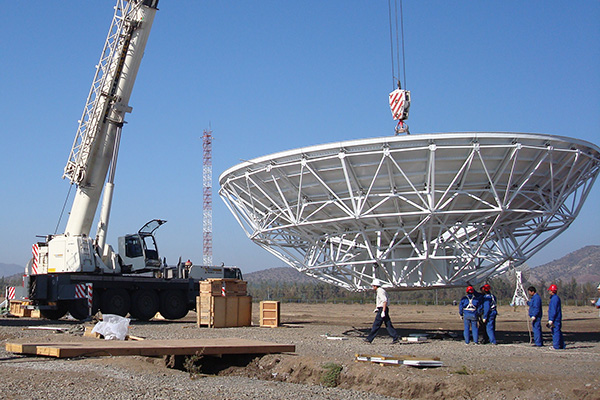
The Central Meteorological Observatory continued to issue a yellow typhoon warning at 06: 00 on October 8.

CCTV News:According to the website of the Central Meteorological Observatory, the Central Meteorological Observatory continued to issue a yellow typhoon warning at 6: 00 on October 8:

The center of the 14th typhoon "Little Dog" this year (strong typhoon level) is located at 5 o’clock this morning (8th) in the northern part of the South China Sea, about 160 kilometers west-south of Shanwei City, Guangdong Province, which is 21.5 degrees north latitude and 114.7 degrees east longitude. The maximum wind force near the center is 14 (42m/s), the lowest pressure in the center is 955 hectopascals, and the radius of the seven-level wind circle is 180-222.

It is estimated that "Little Dog" will move slowly to the west at a speed of 5-10 kilometers per hour, and its intensity will slowly weaken, and gradually approach the coastal area from the west of Guangdong to the east of Hainan Island.

Gale forecast: From 08: 00 on the 8th to 08: 00 on the 9th, there will be 6-8 winds and 9-10 gusts in most parts of the East China Sea, the Taiwan Province Strait, the northern part of the South China Sea, the Beibu Gulf and the coastal areas of Zhejiang, Fujian and Guangdong. Among them, there will be 9-11 winds and 12-13 gusts in parts of the coastal areas of Guangdong and the northern part of the South China Sea, and the winds near the "Little Dog" center will be 12.

Precipitation forecast: From 08: 00 on the 8th to 08: 00 on the 9th, there will be heavy rain and local heavy rain (100-150 mm) in the northeast of Taiwan Province Island, the central coast of Guangdong and the vicinity of the Pearl River Estuary.

Defense guide:

1. The government and relevant departments shall, in accordance with their duties, do a good job in typhoon prevention and emergency rescue.

2. Water operations and passing ships in relevant waters should return to Hong Kong to take shelter from the wind, strengthen port facilities, and prevent ships from anchoring, grounding and collision.

3. Stop large-scale indoor and outdoor gatherings and dangerous outdoor operations such as high altitude.

4. Reinforce or dismantle structures that are easy to be blown by the wind. Personnel should not go out at will. They should stay in windproof and safe places as far as possible, so as to ensure that the elderly and children stay in the safest place at home, and the dangerous people will be transferred in time. When the typhoon center passes by, the wind will decrease or stay still for a period of time. Remember that the strong wind will suddenly blow and you should continue to stay in a safe place to avoid the wind.

5. Relevant areas should pay attention to prevent flash floods and geological disasters that may be caused by heavy precipitation.