The barren hills are covered with greenery, green water and green hills, paving a happy background.

  CCTV News:(Reporter Zhang Qi) Dongchuan is a famous "Tiannan Copper Capital" in history. After thousands of years of exploitation and logging, the mountains in Dongchuan have basically become bare. When it comes to Dongchuan 20 years ago, people often associate it with barren land covered in mines, weeds everywhere, and mudslides that cross the river wantonly. "Walking on the top of the mountain with dragons and blowing horns at every ditch" was the truest portrayal of Dongchuan at that time.

Photo courtesy of Dongchuan District Forestry and Grassland Bureau

  "We want a blue sky and green mountains, and we want the earth to awaken and the Qingshui River", which has become the aspiration of all Dongchuan people and the dream of Dongchuan people.

  However, it is an arduous task to make the barren hills in Dongchuan green. The area of barren hills in Dongchuan is 606,000 mu, and there are more than 100,000 mu of barren hills in Xiaojiang dry-hot valley with a total length of more than 80 kilometers. Due to drought, lack of rain, large evaporation, poor soil layer and poor water conservation ability, the survival rate of newly planted trees is low, and many barren slopes are "afforestation without forest" every year.

  Dongchuan forestry workers repeatedly tried to use different methods and tree species for experimental planting, boldly diverted water up the mountain to water seedlings, and explored the soil and water conservation technology of fish scale pit at the bottom of funnel. In recent years, Dongchuan has taken 7,000 acres of barren hills in Daduo Village of Tangdan Town as a demonstration base for drought-resistant afforestation in dry-hot valleys, mainly popularizing these two technologies and planting new Leucaena leucocephala which is drought-resistant and easy to survive, with remarkable results.

  In order to plant trees and fill the ecological shortcomings, Dongchuan also spent a lot of money. Twenty years ago, the investment in afforestation per mu was only in 8 yuan, but now, the investment in 800 yuan per mu has increased by 100 times. The local finance in Dongchuan District will allocate 10 million yuan for ecological restoration every year, and at least 30,000 mu will be planted every year, so that the forest coverage rate in Dongchuan will increase by at least 1 percentage point every year.

  Through the arduous efforts of Dongchuan District, the ecological restoration has achieved remarkable results. From 2012 to 2018, a total of 246,000 mu of barren hills were afforested, with an average annual afforestation of 37,000 mu, 204,000 mu of returning farmland to forests and 245,000 mu of walnut base construction. By the end of 2018, there were 1,603,700 mu of forest land in the whole region, and the forest coverage rate increased to 33.7%. It is estimated that the forest coverage rate will reach 38% by the end of 2019.

Photo courtesy of Dongchuan District Forestry and Grassland Bureau

  Today, the bare peaks in Dongchuan District are long gone, and the trees on both sides of the road are dense, clean and tall. The mountains are green, the sky is blue, the water is blue, and the green mountains and green hills have also brought real Jinshan Yinshan to the people. The ecological dividend is benefiting the local people, and the villagers’ days are getting more and more prosperous.

  Walking into Xindianfang Village, Tuobuka Town, Dongchuan, the small saplings all over the mountains attract attention, and the economic crops such as navel orange, soft-seeded pomegranate and pepper grow gratifying, which is a vivid exploration and practice of developing the under-forest economic model in Dongchuan at present. Combine returning farmland to forests, economic planting under forests and large-scale cooperatives to achieve the greatest combination of ecological benefits, social benefits and economic benefits.

Photo courtesy of Dongchuan District Propaganda Department

  Now Xindianfang Village has planted 400 mu of soft-seeded pomegranate and 500 mu of navel orange. The first batch of 200 acres of navel oranges have all borne fruit, and the estimated economic income is more than 300,000 yuan. Next year, the soft-seeded pomegranate will bear fruit officially, and the estimated economic income is more than 200,000 yuan. The two industries have become the pillar industries of Xindian Fangcun, which have brought protection to the economic benefits of farmers in the later period.

  "Now this blue sky is full of green hills, with clear rivers and fish as companions, and forests all over the mountains and rivers. Birds are singing freely in the forest, and cattle and sheep have found the grass mountain. We sow hope and weave a green shirt for our hometown … …” The green dream of Dongchuan people has come true.

Spatial Agglomeration of Heavy Pollution Industries in China and Its Environmental Effects: Characteristics and Enlightenment

China Net/China Development Portal Network News Environmental pollution has always been an important content of national economic development and the realization of reform and innovation goals. From the source of emissions, industrial pollutants are an important part of pollution emissions. At the same time, heavy pollution industry is the main source of industrial pollutant discharge, which has a huge negative externality to the ecological environment system. Therefore, it is very important to explore the eco-environmental effects of industrial agglomeration from the perspective of heavily polluting industries.

There is trans-regional migration of industry in space, which is essentially to seek the optimal production location. With the increase of production costs, enterprises seeking to maximize profits will constantly move to adapt to the more complex market environment. Industries that bring serious negative externalities to the ecological environment are more sensitive to environmental policies, and are more vulnerable to changes in environmental policies that lead to industrial transfer. Usually, economically developed countries or regions will transfer such industries to areas with relatively backward economic development through production, investment and trade. Strictly speaking, the transfer of polluting industries comes from both international and domestic regions. The existing evidence shows that some polluting industries in China are transferring to the central and western regions. The industrial undertaking places have to bear the negative externalities of environmental pollution caused by industrial transfer while undertaking heavily polluting industries, so the spatial agglomeration of heavily polluting industries will reshape the spatial layout of industrial pollutants and become an important factor affecting regional environmental policies. Because the inter-regional flow of heavily polluting industries is an important reason that affects the regional pollutant discharge, it is very important to understand the influencing factors and driving mechanisms of the transfer of heavily polluting industries for correctly understanding the international or domestic industrial transfer that has taken place, adjusting the ecological environment protection policies of various regions (especially the central and western regions), and realizing the vision of a beautiful China with sustainable development.

At present, the analysis of environmental pollution effect brought by industrial transfer is relatively mature in academic circles, and the focus of discussion is on the hypothesis of "pollution refuge" and the empirical analysis of environmental Kuznets curve. Among them, foreign research mainly focuses on the national and industrial analysis scales, while domestic research mainly focuses on the provincial and municipal scales, and the industrial level research needs to be further improved. On the whole, the research on the agglomeration of pollution-intensive enterprises and its environmental effects has achieved rich results, but it is still very important to identify the agglomeration of heavily polluted industries and its environmental effects from a macro perspective, which is of great significance to analyze the agglomeration and transfer of industries from a macro scale, the preference of enterprises for migration and the environmental pollution of industrial undertaking areas from a micro scale. Therefore, under the background of constrained resource development, tightening environmental protection policies and slowing economic growth, it is of great significance to scientifically plan the transfer trend of heavily polluted industries and clarify the spatial agglomeration characteristics of heavily polluted industries to adjust the layout of major productive forces, comprehensively divide the main functional areas of each region, improve the ecosystem value of each region, efficiently deploy strategically around the overall national goal, and realize high-quality development of the whole region. This study focuses on three points: ① identifying the spatial distribution and agglomeration characteristics of heavily polluted industries in China in the past 20 years; (2) analyze the main factors that promote the agglomeration of heavily polluted industries, and whether the production cost (factor endowment), environmental regulation and foreign direct investment have promoted the agglomeration of heavily polluted industries in the central and western regions; ③ Analysis in the process of transferring heavily polluting industries,The transfer of pollutant discharge and whether the environmental pollution problems derived from the transfer of heavily polluting industries in the future are likely to continue to deteriorate.

Heavy pollution industry and its environmental effect analysis data set

Heavy pollution industry data set

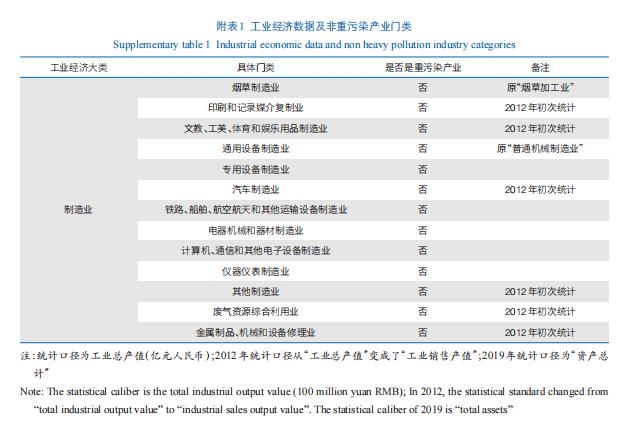
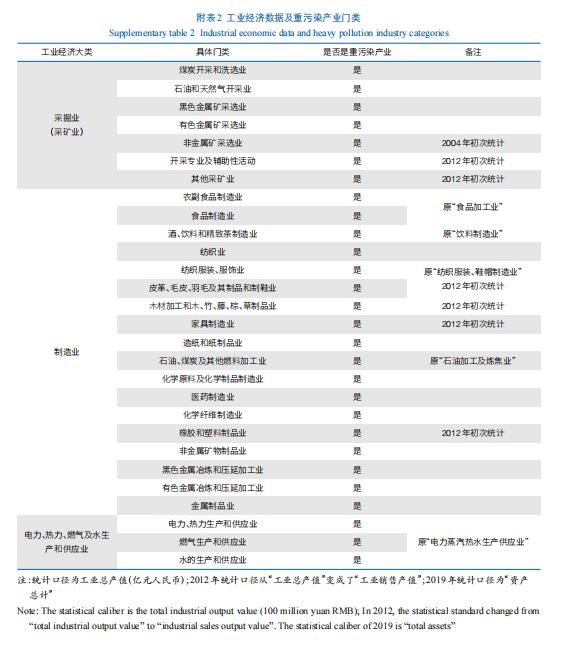
This study collected the industrial economic data of China from 1999 to 2021, and the data came from the Statistical Yearbook of Industrial Economy of China. The types of industries involved in industrial economic data are detailed in Schedule 1 and Schedule 2. Among them, the extractive industry in 2004, the production and supply of electricity, heat, gas and water, and the lack of industrial economic data in 2017 are supplemented by the method of average filling.

At present, there is no strict and clear definition of heavy pollution industry, but most scholars mainly follow the environmental protection certification standards issued by government departments. The Guide to Environmental Information Disclosure of Listed Companies published by the Ministry of Ecology and Environment shows that heavily polluting industries mainly involve thermal power, steel, cement, electrolytic aluminum, coal, metallurgy, chemicals, petrochemicals, building materials, paper making, brewing, pharmaceuticals, fermentation, textiles, tanning and mining. In this study, the situation of heavily polluting industries in the industrial industry is defined with reference to the Catalogue of Classified Management of Environmental Verification Industries of Listed Companies (Huanban Letter [2008] No.373) issued by the former Ministry of Environmental Protection (Attached Tables 1 and 2).

Environmental pollution data set

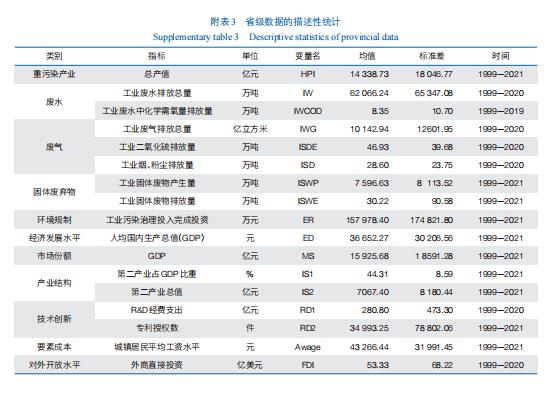
Heavy pollution discharge is divided into waste water, waste gas and industrial solid waste according to pollution sources. Considering the consistency and consistency of data, some data in this study are used as substitute variables for robustness test to enhance the reliability of empirical results. Among them, the data of wastewater, waste gas and solid waste come from China Statistical Yearbook and China Environmental Statistical Yearbook; The data of environmental regulation, economic development level, market share, industrial structure and factor cost come from China Statistical Yearbook. The data of technological innovation (mainly focusing on R&D expenditure) comes from the Statistical Bulletin of National Science and Technology Expenditure published by the National Bureau of Statistics. The description and descriptive statistical results of the data are detailed in Schedule 3.

Measurement and empirical analysis of heavily polluting enterprises in China

Agglomeration characteristics of heavily polluting industries

By depicting the spatial distribution of the gross output value of heavily polluted industries in China in 1999, 2003, 2007, 2011, 2015 and 2021 (Figure 1), it is found that the heavily polluted industries in China obviously spread from east to west and from coastal to inland. On the whole, the spatial hierarchical structure is obvious, and there are peak-shifting characteristics in coastal provinces, central regions and northwest inland areas. Shandong, Jiangsu, Zhejiang and Guangdong have always been the gathering highlands of heavily polluting industries, while the heavily polluting enterprises in Xinjiang, Inner Mongolia, Shanxi, Shaanxi, Henan and Sichuan have obvious development momentum and are potential new gathering areas of heavily polluting industries in the future.
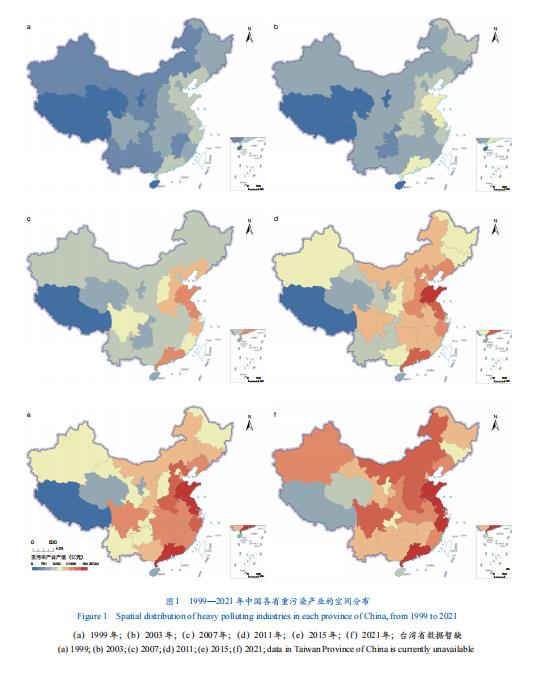
From the spatial distribution map of heavily polluted industries in China from 1999 to 2021, we can see the development, transfer and diffusion trend of heavily polluted industries in the past 20 years. In 1999, the output value of heavily polluting industries in coastal provinces was significantly higher than that in other regions; Until 2007, Shandong, Jiangsu and Guangdong became areas with obvious concentration of heavily polluting industries. Since then, heavily polluting enterprises have gradually spread to Zhejiang, Liaoning, Hebei, Henan and other places. Around 2011, Sichuan and Inner Mongolia became the gathering highlands of heavy pollution industries in inland areas, and at the same time, heavy pollution industries further spread to Shanxi, Hubei, Anhui, Jiangxi and other central regions. After 2015, Shaanxi, Gansu, Chongqing, Guizhou and Yunnan have become the undertaking places and potential development areas for the transfer of heavily polluting industries. By the end of 2021, the heavily polluting industries in Xinjiang and Inner Mongolia have grown rapidly, and the output value of heavily polluting industries in Sichuan, Shanxi, Hubei and Anhui has been increasing. On the whole, the development of heavy pollution industry in Northeast China is relatively backward, which is related to the development history and related policies in Northeast China to some extent.

Influencing factors and mechanism of heavy pollution industry agglomeration in China

 influencing factor

This study holds that the agglomeration of heavily polluting industries is the result of industrial transfer and industrialization. The transfer of heavily polluting industries in China is essentially a change in the location choice of heavily polluting industries in China, and enterprises need to consider factor costs and regional acceptance policies. Due to the influence of heavily polluting industries on environmental pollution, local environmental policies usually need to be considered in the location selection of enterprises. The "pollution refuge" hypothesis holds that pollution-intensive industries tend to move to countries or regions with relatively low environmental access standards (environmental regulations). This hypothesis also has limitations, such as freedom of trade, law of one price, and differences in environmental regulations among countries or regions. Although there are trade barriers and transportation costs in reality, the (no) risk arbitrage mechanism between countries or regions makes the actual price level basically conform to the law of one price principle. When the product price is clear, the production cost (factor endowment) will affect the production location of the industry, and then affect the direction and region of industrial transfer; When other conditions are basically the same, areas with lower environmental access standards (environmental regulations) will become the main destinations for the transfer of polluting industries.

Therefore, this study focuses on the influence of production cost (factor endowment), environmental regulation and foreign direct investment on heavily polluted industrial agglomeration, taking them as the core explanatory variables of the model, and taking economic development level, market share, industrial structure and technological innovation as control variables. In order to verify whether the environmental Kuznets curve is established at the provincial level, the square term of economic development level is introduced to test.

 Agglomeration mechanism

Production cost (factor endowment) factor. On the whole, it has the strongest influence on the agglomeration of heavily polluting industries among the core explanatory variables. Mining, smelting and processing industries of mineral resources such as coal, oil, metal and nonmetal account for a relatively large proportion in heavily polluted industries, and the resource-intensive orientation of such heavily polluted industries is obvious. Compensatory wages make the wage level of such heavily polluted industries higher, which may lead to a certain synchronization between high labor costs and heavily polluted industries. At the same time, although the preferred areas for heavily polluting industries have the advantages of intensive labor force and low production cost, heavily polluting enterprises will also comprehensively consider the economic development level, transportation infrastructure construction and supporting policies in the areas where they move. Only when the above conditions reach a certain level, the wage level will get more consideration, so the wage level of some moving areas does not have too much advantage in the alternative moving areas of heavily polluting industries.

Environmental regulatory factors. It is not significant when the individual effect is fixed, but it is positively related to industrial agglomeration when the time effect is fixed. The "pollution refuge" effect at the provincial scale is not significant on the long-term scale, which means it is difficult to support the "pollution refuge" hypothesis. With the increasing emphasis of local governments on ecological environmental protection and environmental protection, the differences of environmental policies among regions have gradually decreased, and the transfer strategy of heavily polluting industries seeking lower environmental regulations has gradually failed.

Factors of foreign direct investment. Its impact on the agglomeration of heavily polluting industries is not significant, which shows that the transfer of heavily polluting industries mainly occurs at the provincial level, and the scale of heavily polluting industries at the international level is small.

Economic development level, market share and industrial structure factors. It has a very significant effect on the agglomeration of heavily polluted industries. This is basically consistent with the traditional mainstream views of industrial location theory, industry and regional economy.

Technological innovation factors. It is only significant when the time is fixed. It shows that there is a positive correlation between long-term technology investment and R&D and heavy pollution industrial agglomeration, which is inseparable from potential industrial transformation and industrial upgrading. At the same time, it also reflects the shift of technology investment in heavily polluting industries, which may be closely related to the upgrading of mining technology, industrial chain and even environmental protection investment in resource-based areas.

Environmental effects of heavily polluting industrial agglomeration

The influence of heavy pollution industrial agglomeration on local environmental pollution, that is, whether heavy pollution industrial agglomeration causes significant environmental pollution in the moving area.

 Core variable

This study focuses on the influence of two core variables, the agglomeration of heavily polluting industries and environmental regulation, on environmental pollution.

Heavy polluting industries have significantly increased the emission of environmental pollutants. There is a nonlinear relationship between heavily polluting industries and environmental pollution, in which the agglomeration of heavily polluting industries has an "inverted U" relationship with the total amount of industrial waste gas and the amount of industrial solid waste, and the pollutant emissions show a trend of rising first and then falling with the agglomeration of heavily polluting industries.

Environmental regulation has not yet played a role in reducing pollutant emissions at the provincial level. There is a significant positive correlation between environmental regulation and the total discharge of industrial wastewater, industrial waste gas and industrial solid waste. In the future, it is still necessary to continue to deepen the concept of environmental protection policy and ecological governance, and improve the intensity of environmental protection and environmental regulation.

 Other factors

Technological innovation. It has played a role in reducing pollutant emissions. By adopting cleaner, more efficient and more sustainable emission reduction and pollution reduction technology, the total discharge of industrial wastewater and the total production of industrial solid waste in heavily polluted industries can be effectively reduced.

Foreign direct investment. It is only significant to reduce the output of industrial solid waste in heavily polluted industries. It shows that foreign-funded enterprises may bring more environmental protection concepts and advanced technologies to the industries that discharge solid waste.

The level of regional economic development. There is a significant positive correlation with pollutant emissions. With the increase of per capita gross domestic product (GDP), pollutant emissions will gradually increase, which is basically consistent with the theory of environmental economics.

Market share (specifically the total GDP). There is a negative correlation with pollutant discharge (except industrial wastewater discharge). This is because the market share is related to the economic structure, and the development level of service industry is higher and the proportion of tertiary industry is larger in areas with higher GDP, which is also confirmed by the correlation between the results and the coefficients of industrial structure variables.

Industrial structure. There is a significant positive correlation with pollutant emissions. Pollutant discharge is usually related to industrial activities. The higher the output value of the secondary industry, the more pollutants will be discharged, so the industrial structure variable (the output value of the secondary industry) is significantly positively correlated with pollutant discharge.

Main conclusions

This study systematically combs the agglomeration and spatial distribution of heavily polluted industries in China in the past 20 years, analyzes the influencing factors and agglomeration mechanism of heavily polluted industries through the panel data fixed effect model, and studies the environmental effects of heavily polluted industries agglomeration, and draws the following four main conclusions.

The agglomeration characteristics of heavily polluted industries are consistent with the overall trend of international and domestic industrial transfer, and there is an obvious diffusion trend from east to west and from coastal to inland. Shandong, Jiangsu, Zhejiang and Guangdong are the areas with high concentration of heavily polluted industries in China in the past 20 years, while Xinjiang, Inner Mongolia, Shanxi, Shaanxi, Henan and Sichuan are the potential areas for the future concentration of heavily polluted industries.

The results of fixed effect model show that factor endowment, environmental regulation, economic development level, market share and industrial structure are the key factors affecting the development of heavily polluted industries. Among them, the production cost (factor endowment) is positively related to the development of heavily polluted industries. It is difficult to find the relevant evidence to support the "pollution shelter" hypothesis on the provincial scale. However, the technological innovation that only has a significant impact on the development of heavily polluted industries in a long time scale may reveal the shift of potential technology investment, which promotes the industrial upgrading and transformation of heavily polluted industries in China.

The test of labor cost and regional robustness reveals the driving mechanism and regional heterogeneity of the development of heavily polluted industries in China. The nonlinear relationship test of production cost (factor endowment) shows that there is an "inverted U" relationship between labor cost and the development of heavily polluted industries in China. Influenced by industrial types and compensatory wages, the development of heavily polluting industries in China has increased the labor cost in the areas where they moved in, but the excessive labor cost has promoted the further transfer of heavily polluting industries. Regional heterogeneity reveals the gradient characteristics of heavy pollution industry transfer in China, that is, the eastern part of China is the main position to undertake international heavy pollution industry, and the international heavy pollution industry seeks areas with lower labor costs, which leads to the eastern part becoming a "pollution refuge" for international heavy pollution industry transfer. It is more obvious that the heavily polluting industries in the central region seek low labor costs and resource-rich areas. The "inverted U" relationship between the labor cost and the development of heavily polluting industries in the western region is remarkable. The heavily polluting industries in Northeast China are more affected by their own industrial base and international industrial transfer, and grow slowly.

The environmental effect of heavy pollution industry agglomeration is remarkable, which significantly increases the emissions of industrial wastewater, waste gas and solid waste, and increases the emissions of pollutants. Although there is an obvious nonlinear relationship between the agglomeration of heavily polluting industries and environmental pollution ("inverted U" relationship, that is, the emission of environmental pollutants and the agglomeration of heavily polluting industries rise first and then fall), the results of this study cannot support the conclusion that environmental regulation can reduce the emission of pollutants. More importantly, the environmental Kuznets curve on the provincial scale in China is not established, and many provinces have not reached the inflection point of environmental pollution at present.

Research enlightenment

From an empirical point of view, this study analyzes the influencing factors and environmental effects of heavy pollution industry agglomeration, and the enlightenment to China’s adjustment of heavy pollution industry layout and introduction of environmental regulation and protection policies is as follows.

Spatial concentration of economic activities is conducive to reducing environmental pollution emissions. In order to improve the spatial concentration of heavily polluting industries and reduce the pollution to the ecological environment, local governments should conform to the trend of the development of heavily polluting industries, reserve planned industrial cluster parks and support corresponding infrastructure, and centrally arrange heavily polluting industrial clusters.

When guiding and undertaking the development of heavily polluting industries, governments in different regions should formulate different policy orientations. ① Eastern region. We should pay attention to unified planning at regional scale, raise the threshold of environmental policy at the same time, strengthen the regional control of pollutant discharge from heavily polluting industries, reduce the "pollution refuge" effect, promote the orderly reduction of pollution discharge in the whole eastern region, and take the lead in building a model area of beautiful China. ② Central and western regions. We should give full play to our own characteristics and advantages, make full use of low-cost advantages, scientifically introduce relevant heavily polluting industries when our own resources and environment carrying capacity allow, build high-quality heavily polluting industrial clusters, guide the rational layout of heavily polluting industries, and promote the transformation and technological upgrading of heavily polluting industries after moving in; At the same time, improve the supervision and management mechanism of heavily polluting industries before, during and after the event as soon as possible, and avoid taking the old road of "pollution first and then treatment". ③ Northeast China. It is necessary to strengthen the transformation and upgrading of heavily polluting industries, enhance the competitiveness of industries, fully tap and give play to the advantages of existing industrial bases, and realize regional revitalization through industrial upgrading and transformation.

Pay attention to the ecological environment protection in ecologically fragile areas, do a good job in policy avoidance programs, and reduce the ecological environment pressure of the development of heavily polluting industries. The government should pay attention to the more serious environmental pollution problems arising from the transfer of heavily polluting industries to ecologically fragile areas such as Xinjiang and Inner Mongolia, and local governments need to adopt more forward-looking macro-control policies to deal with potential environmental pollution risks. In a word, all regions should adopt targeted industrial guidance and pollution response strategies according to local conditions, reduce the degree of environmental pollution while developing industries and revitalizing the economy as much as possible, and make joint efforts to build a beautiful China.
(author:Chen Hongyang, Yu Jianhui and Zhang Wenzhong, Key Laboratory of Regional Sustainable Development Analysis and Simulation of China Academy of Sciences, Institute of Geographical Sciences and Resources, Chinese Academy of Sciences, School of Resources and Environment, University;Contributed by Journal of China Academy of Sciences)


Remember Shen Yinluo, former chairman of Hubei Provincial Political Consultative Conference

  Xinhua News Agency, Wuhan, December 1st Title: A tree, a grass, a steelyard — — In memory of Shen Yinluo, former chairman of Hubei Provincial Political Consultative Conference (I)

  Xinhua News Agency reporter Tan Yuanbin

  On February 20th this year, Shen Yinluo, former chairman of Hubei Provincial Political Consultative Conference, died in Wuhan due to illness at the age of 96. From setting foot on the battlefield of anti-Japanese national salvation, to leading WISCO to create brilliance, and then to taking the leadership position in Hubei Province, I was unwilling to publicize my Shen Yinluo all my life, but after my death, it caused strong repercussions in Jingchu.

  "He doesn’t care about his family, but only knows how to work." Shen Yinluo’s widow Cao Junmin said. In the living room of Shenyang, there are two bottles of earth under the portrait of Shen Yinluo, which were brought back by Shen Yinluo’s niece from Yan ‘an, Shaanxi and Wuxian, Jiangsu. One bottle is "holy earth" and the other is "native land".

  Red gene, green heritage. Shen Yinluo struggled for the cause of the party and the people all his life, and was deeply cherished and commemorated by the broad masses of cadres and people, leaving a valuable spiritual wealth. Hubei Provincial Party Committee is carrying out learning activities from Shen Yinluo among cadres in party member.

  He is like a tree, "insisting that the green hills will not relax."

  In 1937, 17-year-old Shen Yinluo left his hometown and set foot on the battlefield of resisting Japan and saving the nation. He arrived in Yan ‘an in 1938 and joined the Communist Party of China (CPC) in the same year. During his stay in War of Resistance against Japanese Aggression, he participated in the "Hundred Regiments War"; During the War of Liberation, he participated in the "Central Plains Breakthrough".

  After the founding of New China, Shen Yinluo successively held leadership positions in the 41st Army of the People’s Liberation Army and Wuhan Iron and Steel Company, and later held important leadership positions in Hubei Provincial Committee and Hubei Provincial Political Consultative Conference.

  From March 1961 to October 1982, Shen Yinluo worked in WISCO for 21 years and 7 months, and served as deputy manager and manager, deputy director and director of the company’s revolutionary Committee, second secretary and manager of the company’s party Committee, and first secretary of the party Committee. When I first arrived in WISCO, it coincided with three years of natural disasters. The Soviet Union terminated aid construction and withdrew experts, and a large number of projects in WISCO stopped construction and production. Shen Yinluo was ordered by the crisis to bring the army’s good tradition and style into WISCO and lead WISCO on the right track.

  Cao Junmin still remembers that during the Cultural Revolution, although Shen Yinluo was repeatedly hit, he never complained in front of his family. At that time, he put forward a slogan: "WISCO can’t be chaotic, the stove can’t be turned off, and production can’t stop."

  It is Shen Yinluo’s greatest contribution to WISCO to implement the central government’s decision to deploy and introduce a 1.7-meter rolling mill. Previously, the quality of steel produced in China was not high, which was called "noodles" and "belts". High-end products such as strip steel, sheet steel and silicon steel are totally dependent on imports, which not only costs a lot of foreign exchange, but also is blocked by developed countries.

  As the general representative of Chinese technical negotiation, Shen Yinluo spared no effort to overcome all difficulties and won the contract. Subsequently, as the main leader of the engineering headquarters, he led a hundred thousand construction troops to participate in the battle.

  At the end of 1981, the 1.7-meter rolling mill project passed the national acceptance and was officially put into production. It has changed the structure of steel products in China and become a model for China to introduce and digest international advanced technology.

  During his tenure as an important leader of the Hubei Provincial Party Committee and the Hubei Provincial Political Consultative Conference, Shen Yinluo was strict with himself and worked hard for the cause of the party and the people. After retiring, Shen Yinluo always cares about the development of Hubei, actively exerts the waste heat, and makes suggestions. The day before his death, his eyesight was severely impaired, and he asked his secretary to read him the new Central Document No.1.

  It is the lofty ideals and beliefs of communist party people that support Shen Yinluo. "In Shen Lao, we have seen the political quality of a party member cadre with firm belief and infinite loyalty to the party." Liu Yanhong, deputy director of the Organization Department of Hubei Provincial Party Committee and director of the Bureau of Retired Veteran Cadres, said.

  He is like a grass, rooted in the soil of the people.

  "Come on, Yin Shi, I’ll give you some rice!" For more than 40 years, Chen Yinshi, an associate professor at the Party School of Wuhan Iron and Steel Company, still remembers this call. That year, as an ordinary young worker, he had a meeting with a group of WISCO personnel such as Shen Yinluo in Beijing. At lunch, everyone crowded around a big round table for dinner, with Chen Yinshi sitting in the corner and Shen Yinluo sitting opposite him. "I was just about to get up and add rice. Manager Shen stood up and naturally reached for the bowl."

  Keeping close contact with the masses, Shen Yinluo persisted all his life. Wang Guolian, a retired cadre of WISCO, said that Shen Lao’s memory is very good. He can remember the names of great families after one or two contacts, and the workers are willing to tell him anything.

  A bicycle, a yellow military satchel, a notebook and a pen, Shen Yinluo’s footprints are all over Shili Steel City and Baili Mine of WISCO. He ate, lived and worked with the workers for several months, jumping into slag pits, moving ore, eating cold meals, and working hard and dirty.

  When he goes to factories and mines to check production, he always goes to the canteen to have a look, telling the logistics staff to arrange the food, saying, "There is steel in the food, and the workers can only concentrate on refining steel when they are full."

  After retiring, he went deep into grassroots research, including running in the countryside for 102 days in 2002, reaching the junction of Hubei and Shaanxi as far as possible.

  Putting the masses in a prominent position, Shen Yinluo is consistent. Last year, Shen Yinluo, as a veteran of the Anti-Japanese War, won the medal for the 70th anniversary of the victory of China people’s War of Resistance against Japanese Aggression and a 5000-yuan solatium. He immediately entrusted the Bureau of Retired Veteran Cadres of Hubei Provincial Party Committee to transfer solatium to the needy people in the old revolutionary base areas. In the end, the solatium was divided into two parts, which were sent to Min Xinzhou and Zhao Zhiliang, martyrs of the Red Army in Hong ‘an County, Huanggang City, Hubei Province.

  "He left before he met the benefactor!" Min Xinzhou said. Min Xinzhou fell from the sky last year, and his spine was injured, so he couldn’t work. His lover suffered from mental illness and couldn’t take care of himself. "Shen Lao’s financial assistance is to help us tide over the difficulties."

  When the staff of the Bureau of Retired Veteran Cadres of Hubei Provincial Party Committee helped to sort out Shen Yinluo’s relics, they found 106 donation receipts in an envelope, many of which were donated in the name of Cao Junmin, with a total amount of more than 140,000 yuan, but the donations without receipts were unknown.

  "Shen Lao always has the masses in his heart." Wang Shengtie, former chairman of the Hubei Provincial Political Consultative Conference, who was in charge of agricultural work in the province, said that seeing good experiences in newspapers and periodicals involved the interests of farmers. Mr. Shen wrote them in strokes and sent them to him by letter. "I have worked in the provincial government, provincial party Committee and provincial political consultative conference for 11 years, and I received a publication sent by Shen Lao at least once a month on average."

  He is like a steelyard, and he has a good style of seeking truth and being pragmatic.

  "On September 5, at 6: 40 in the morning, I visited the vegetable wholesale and retail markets and found that the price difference between wholesale and retail was 50% to 100%. The wholesale price of Chinese cabbage is 0.20 yuan/kg and the retail price is 0.40 yuan/kg; Chili pepper wholesale 0.80 yuan/kg, retail after classification 1.6 yuan/kg; The retail price of eggplant is 1.50 yuan/kg. Exotic vegetables come from Henan. " This is a note on people’s feelings written by Shen Yinluo in 1996, when he retired.

  Touching the truth, telling the truth, making practical moves and seeking practical results, Shen Yinluo opposes formalism and emphasizes seeking truth and being pragmatic. Chen Ming, his last secretary, said that Shen Lao was most disgusted with cadres who spoke Mandarin but failed to take practical actions.

  At the end of the 20th century, Hubei Province once took over the farm management right, which triggered a series of problems such as farmers’ petition, and the farm directors, local leaders and ordinary people were very anxious. At that time, Shen Yinluo, who was over 80 years old, conducted research on this and spent more than 120 days traveling to all provincial state-owned farms in the province.

  After the investigation, he wrote a report to the Hubei Provincial Party Committee and the provincial government. After in-depth study, the Hubei Provincial Party Committee and the provincial government re-delegated the farm management right and mobilized the local enthusiasm.

  "Shen Lao knows all about some major construction at the grassroots level, the planning in the province, the strategic layout of the country, and the resource characteristics of various cities and States. Even the places he visited decades ago are clear to him." Chen Ming said.

  Shen Yinluo gave suggestions to the Hubei Provincial Party Committee and the provincial government. If you are not sure, you will definitely consult relevant experts and cadres first to find out the situation. Every time he goes out for research, he takes notes carefully.

  "He is such a person who is strict with himself with the standards of Communist party member everywhere." Cao Junmin said.

Or named "Pengfei" Lifan brand-new SUV declaration information.

  [Domestic spy photos] A few days ago, we obtained the brand-new declaration information from Lifan, and the car was internally code-named "CY02C" or positioned in a car. According to the rear picture, the new car may be named "Lifan Pengfei".


   Friendly reminder:I hope enthusiastic netizens can take photos of your new car spy photos and send them to our corresponding mailbox: diezhao@autohome.com.cn. I look forward to hearing from you and becoming a member of the "spy".


Home of the car

  According to the declaration, the appearance of the new car adopts Lifan’s latest family-style design language, and the hexagonal large mouth air intake grille and open-corner headlight group on the front face are both popular designs. At the same time, the lower bumper is tough, the fog lights on both sides are simple in design, and the overall front face style is very attractive. From the side, the B, C and D columns of the new car are blackened to create the visual effect of the suspended roof. The rear design of the car body is simple, and the silver anti-scratch guard under the bumper is surrounded by the black bottom around the car body, which makes the car look as wild as an SUV.

Home of the car

  The body size of the new car is 4390/1820/1715mm, which is 2610mm, and the size is close to the entry compact SUV. According to different vehicle configurations, the new car will be equipped with tires with specifications of 215/60 R17 and 225/55 R18, and a variety of rim shapes will be available. In addition, the new car will also be equipped with skylights, etc.

  In terms of power, Lifan Pengfei will be equipped with a 2.0L naturally aspirated model LF483Q with a maximum of 141 horsepower (104kW). According to the spy photos previously exposed, the new car transmission system will be manual and optional. (Text/car home zhang xiaodan)

Le Jia’s apprentice was drunk and sent a long message to Master: Meeting him is a blessing.

    1905 movie network news On the evening of June 7th, on the Super Speaker program, Le Jia, the tutor, got drunk at the scene of the program. As a result, he got drunk out of control, and his mouth was full of swearing. Three hours after the incident, Le Jia sent Weibo a response: "A clear conscience is much more important than becoming a successful person." But the Weibo was deleted by Le Jia. On the morning of June 9th, Cui Wanzhi, a disciple of Le Jia, posted a long microblog, saying that Le Jia was drinking this time to give himself a strong drink, and wrote affectionately, "Meeting Master Le is a blessing for my life".

Le Jia disciple Cui Wanzhi sent Weibo the original text is as follows:

    Last night (June 8th), I saw many netizens saying that Master Le was drunk, and even said that he was hyping himself. I felt very surprised, shocked and very sad. I knew that Master had put himself under great pressure and grievances for me, and I thought I could no longer remain silent.

    Anyone who is familiar with the musician knows that speaking is something he loves and devoted his life to. He loves everyone in our Nirvana team. Every time I give a speech, he teaches me by hand and inspires me word by word. In the face of my game, he pays more behind the scenes than I do. I know in my heart that he always hoped that he could fulfill his promise to the man I made in the audition.

    Master Yue believes that the quality of a speech mainly depends on how many people can be touched and how far the influence is. He doesn’t want me to just win sympathy points on the speaker stage, but to speak with real strength. His passion on the stage, I think, is that he has been worried that disabled people will suffer on this stage. He really hopes that I can go to the end, but I can go to today, in fact, I am very satisfied.

    Yesterday’s first speech, my state was not very good. Before the last lecture, in order to let me completely lay down my burden and stimulate my fighting spirit and potential, Mr. Le did not hesitate to be strong with wine. He asked me to drink half a glass of wine and said to me, Wan Zhi, I hope you will devote yourself to this lecture, forget your achievements, and pass on the sentence "Being a good person is much more important than being a successful person" to all people, so that your son will be proud of having a father like you in the future. He is totally trying to inspire my potential in this way, so that I can play better in the final. When Master Le encouraged me and canvassed for me, he was a little emotional when he spoke. Everyone who studied with him knows very well that I appreciate his painstaking efforts, but this may make some unfamiliar friends misunderstand or unhappy. Please understand.
 
    Thank you, Mr. Le Jia, for your careful guidance, companionship and encouragement over the past few months. Meeting Master Le is a blessing for my life.

Dialogue Zhang Xue: I’m a journalist in Britain.

Original surround furnace surround furnace

Zhang Xue, an undergraduate in sociology, studied for a master’s degree in gender and international development in the UK. After graduation, she worked in the Chinese media in London. This experience gave her an opportunity to observe and think about all aspects of British society and the Chinese community in Britain.

Make a promise

Thousand = Millennium Snow

Zhang = Zhang Xue

Xu | About the Chinese media in Britain, I only knew that there was a new Chinese media for British newspaper sisters. It seems that the audience is mainly overseas students in the UK, which has a great influence, and people who are not in the UK will also pay attention to it. Can you tell me something about the British Chinese media and your work first?

Zhang | The format of Chinese media in Britain is quite diverse. In addition to the British newspaper sister who pursues traffic more in content, there are many specialized investment media and well-done marketing media. Maybe there is not so much traffic, but there are still a group of loyal audiences. The information is really objective and fair, and some people will still read it.

Although the print media are declining all over the world, the local Chinese in Britain, especially the older generation of Chinese, still have the habit of subscribing to newspapers. At present, the paper media with large circulation in Britain include European Times, UK-Chinese Times, Huawen Weekly, British Overseas Chinese News and Chinese Business Daily.

Although I paid more attention to British politics before, in fact, news in various fields related to the Chinese community will run. Now, because the work under the epidemic line has stopped, at present, it is mainly translation and editing, and some British media news is transferred to our new media platform.

Getting along with Xu | undergraduate makes me think that you are a character who prefers quiet thinking. I never thought that you would do such a publicity job as the media. Besides, I talked to you before, and you seemed to talk about the difficulty of finding a job. Can you tell me how you chose this job?

Zhang | I majored in gender and international development at Warwick University. The main destinations of this major are government departments, academic research and NGOs. As far as I know, these industries have limited job opportunities. I have long heard that it is not easy to find a job in Britain. In March of 19, I submitted my resume in various industries with a try mentality. Perhaps because of my experience in media work as an undergraduate, I was lucky to receive offer from two Chinese media. The media I am currently in is supported by a private capital and has certain freedom in topic selection and voice. This paper media was founded by mainland businessmen in 2003, but it is printed in traditional Chinese characters, perhaps considering that quite a few of our readers still come from Guangdong or Hong Kong.

I haven’t been in Britain for a long time, and I’m not very sociable (laughs). I haven’t established a wide network of social relations, so I can’t talk about going deep into the mainstream society in London. But after all, the media still have the opportunity to participate in various local activities, and have a face-to-face meeting with British colleagues such as BBC and The Times. In addition, I have an empirical understanding of the specific operation of British democracy by reporting on the 19-year double 12 elections in Britain.

Xu | I still remember that you said that it was more difficult for Chinese to find a job in Britain than for Pakistanis (laughs), and you also talked to me about the relative marginalization of the Chinese community in the mainstream society. In fact, this issue has also been concerned, and the reasons summarized are nothing more than the huge differences in language, culture and living habits. Do you have your own views on this?

Zhang | People with different education levels or classes may encounter different difficulties when they integrate into the British local society. The Chinese I contact most are overseas students or colleagues with higher education, but the language problem is not very big, and the differences in culture and living habits are more prominent. For example, British locals like to go to bars to drink, watch football, exercise, walk and do public welfare, etc. I don’t deny that there are also Chinese who like these, but the specific methods and contents are still very different.

This is my explanation from my personal experience, but I think there is a very prominent phenomenon in the Chinese community as a whole, and that is: going their own way. The Chinese communities in Britain are relatively isolated from each other. I also consulted some local predecessors, and their views are mainly the lack of an appealing organization/leader to maintain the identity of Chinese communities.

I remember an elite Chinese said, "Chinese and Jews are very similar, both attach great importance to industry, and then attach great importance to their children’s education, and they are engaged in similar occupations, both of which are high-income middle classes." But compared with Jews, the Chinese community does not have a bond to maintain each other. " Most of the joint activities of the Chinese community I witnessed here are pragmatic and have practical benefits. For example, many activities are funded by the Chamber of Commerce, and everyone seems willing to form a bureau to get to know each other. When this matter is over, it will be over. Few large groups are organized because of certain political ideas or hobbies. Even there are few organizations with academic interests. At present, the only one that is relatively large seems to be the natural science group organized by doctors in brain and brain science.

In addition, there are very few Chinese who can speak for themselves in political circles, and there are not many Chinese elites in politics. As for why this happens, I think the main reason is that the history of immigration is too short. For a group, it takes a process to self-unite and participate in public politics.

British Chinese immigrants gathered in London at the earliest and most, and the first wave of immigrants came from Hong Kong in the 1960s and 1970s. The second wave was probably in the 1990 s, the tide of immigrants from the mainland; In recent 10 years, studying abroad has brought a large number of China students and investment immigrants. The first wave of immigrants generally started from the bottom labor force, made laundry rooms, and then slowly opened restaurants.

This is very similar to some immigrants from Romania or Poland in Eastern Europe. Their main purpose is to save money and go back to their own countries to buy a house. Then they will exploit themselves and accumulate the capital to return to China. They will still go to the factory to work overtime on holidays, just to get double wages, and they are politically silent.

Participating in politics or building a community requires a material foundation. Basically, the first generation of Chinese who come to Britain have worked hard to make money and invest in education, so that the next generation or generations can engage in middle-class occupations, such as doctors, lawyers, IT, finance, real estate, etc. Many Chinese I have come into contact with have received higher education and have decent jobs, but most of them are shown as "economic animals", but they are relatively aphasic on social and political issues.

However, the situation has changed. With economic status, political elites will naturally emerge. In particular, the overall institutional environment is actually relatively relaxed, and there is no situation in which political power is not open to a certain ethnic group. In 15 years, Alan Mak, the first Chinese MP, appeared in the British House of Commons. In the 19-year general election, there were also nine Chinese candidates (two from the mainland, seven from Hongkong, Taiwan Province or Malaysia, to be precise, the parents of those immigrants, all of whom were born in Britain), and two were elected as members of the House of Commons, one was Alan Mak, and the other was Sarah Owen of the Labour Party, who was the first female Chinese member in the history of the British Parliament. In this way, Chinese-Americans in the United States just launched a candidate like Andrew Yang last year. Although it can’t be said that it was very successful, it was at least a good attempt.

I remember that one of these nine members was Wang Xingang, and last year was his third time to run for the House of Commons. He graduated from Beijing Jiaotong University with a bachelor’s degree. He completed the master’s degree in engineering, master’s degree in finance and executive courses at Imperial College, Oxford and Harvard Business School respectively, and currently works in the City of London. He knows well the social rules in Britain, knows how to face and fight back against discrimination, and tells Chinese people some ways to deal with it. Since the outbreak of the epidemic, hate crimes against Chinese in Britain have surged. During this period, he received a discriminatory video from a black man to the effect that we don’t need you in England. Please go back to your country. He immediately contacted the local government, police and NGOs, and the three departments also gave feedback in a timely manner. In fact, mainstream British society has zero tolerance for racial discrimination, and as long as it reacts to government departments, it can be highly valued. Taking the initiative to participate in the mainstream society in Britain is also a means to reduce discrimination. Wang Xingang gave several ways to participate in the mainstream society, such as applying to be a magistrate (justice of the peace), a local councillor or a school manager.

However, many Chinese are afraid to defend their rights when they encounter these problems, and their participation in mainstream society is not enough. As I said above, the mainstream values of British society are very disgusted with racial discrimination. Of course, it does not rule out its existence and does not dare to be blatant. The long-term marginalization of Chinese people is largely due to their lack of self-awareness, their failure to realize that they can do these things, or their lack of interest in this thing. Of course, there are also reasons for information asymmetry.

There is also a phenomenon that a large number of mainland students hold the idea of being a guest in Britain for a short time from the beginning, and naturally they are not very involved in British society. In fact, many domestic observations on British society also come from this group, and it is normal to have some deviations.

There are still many mainland immigrants who are investment immigrants, such as various big businessmen. They are all rich in resources, and their main industries may not be in Britain. These people do not need to participate in the local society, nor do they need to have any deep contact with the Chinese community. This is also an important reason why the Chinese community, especially the Chinese community in mainland China, is relatively scattered.

Xu | So, within the Chinese, will many geographical organizations play a role? For example, will the community connection and identity in Wenzhou or Chaoshan be higher than the overall level of Chinese who can speak Mandarin?

Zhang | This kind of organization, which is similar to hometown association or geographical chamber of commerce, certainly exists, and I have participated in it to some extent. For example, there are large chambers of commerce in many provinces across the country, and many activities of Chinese society are sponsored by them, including the chamber of commerce, which will also take the lead in organizing international students from the same hometown to get together and exchange feelings during the New Year. But in fact, everyone has nothing in common, that is, they will break up after a meal. If there is any personal business cooperation, it is actually their personal business, and it is hard to say that there is any direct connection with the Chamber of Commerce itself. Generally speaking, I feel that all individuals are atomized, and all kinds of geographical and industrial organizations are just platforms for atomic individuals to expand their society or resources, and they do not have strong organizational power.

Xu | religious activities or election activities to elect members representing the interests of the community will not strengthen the ties within the crowd?

Zhang | Religious activities will certainly maintain the internal identity of the crowd, but the decline or secularization of religion is a general trend in Britain. When religion declines, what will be used to maintain a community? Xiang Biao, a professor of anthropology at Oxford University, mentioned such a phenomenon-"the disappearance of the neighborhood". Everyone either pays attention to tiny personal interests or grand narratives, but ignores the surrounding communities.

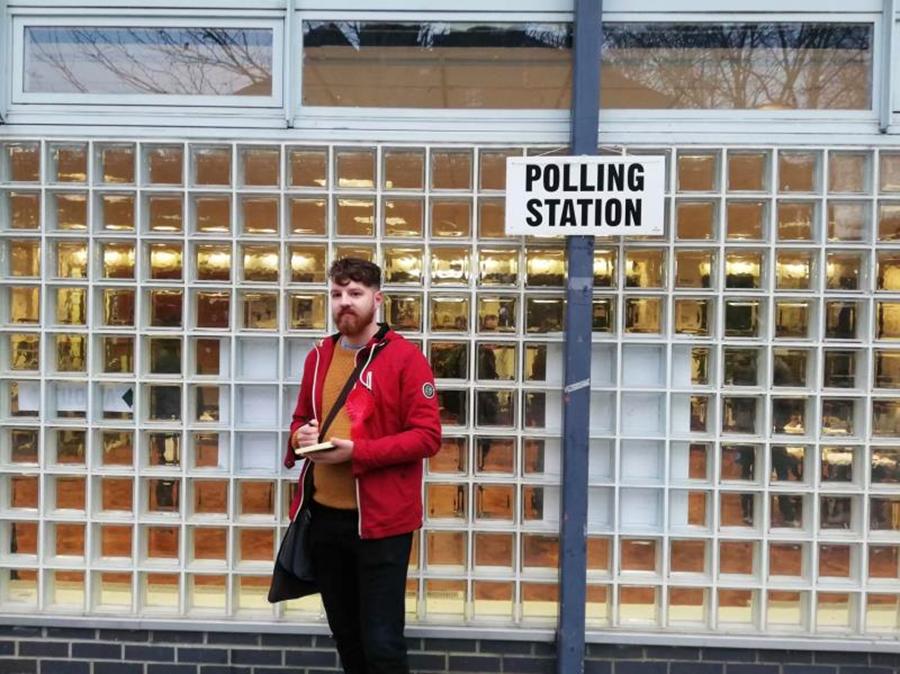
Can democratic elections divided by various regions strengthen local identity? I don’t think so. Last year, I went to interview Islington North, the constituency of former Labor Party leader Corbin, and interviewed about 8-9 voters who went to the polling station to vote. I asked them what topics they were concerned about this year. Everyone was basically talking about Brexit and NHS. No one said anything about improving the infrastructure around Islington North and strengthening community security.

I remember a Muslim voter wearing a headscarf. She originally supported the Liberal Democratic Party, but she changed her position and voted for Corbin. Then she asked her why. He said that because her daughter was going to college, Corbin’s policy was to advocate nationalization, which would lead to a reduction in college tuition, at least beneficial to his family. In this way, when an individual votes, he rarely thinks about the community, but starts from his own interests or his small family.

For example, policy voting at the national level, such as Brexit or free medical care, may lead to a large number of voters who hold the same position, but in fact, they have no other consensus except voting. Once their own situation changes, they will easily change their positions. For example, when the new immigrant’s economic conditions improve and he moves out of the original community, his political position will soon change, and he will not care about the local area when he stays in the original community.

Of course, in some people whose situation has remained stable for a long time, the situation will definitely be very different, and I think there is room for further explanation.

Do you have any concerns about British local media? What is the income of media practitioners?

Zhang | The words of the British media are deeply bound to British politics. They need public opinion support in all kinds of government decision-making or election issues, and they are inseparable from the media. For example, in the past, there were a lot of doubts on Twitter, but it needs to be clarified that group immunization is not the official policy of Britain. It was the Chief Science Officer who first put forward this concept, and later, it was because of many objections from the people that the government began to adopt stricter policies such as grounding orders. In fact, it’s not just an epidemic. Every policy or bill of the British government will be released to major media before it is actually put into operation, to see the reaction of public opinion, and then the voices of the people can be uploaded through political channels and reflected directly through the media. With this interactive discussion process, everyone has psychological expectations for it, so the policy is not released arbitrarily, but only after the participation of the media and a wide range of public opinions.

In addition, the media are also divided into camps. For example, The Guardian is a typical left-wing media, while The Times and The Telegraph support the Conservative Party. Elections or various political games also require public opinion wars. At this time, the media in each camp will also do some supervision and propaganda, expose the black material of the other camp, and investigate some fraud in depth. This is what the Guardian does best. Journalists often make unannounced visits and report to politicians. For example, in this epidemic, a secret investigation by the Guardian revealed that a purchasing supervisor of NHS set up a company during the epidemic to sell a large number of personal protective equipment privately for profit, which is poking the pain point of the British government’s anti-epidemic policy.

There is also a special emphasis on media independence, but I think it is inevitable whether there will be internal interest transfer or the tendency of media reporters’ own values. We can only say that we will strive to maintain the independent status of the media in the system design, such as relying on the market for income and not accepting political funding, and mutual supervision between the media has always existed.

As for the treatment of British media practitioners, generally speaking, it is definitely not a high-paying profession. The annual salary of the Guardian reporter is only in the early 20,000 pounds, but the average annual salary of the financial services industry in the City of London can reach nearly 70,000 pounds. Many former senior government officials will enter the media after leaving office. For example, george osborne, the former chancellor of the exchequer, is the editor-in-chief of London Evening Standard. In addition, media reporters can also move to the political field. Boris was a reporter for The Times, The Telegraph and The Observer before he entered politics.

Postscript: the words of the interviewee

Being a journalist in the UK started by accident, but it left a great impression on my career in the UK, which not only allowed me to capture vivid details when the democratic system took root, but also made me understand the importance of information in personal empowerment. I have always regarded Britain as the first stop to know the world, and I hope to remain a bystander in the future, observing and recording the scenery in different cultural fields. Wish, always on the road, keep walking.

Wen | Promise Millennium Snow

Figure | Zhang Xue

Original title: "Dialogue with Zhang Xue: I am a reporter in the UK | Wai Furnace FDU"

Read the original text

Strengthen top-level design, improve standards and norms, and promote the sustainable and healthy development of "Internet+government services"

  The CPC Central Committee and the State Council attached great importance to the work of "Internet+government services". In April 2016, General Secretary of the Supreme Leader pointed out at the symposium on network security and informatization that it is necessary to promote the modernization of the national governance system and governance capacity through informatization, coordinate the development of e-government, and build an integrated online service platform. Premier Li Keqiang proposed in the government work report of the "two sessions" in 2016 that "Internet+government services" should be vigorously promoted, data sharing among departments should be realized, and residents and the masses should run less errands, handle affairs easily and avoid congestion. In order to strengthen the national integration of "Internet+Government Services" technology and the top-level design and standardization of the service system, according to the unified deployment, the E-government Office of the State Council organized and compiled the "Guide to the Construction of Internet+Government Services" technology system (hereinafter referred to as the "Construction Guide"), which was issued to all regions and departments in the name of the State Council in December 2016. The Construction Guide puts forward the information-based solutions and operation methods to standardize the operation of administrative power and optimize the supply of government services, which is of positive significance for promoting the standardized construction of "Internet+government services" platform in various regions and departments and promoting the sustainable and healthy development of "Internet+government services".

  First, the "Construction Guide" was compiled at the right time

  With the deepening of the transformation of government functions and the development of information technology, online government service has become an important way for the government to provide services to the society and the public, and "Internet+government service" is gradually becoming a new way, new channel and new carrier to innovate government management and service. It can be said that the current promotion of "Internet+government services" is just the right time, with foundation, conditions and motivation. It is a major measure for governments at all levels to deepen reform and actively adapt to the situation. It is of great significance for accelerating the transformation of government functions, improving the efficiency of government services, deepening mass entrepreneurship and innovation, further stimulating market vitality and accelerating the formation of new development momentum.

  Strengthening the national integration of "Internet+government services" technology and the top-level design of service system is not only an important measure to implement the relevant decision-making arrangements in the State Council, but also an urgent need for various regions and departments to promote the work of "Internet+government services". At the same time, the construction of online government service platform in various regions and departments has achieved positive results. However, due to the separate construction, there are great differences between departments and regions, the affairs are not comprehensive, the standardization, fineness and convenience of service information are not high enough, online and offline connectivity is not smooth, cross-regional and cross-departmental information sharing is difficult, business collaboration is difficult, and basic support such as security and identity authentication is insufficient. Many comrades in local departments have reported that the construction of government service technology system is of overall significance. If it is not unified in the top-level design perspective, new information islands and information fragmentation will be formed. It is urgent to strengthen overall planning from the national level and standardize and guide the construction of government service platforms from the technical and content levels.

  In order to implement the spirit of leading comrades’ important instructions on promoting "Internet+government services", the E-government Office of the State Council focused on the construction of "Internet+government services" platform, information sharing, interconnection and other aspects to promote the pilot demonstration and technical system construction of "Internet+government services". First, organize relevant provinces and cities to carry out pilot demonstrations. Since the beginning of 2016, focusing on the outstanding problems in government services, we have organized Jiangsu, Zhejiang, Guizhou, Gansu and Qingdao to carry out the pilot work of "Internet+government services" to solve a number of blocking points and pain points that restrict the whole online service, improve the integrated support capacity of government services, explore effective methods to realize cross-regional and cross-departmental information sharing, and initially establish a clearly classified, objective and comprehensive evaluation and assessment system. The pilot work was fully affirmed by the leading comrades in the State Council, and it also provided examples and experiences for improving the pertinence and operability of the Construction Guide. The second is to organize the preparation of the "Internet+Government Services" technical system construction guide. Compiling the Construction Guide is not only the key task of the Guiding Opinions of the State Council on Accelerating the Work of Internet+Government Services, but also the key link of the work of Internet+Government Services. The compilation of "Construction Guide" lasted for nearly one year, and received strong support from various regions and departments. We tried to put forward the implementation path and operation method around the last mile of "Internet+government service" from the perspective of the role of informatization through the compilation of the guide.

  Two, the preparation of the "Construction Guide" is a process of building consensus and solving difficult problems.

  (A) the main preparation process

  The E-government Office of the State Council officially started the compilation of the Construction Guide in January 2016. First, a working mechanism with extensive participation of relevant parties has been established. Invite the heads of five local government service agencies and e-government agencies in Jiangsu, Zhejiang, Guizhou, Gansu and Qingdao to set up special working groups; Set up an overall group led by the State-run E-government Office and an expert group composed of experts in e-government related fields; Invite research institutions such as National School of Administration and National Information Center as supporting units; Establish normal working contact with the central network information office, development and reform commission and other functional departments. The second is to carry out in-depth research and discussion exchanges. Organized a technical training and exchange meeting for the construction of "Internet+Government Services" platform for 31 provinces (autonomous regions and municipalities directly under the Central Government); Held a centralized research meeting attended by 10 regions including Beijing, Shanghai, Fujian and Guangdong; Go to relevant areas to carry out field research; Relying on the "Internet+Government Services" series forums of the National School of Administration, some local departments and experts were organized to hold special seminars. Through extensive investigation, we have a comprehensive understanding of the experience, practices and existing problems of various departments in various regions, as well as opinions and suggestions on the compilation of the guide. The third is to combine the pilot demonstration work and key technology research, comprehensively sort out and summarize the current situation and common problems of government services in various regions and departments, and fully absorb the achievements and experiences of exploration and practice in promoting the construction of government service halls and online government service platforms in Beijing, Shanghai, Jiangsu, Zhejiang, Fujian, Guangdong, Hainan, Guizhou, Gansu, Ningxia, Shenzhen, Qingdao, Nanjing and other regions.Organize forces to focus on tackling key problems and prepare the first draft of the Construction Guide. The fourth is to solicit opinions from relevant localities, departments and experts. It has held many expert argumentation meetings, local department symposiums and consultation meetings, and solicited opinions from local departments in writing after the first draft was formed. According to the opinions and suggestions of various departments in various regions, it has been revised and improved many times.

  (B) several principles to grasp in the preparation work

  First, adhere to the problem orientation. In view of the difficulties, pain points and blocking points in online government service, such as nonstandard content, inconvenient service, non-interoperability of online government service platforms, non-sharing of data, poor online and offline connectivity, and insufficient standardization of government service, this paper deeply analyzes the reasons, studies and formulates solutions, optimizes the government service structure, improves the construction mechanism, and strives to break through the information barrier. The second is to strengthen the top-level design. According to the requirements of national chess game and local conditions, do a good job in the top-level design of "Internet+government services" and gradually establish technical standards and management norms covering all aspects of the whole process of "Internet+government services". The third is to promote resource integration. Make full use of existing facilities and data resources, optimize and improve the construction level of existing government service platforms in various regions and departments, so as to make up the position and avoid starting a new stove. Guided by norms and supported by platforms, we will give full play to the role of public "channels" and common support, and promote cross-regional, cross-departmental and cross-disciplinary information sharing and business collaboration. The fourth is to pay attention to open collaboration. Make full use of Internet thinking, government and social forces, fully absorb the practical results of pioneering regional exploration, take into account the development reality of different regions, and provide different construction modes and application depth versions for various regions and departments to choose according to the actual situation, focusing on popularization, replication and sustainability, and striving to highlight operability, iteration and foresight.

  (3) The key problems to be solved in the guide

  Focusing on solving the outstanding problems existing in the "streamline administration, delegate power, strengthen regulation and improve services", such as the difficulty in handling affairs, examination and approval, running errands, and many certificates, the Construction Guide focuses on the key links of "Internet+government services" business support, basic platforms, key technologies, evaluation and assessment, clarifies the technical framework and service specifications, and formulates technical schemes, management methods and standards for promoting cross-regional and cross-departmental platform interoperability, mutual recognition of licenses, and data exchange. Strengthen the top-level design and standardization of the national integrated "Internet+government service" system, promote the cracking of "information islands" and "data chimneys", so that information can "run more roads" and enterprises and the masses can "run less errands". First, in order to solve the problems of incomplete, irregular and inconvenient online affairs, standardize the construction of business support system, promote the standardization of matters list, work guide, detailed review, collaborative business handling and dynamic management of matters; Second, in view of the problems of non-interoperability and data sharing of online government service platforms, strengthen the construction of basic platform system, realize unified declaration, unified acceptance, centralized handling, unified feedback and whole process supervision of government services, and promote platform integration and data sharing; Third, in view of the general technical obstacles to the development of online government services, improve the construction of key support technology systems, and promote the construction of unified online identity authentication, unified electronic license database, and the application of big data and cloud computing in government services; Fourth, in view of the lack of user experience and evaluation methods of government services, we will promote the construction of evaluation and assessment system, and promote the improvement of government services with electronic monitoring and third-party evaluation as the starting point.

  Third, strengthen overall planning, form a joint force, and promote the implementation of the "Construction Guide"

  Promoting "Internet+Government Services" is a systematic project involving the overall situation and far-reaching influence, and it is also a pioneering work. In the next step, in accordance with the decision-making arrangements of the CPC Central Committee and the State Council on promoting "Internet+government services", we will work closely with the relevant departments of the State Council and various departments in various regions, focusing on implementing the Guiding Opinions of the State Council on Accelerating the Work of "Internet+Government Services" and the Notice of the General Office of the State Council on Printing and Distributing the Guide for the Construction of the Technical System of "Internet+Government Services", and strive to reshape this relationship’s government functions and make it practical and convenient. In 2017, the E-government Office of the State Council, together with relevant parties, will strengthen the overall coordination, supervision and inspection, evaluation and evaluation of the implementation of the Construction Guide, do a good job in the publicity, interpretation and training of the Construction Guide, organize relevant regions and departments to carry out pilot demonstrations, supervise and inspect the implementation of the Construction Guide in a timely manner, promote the evaluation and evaluation of the online government service capabilities of various regions and departments in a timely manner, and guide and standardize the integration of online government services of various regions and departments. (Director, State Council E-government Office)
Lu Xiangdong)

Notice of the General Office of Hainan Provincial People’s Government on Further Improving the Delimitation of Permanent Basic Farmland and the Management of Facility Agricultural Land

General Office of Hainan Provincial People’s Government on Further Improving
Notice on Delineation of Permanent Basic Farmland and Management of Facility Agricultural Land
Qiong Fu Ban [2015] No.26

The people’s governments of cities, counties and autonomous counties and the units directly under the provincial government:

On January 5, 2015, the Ministry of Land and Resources and the Ministry of Agriculture jointly deployed the delineation of permanent basic farmland and the management of protected agricultural land. In order to implement the work arrangements of the Ministry of Land and Resources and the Ministry of Agriculture, and further improve the delineation of permanent basic farmland and the management of facility agricultural land in our province, with the consent of the provincial government, relevant matters are hereby notified as follows:

First, fully understand the importance and urgency of doing a good job in the delineation of permanent basic farmland and the management of protected agricultural land in the new period.

At present, the situation of cultivated land protection and food security in China is still very grim. The CPC Central Committee and the State Council clearly put forward that it is necessary to consolidate the material foundation of grain production, ensure that grain is basically self-sufficient and that rations are absolutely safe. Keeping the red line of cultivated land and basic farmland is the foundation and lifeline of agricultural development and agricultural modernization, and is the cornerstone of national food security. Delineating permanent basic farmland and supporting the development of protected agriculture are of great significance to building a tropical modern agricultural base in our province and promoting the construction of Hainan International Tourism Island. All cities, counties and departments should conscientiously study and profoundly understand the decision-making spirit of the CPC Central Committee and the State Council, improve their ideological understanding, unify their actions with the major decision-making arrangements of the central government, earnestly enhance their sense of responsibility and responsibility, and further improve the delineation of permanent basic farmland and the management of protected agricultural land. It is necessary to pay equal attention to quantity and quality, strictly delimit and specially protect permanent basic farmland, and tighten the "fence" for farmland protection; It is necessary to actively support and strictly regulate the management of protected agricultural land, prohibit the "non-agricultural" of cultivated land, promote the adjustment of agricultural industrial structure and the development of modern agriculture, and lay a solid foundation for national food security.

Two, to further improve the delineation of permanent basic farmland, the implementation of special protection of permanent basic farmland.

(a) to speed up the delineation of permanent basic farmland. According to the requirements of the Notice of the Ministry of Land and Resources and the Ministry of Agriculture on Further Improving the Delineation of Permanent Basic Farmland (No.128 [2014] of the Ministry of Land and Resources) and the provisions of the technical regulations for the delineation of basic farmland, in accordance with the requirements of the Work Plan for the Delineation of Permanent Basic Farmland in Hainan Province (see Annex), on the basis of the existing achievements in the delineation of permanent basic farmland, According to the results of the second national land survey, the latest annual land use change survey, the overall land use planning, and the investigation and evaluation of cultivated land quality grades, combined with the problems found in the demarcation of permanent basic farmland in the audit of land transfer revenue and expenditure and cultivated land protection in cities and counties of our province, in the order of cities (towns) from big to small, space from near to far, cultivated land quality and fertility grade from high to low, Will be approved by the permanent basic farmland delineation tasks timely landing to households, the above picture storage, focusing on the city (town) surrounding, traffic along the existing easily occupied high-quality arable land priority as permanent basic farmland, will not meet the requirements of the delineation of land types designated permanent basic farmland, to ensure that the permanent basic farmland layout is basically stable, the number is not reduced, the quality is improved. All cities and counties should complete the delineation of permanent basic farmland and the improvement of results before the end of June 2016.

(two) strict requirements for the delineation of permanent basic farmland. The delineation of permanent basic farmland in cities and counties should be promoted simultaneously with the adjustment and improvement of the overall land use planning, and coordinated with the delineation of urban development boundaries and ecological protection red lines. It is necessary to strictly demarcate permanent basic farmland in accordance with the clear procedural requirements of investigation, verification and proof-giving, demonstration and approval, formulation and implementation of the work plan, and follow the principle of giving priority to farmland protection and paying equal attention to quantity and quality, so as to achieve "landing blocks, clarifying responsibilities, setting signs, building lists and entering the library". The existing basic farmland reserved in the achievements of basic farmland demarcation should be cultivated land, adjustable land preparation and other agricultural land that has been identified as the production base of famous and special new products in the last round of basic farmland demarcation; For the construction land, unused land and agricultural land that can not be adjusted and can not meet the quality standards of cultivated land, it is necessary to set aside basic farmland; The newly designated basic farmland should be high-quality current farmland with a slope below 25 degrees and concentrated contiguous areas. Without the approval of the provincial government, non-cultivated land may not be included in basic farmland.

(3) Strengthen the special protection of permanent basic farmland. It is necessary to make overall plans for regulatory protection, constructive protection and incentive protection of permanent basic farmland. Once the permanent basic farmland is demarcated, it shall not be adjusted at will. Except for the inevitable occupation of basic farmland by national defense military and major infrastructure construction projects, other construction projects are not allowed to adjust the designated basic farmland. Urban construction should jump out of the permanent basic farmland that has been demarcated, and realize the development in groups and series. It is not allowed to occupy basic farmland to engage in new areas, nor to illegally enclose or occupy basic farmland in the name of various parks and development zones. Strengthen land use control, non-agricultural construction occupation of basic farmland must be reported to the State Council for approval according to procedures, and no other unit or individual may illegally approve the occupation of basic farmland; It is necessary to combine the implementation of land remediation projects, implement the stripping and reuse of cultivated layers, increase the construction of high-standard farmland, and timely classify the completed high-standard farmland into permanent basic farmland; To establish a compensation mechanism for cultivated land protection, the provincial, city and county governments should arrange funds to give appropriate economic compensation to rural collective economic organizations, state-owned farms and other responsible units and land contractors who undertake the protection of cultivated land and basic farmland, so as to improve the enthusiasm of units and land contractors who undertake the protection responsibility to protect cultivated land and develop production.

Three, standardize the management of protected agricultural land, and promote the healthy development of protected agriculture

(a) the implementation of special land policy to support the development of protected agriculture. Cities and counties should conscientiously implement the spirit of the Notice of the Ministry of Land and Resources and the Ministry of Agriculture on Further Supporting the Healthy Development of Facility Agriculture (No.127 [2014] of the Ministry of Land and Resources), fully consider the needs of facility agriculture development and large-scale grain production, and further increase the policy support for facility agricultural land. Clarify the scope of land policy support, and the land for production facilities directly used for agricultural products production, land for ancillary facilities for auxiliary production and land for supporting facilities necessary for large-scale grain production in the facility agriculture project area shall be managed according to agricultural land, and there is no need to go through the examination and approval procedures for agricultural land conversion; Improve land use management mode, change the original land use audit system into filing system, and improve management efficiency by standardizing land use agreement behavior, announcing land use conditions, strengthening township government supervision, filing and verification, etc. Encourage economical and intensive land use, guide the operators of facility agricultural projects to jointly build and jointly use facilities such as drying yards, grain storage and agricultural machinery sheds according to local conditions, and improve the use efficiency of agricultural facilities and land use efficiency; Actively disclose policy provisions, timely disclose relevant planning, land use standards and management requirements, and provide active services and specific guidance to promote the healthy and orderly development of facility agriculture.

(two) strictly regulate the management of agricultural land facilities. Cities and counties should actively guide the rational location of protected agricultural land in accordance with the overall land use planning and agricultural development planning. Facilities construction should make full use of unused land and non-cultivated land such as barren hills, slopes and beaches, and do not occupy or occupy less cultivated land to avoid excessive occupation of high-quality cultivated land. Strengthen the filing and review of land use agreements, facilities construction plans, contract for the transfer of contracted management rights, etc. If it does not meet the relevant provisions of agricultural land for facilities, it shall not start construction, and strictly control the scale of land for ancillary facilities and supporting facilities. If the site selection is unreasonable, the supporting facilities exceed the standard, and the content of land reclamation is lacking, it is necessary to urge and correct. Facility agricultural land shall not change the land use, and it is prohibited to use facility agricultural land for other non-agricultural construction without authorization or in disguise; It shall not exceed the standard of land use, and it is forbidden to expand the scale of land use for facilities without authorization or expand the scale of land use for facilities in disguise by applying for land in several times; The nature of facilities directly engaged in or serving agricultural production shall not be changed, and it is forbidden to use facilities for other operations without authorization. Use land strictly in accordance with the purposes defined in the overall land use planning. It is forbidden for any unit or individual to change the use of agricultural land without authorization and illegally build non-agricultural supporting facilities such as golf courses, villas, expert buildings, farmhouses, clubs, accommodation and catering, factory agricultural products processing and large parking lots under the name of "leasing", "cooperative development" and "transfer of contracted management rights". Strengthen daily land law enforcement inspections, and carry out facilities construction and land use that do not meet the specified requirements, so as to find, stop, report and investigate early.For unauthorized or disguised use of facility agricultural land for other non-agricultural construction, it should be severely punished according to the law and regulations; Unauthorized expansion of the scale of land used for ancillary facilities or sub-declaration of land used to expand the scale of land used for facilities in disguise, and unauthorized change of the nature of agricultural production facilities for other operations should be stopped in time, ordered to make corrections within a time limit, and the relevant personnel should be held accountable according to laws and regulations.

Fourth, the job requirements

(1) Strengthen leadership and implement responsibilities. City and county governments should implement the main responsibility for the delineation of permanent basic farmland and earnestly strengthen leadership. It is necessary to set up a leading group headed by the responsible comrades of the municipal and county governments, with the responsible comrades of the departments of land and resources, agriculture, finance, housing and urban and rural construction, ecology and environmental protection, forestry, etc. as members, and strengthen the overall coordination of the demarcation of permanent basic farmland. It is necessary to formulate a work plan, clarify departmental responsibilities and work plans, implement staff and work funds, and ensure that work tasks are completed on time with good quality and quantity. The Provincial Department of Land and Resources and the Provincial Department of Agriculture are responsible for the supervision and guidance of the demarcation of permanent basic farmland, and set up a joint working group to strengthen the guidance, supervision and inspection of the demarcation of permanent basic farmland, regularly report the progress, study the problems in time, focus on the supervision of cities and counties with poor work, and promote rectification. It is necessary to incorporate the delineation of permanent basic farmland and the management of protected agricultural land into the assessment content of the responsibility target of cultivated land protection of city and county governments, and earnestly strengthen inspection and assessment. Establish a regular reporting and notification system. From the date of notification, cities and counties should regularly report the work progress to the Provincial Department of Land and Resources and the Provincial Department of Agriculture at the end of each quarter.

(two) do a good job of convergence, strengthen departmental cooperation. Delineation of permanent basic farmland should be promoted simultaneously with the adjustment and improvement of the overall land use planning, and coordinated with the delineation of urban development boundaries and ecological protection red lines. To implement the special support policy for facility agriculture, it is necessary to make a good connection between the development plan of facility agriculture and the overall land use plan. Provincial, municipal and county departments of land and resources and competent agricultural departments should actively cooperate with relevant parties to enhance cooperation awareness, strengthen departmental cooperation, form joint efforts, and jointly promote the delineation of permanent basic farmland and standardize the management of protected agricultural land.

(three) to strengthen law enforcement and supervision, and seriously investigate and deal with illegal acts. It is necessary to include the delineation of permanent basic farmland and the management of the use of protected agricultural land in the work priorities of land and resources management departments and agricultural authorities at all levels, and strengthen supervision and inspection. Make full use of land surveillance film law enforcement supervision and inspection, land law enforcement dynamic inspection, land change investigation and other means, and dare to touch the real and hard to deal with illegal acts in farmland protection and facility agriculture construction, and severely investigate and deal with them according to law.

(4) Do a good job in guiding public opinion and create a good atmosphere. Cities and counties should make full use of various publicity media and adopt various methods to widely publicize and report the great significance of strictly observing the red line of cultivated land and the red line of basic farmland, so that the policy of cultivated land protection can be deeply rooted in the hearts of the people. Good practices, good experiences and good models in the delineation of permanent basic farmland and the management of protected agricultural land should be publicized, reported and popularized in a timely manner. It is necessary to give full play to the role of news media in public opinion supervision in strengthening the protection of basic farmland, supporting and standardizing the management of facility agricultural land, creating a good public opinion atmosphere and ensuring the smooth progress of the work.

Attachment: Work Plan for Delimitation of Permanent Basic Farmland in Hainan Province

General Office of Hainan Provincial People’s Government
March 2, 2015

(This piece is made public voluntarily)

Attachment:

Work plan for delineating permanent basic farmland in Hainan Province

In order to implement the spirit of the Notice of the Ministry of Land and Resources and the Ministry of Agriculture on Further Delineating Permanent Basic Farmland (No.128 [2014] of the Ministry of Land and Resources), do a solid job in delineating permanent basic farmland in our province, and further strengthen the protection of cultivated land, this plan is formulated in combination with the actual situation in our province.

I. Purpose of work

According to the new requirements of the Ministry of Land and Resources and the Ministry of Agriculture on demarcating permanent basic farmland, on the basis of the existing achievements of demarcating permanent basic farmland, the existing high-quality cultivated land and built high-standard cultivated land around cities (towns) and along traffic lines will be preferentially classified as permanent basic farmland, and those that do not meet the demarcating requirements will be demarcated as permanent basic farmland, so as to ensure that the layout of permanent basic farmland is basically stable, the quantity is not reduced and the quality is improved, and that the area of real high-quality cultivated land in our province is basically stable within a certain period.

Second, the task

(a) sort out the permanent basic farmland that has been demarcated, and further improve the work results according to the results of the second national land survey and the evaluation of cultivated land quality, following the principle of giving priority to cultivated land protection and paying equal attention to quantity and quality, and in accordance with the requirements of basically stable layout, no reduction in quantity and improvement in quality.

(II) On-the-spot verification of the quantity, quality and distribution of existing cultivated land around the city (town) and along the traffic line that is not included in the basic farmland protection area, and the demarcation of the urban development boundary and the red line of ecological protection, the high-quality cultivated land around the city (town) and along the traffic line that should be included but not included and the built high-standard cultivated land should be included in the basic farmland for permanent protection.

Third, the delineation requirements

The delineation of permanent basic farmland in cities and counties should be promoted simultaneously with the adjustment and improvement of the overall land use planning and the registration and certification of rural land contractual management rights, so as to ensure that the layout of the adjusted and improved basic farmland is consistent with that of the permanent basic farmland.

(1) Cultivated land designated as permanent basic farmland in priority.

1. The existing cultivated land around the city (town) that has not been classified as permanent basic farmland and whose soil fertility level has reached the average level of this city and county;

2. Existing cultivated land whose quality grade and soil fertility grade have not been classified as permanent basic farmland along the traffic line have reached the average level of this city and county;

3. Newly built high-standard farmland that has not been classified as permanent basic farmland after land consolidation;

4. 268,000 mu of cultivated land located in Sanya, Ledong and Lingshui, which is suitable for scientific research and breeding in Nanfan and classified as Nanfan Scientific Research and Breeding Reserve;

5. "Regulations on the Protection of Basic Farmland" stipulates that other cultivated land that should be classified as permanent basic farmland but has not been classified as priority.

(2) Cultivated land with permanent basic farmland should be set aside.

1. The cultivated land that is planned to be returned to forests, grasslands and lakes in the new general plan of returning farmland to forests and grasslands approved by the State Council;

2. With the approval of the provincial government, the agricultural departments at or above the county level shall, jointly with the environmental protection departments at the same level, monitor and evaluate the cultivated land that has been seriously polluted and cannot be treated;

3. Due to natural disasters and production and construction activities, the cultivated land that cannot be reclaimed is seriously damaged.

In the process of demarcation, it is found that there are construction land, unused land and other agricultural land whose quality does not meet the requirements in the current basic farmland, which should be demarcated and supplemented with permanent basic farmland whose quality meets the requirements. Without the approval of revision or adjustment in accordance with the law, the overall land use planning of cities and counties shall not be used to adjust the layout of permanent basic farmland without authorization, and the cultivated land in the current basic farmland shall be set aside.

IV. Work Steps and Results Requirements

(1) Work steps.

1. Investigate the bottom. According to the basic farmland protection objectives of cities and counties determined by the adjustment and improvement of the overall land use planning of the whole province and cities and counties, based on the latest land change survey results, the current overall land use planning results, the evaluation results of cultivated land quality and soil fertility, etc., the methods of indoor analysis and field investigation are adopted. The Provincial Department of Land and Resources and the Provincial Department of Agriculture are responsible for analyzing and evaluating the distribution, quantity, quality and concentration of existing cultivated land around cities (towns) in cities and counties (except Haikou and Sansha) (including permitted construction areas and conditional construction areas) that are not classified as basic farmland, and putting forward the preliminary task of prioritizing the classification of urban (towns) as permanent basic farmland. The preliminary task of Haikou City was issued by the Ministry of Land and Resources and the Ministry of Agriculture.

2. verify the evidence. According to the preliminary tasks assigned by the Provincial Department of Land and Resources and the Provincial Department of Agriculture, the relevant departments of land, agriculture, housing, urban and rural construction, ecological and environmental protection, etc. organized by the municipal and county governments, investigated and verified the existing cultivated land put forward in the preliminary tasks one by one, and put forward the tasks that can be designated as permanent basic farmland. For the cultivated land around the city (town) and along the traffic line that cannot be designated as permanent basic farmland, the reasons shall be explained to the Provincial Department of Land and Resources and the Provincial Department of Agriculture, and relevant certification materials shall be listed; Haikou explained the reasons to the Ministry of Land and Resources and the Ministry of Agriculture, and provided relevant supporting materials.

3. Demonstration and verification. The Provincial Department of Land and Resources and the Provincial Department of Agriculture are responsible for the approval and release of the tasks of demarcating basic farmland around cities (towns) in relevant cities and counties, and the tasks of demarcating Haikou City are approved and released by the Ministry of Land and Resources and the Ministry of Agriculture.

4. Make a plan. The relevant cities and counties shall, according to the tasks assigned by the Provincial Department of Land and Resources and the Provincial Department of Agriculture, organize the land and agricultural departments of the cities and counties, prepare the plan for delineating permanent basic farmland of the cities and counties according to the actual situation, and submit it to the Provincial Department of Land and Resources and the Provincial Department of Agriculture for review with the consent of the cities and counties. The delimitation plan of Haikou City was approved by Haikou Municipal Government, reported to the Ministry of Land and Resources and the Ministry of Agriculture, and copied to Guangzhou Bureau of State Land Supervision. The plan for delineating permanent basic farmland in cities and counties is included in the overall land use planning adjustment and improvement plan of cities and counties.

5. Organize implementation. The demarcation of permanent basic farmland is based on the administrative regions of cities and counties, and is organized and implemented by the competent departments of land resources and agriculture of cities and counties under the unified leadership of the municipal and county governments. 

(2) Requirements for results.

On the basis of the existing achievements in the demarcation of permanent basic farmland, we will further update and improve the achievements in the demarcation of permanent basic farmland.

1. Implement basic farmland plots. On the basis of the original implementation of the basic farmland plots, the basic farmland protection plots will be implemented one by one according to the specified requirements, and the information such as the location, boundary, land type, area, quality, etc. of the basic farmland plots will be clarified.

2. Update and improve the related charts. On the basis of the original basic farmland related chart book, the adjusted permanent basic farmland area is calculated and summarized, and the chart book is updated and improved. First, the preparation of maps, including city and county basic farmland distribution map, township and village basic farmland protection map and standard framing basic farmland protection map; The second is to fill in the form, fill in the basic farmland status registration form, the status summary table and the adjustment and demarcation balance table.

3. Establish a unified logo. On the basis of the unified identification of basic farmland, the permanent basic farmland areas around the city (town) and along the traffic line will be adjusted and included, and the establishment of basic farmland protection signs, publicity signs and protection boundary markers will be supplemented and improved in accordance with the Provisions on the Use of Labels for Basic Farmland and Land Consolidation and the Establishment of Relevant Signs (No.304 [2007] of the Ministry of Land and Resources) and relevant design specifications.

4. Implement the responsibility to protect. On the basis of the original signed letters of responsibility for the protection of basic farmland, the signing of letters of responsibility for the protection of basic farmland will be supplemented and improved to adjust the area of permanent basic farmland, and the scope, land type, area, plot, safeguard measures, rights and obligations of the parties, rewards and penalties for the protection of basic farmland will be clarified. At the same time, combined with the registration and certification of rural land contractual management rights, the basic farmland will be marked on the certificate of rural land contractual management rights, clearly identified to specific farmers, and implemented in plots.

5. Establish a database of basic farmland. On the basis of the preliminary establishment of permanent basic farmland database, according to the adjustment of permanent basic farmland, update and improve the construction of basic farmland database in this city and county, and use the quality inspection software issued by the Ministry of Land and Resources to carry out quality inspection, and report it to the Provincial Department of Land and Resources after passing the inspection, which will summarize and report it to the Ministry of Land and Resources for review. Cities and counties shall be responsible for the legality, compliance, authenticity and integrity of database information within their respective administrative areas.

6. Acceptance and filing. In accordance with the relevant provisions of the Decision of Hainan Provincial People’s Government on Decentralizing Administrative Matters (Decree No.216 of the provincial government), the results of the delineation of permanent basic farmland shall be checked and accepted by the municipal and county governments and submitted to the Provincial Department of Land and Resources and the Provincial Department of Agriculture for review and filing. The data results after filing were timely included in the land use change survey of the year.

V. Time schedule

(a) the delineation of permanent basic farmland in cities and counties and the improvement of the results should be fully completed before June 2016.

(II) After this scheme is issued, the municipal and county governments should set up a leading group for the demarcation of permanent basic farmland, with the responsible comrades of the municipal and county governments as the team leader and the responsible comrades of the departments of land and resources, agriculture, finance, housing and urban and rural construction, ecological environment protection and forestry as the team members, to deploy the demarcation of permanent basic farmland, coordinate the demarcation of permanent basic farmland with the demarcation of urban development boundaries and ecological protection red lines, and implement the staff and work funds.

(3) Within 3 months after this scheme is issued, the Provincial Department of Land and Resources and the Provincial Department of Agriculture will complete the preliminary task of delineating permanent basic farmland in relevant cities and counties; Within 9 months, the relevant cities and counties will complete the verification and proof of the existing cultivated land around the city (town), the Provincial Department of Land and Resources and the Provincial Department of Agriculture will complete the approval and release of the task of delineating permanent basic farmland, and the relevant cities and counties will complete the preparation of the delineation plan and report it to the Provincial Department of Land and Resources and the Provincial Department of Agriculture.

(4) Within 3 months after the completion of the adjustment and improvement of the overall land use planning in cities and counties, all permanent basic farmland delineation and achievements improvement work shall be completed, and acceptance shall be organized according to regulations, and reported to the Provincial Department of Land and Resources and the Provincial Department of Agriculture for review and filing.

How to do nucleic acid detection? What should I pay attention to? How to query the results? Look here →

According to National Health Commission’s clear instructions

"Returnees need to hold.

Negative proof of nucleic acid detection within 7 days. "

These days,

The number of citizens who came to the hospital for nucleic acid testing increased significantly.

In order to do a better job of willing inspection,

The county people’s hospital has taken many measures simultaneously.

Ensure the nucleic acid detection work

Safe, orderly and efficient.

01

Left bracket

Simplification of nucleic acid detection process

Left bracket

According to the actual situation of nucleic acid detection in outpatient department, the hospital optimized the whole detection process for the first time, and specially opened two artificial windows for nucleic acid detection registration, which integrated the original three processes of registration, billing and payment into one step, greatly reducing the waiting time for everyone to queue up. The specific process is as follows:

For a detailed understanding of the whole detection process, click on the video to watch:

matters need attention

Before detection

Try to avoid eating 2 hours before nucleic acid detection to avoid vomiting;

Smoking, drinking and chewing gum should not be allowed 30 minutes before sampling;

When detecting

Collecting oropharyngeal swab: The examiner leans back and opens his mouth to make an "ah" sound, which is helpful to expose the throat. During the process, symptoms such as irritating dry cough, nausea and vomiting may occur. The examiner can cooperate with the collector to relax and take a deep breath to reduce discomfort. Attention should be paid to hand hygiene before and after nucleic acid detection, and hands can be wiped with hand-free disinfectant.

After testing

Wear a mask correctly after collection and leave the collection site immediately to avoid spitting and vomiting around the collection site. Pay attention to hand hygiene before and after nucleic acid detection, and wipe your hands with hand-free disinfectant or sterile cotton pads.

Key points: The inquiry method of test report is as follows:

Outpatient self-service registration machine (24 hours service):

The inspector can print the inspection report on the outpatient self-service registration machine according to the time on the bar code.

Wechat WeChat official account query:

Please scan the QR code below and log in to the WeChat WeChat official account of Pujiang County People’s Hospital → click self-service → report for inquiry.

One-stop service center:

If the self-service machine or WeChat can’t be inquired, you can also go to the consultation window of the one-stop outpatient service center (located on the right side of the outpatient hall) to inquire.

02

Left bracket

Nucleic acid detection door-to-door service

Left bracket

While further optimizing the nucleic acid detection process in Covid-19, the hospital specially organized medical staff to go deep into the enterprise to provide on-site nucleic acid detection service for migrant workers returning home, in order to avoid the hidden dangers of prevention and control in hospitals. Up to now, the hospital has completed more than 1000 on-site nucleic acid testing services.

Original title: "How to do nucleic acid detection? What should I pay attention to? How to query the results? Look here → "

Read the original text

How does a small moon cake become a "reunion cake"? The Origin and Customs of Mid-Autumn Festival

  In three days, it will be the traditional Mid-Autumn Festival in China. Mid-Autumn Festival, also known as Reunion Festival, August Festival, Mid-Autumn Festival and Autumn Festival. Because it is just half the value of Sanqiu, it is named Mid-Autumn Festival. Therefore, the moon is bright and round at night, so people take family reunion to enjoy the moon as the main activity, hoping for a happy reunion. Although it is a relatively late custom to extend family reunion from the Mid-Autumn Festival with the full moon, it is an ancient tradition in Chinese to pray for family reunion. Then let’s take a look at the origin and customs of the ancient Mid-Autumn Festival.

  □ Sun Xiaoming Sun Chenlong

  The origin of Mid-Autumn Festival

  And that custom of eate moon cakes.

  The origin of Mid-Autumn Festival can be traced back to the autumn worship and Yue Bai custom in the pre-Qin period. "The Book of Rites and the Moon Order" said that the Mid-Autumn Festival, "raise old age, give a few sticks, and eat porridge." There is no explicit reference to a certain day here, when it includes looking at the sun (15th). Mei Cheng’s "Seven Hair" explicitly mentioned the matter of making friends and watching Tao on August 15, and there was a sentence that "I will make friends with the governors from afar and go to watch Tao in Qujiang, a straight place". Autumn is the harvest season, and every family worships the land god. Over time, a series of customs have been formed around autumn worship. At that time, people also believed in the moon god, accompanied by a series of activities to worship the moon. Autumn Festival and Yue Bai custom laid the foundation for the Mid-Autumn Festival.

  In the Jin Dynasty, there was a Mid-Autumn Festival to enjoy the moon, and in the Tang Dynasty, it was quite popular to enjoy and play with the moon. Moon cakes appeared in the Tang Dynasty. According to the literature, once Tang Xizong ate delicious moon cakes in the Mid-Autumn Festival, he ordered them to be given to the new Jinshi. However, there was no such thing as "moon cake" in the Tang Dynasty, and it was not until the Song Dynasty that the name of moon cake came into being. In addition, people in the Tang Dynasty also like to eat a kind of food called "Playing Moon Soup" during the Mid-Autumn Festival, which is a special dessert made of longan, lotus seeds and lotus root starch.

  Watching the moon on the Mid-Autumn Festival night is the favorite of the Tang people, as evidenced by poems. "Mid-Autumn Festival" by Si Kongtu: "Everything feels leisurely outside autumn scenery. If there is no moon in this night, a year will be empty. " Cao Song’s Mid-Autumn Festival to the Moon: "Cloudless world in the autumn of March 35, watching the toad plate in Shanghai." Until the end of the day, I never took a private photo of a family. " It is a pity not to see the moon in the Mid-Autumn Festival. "A Tale of Sui and Tang Dynasties" said: "Li Su is hiding in shouyangshan, and he looks at the moon with his friends in mid-autumn and evening. He said,’ If there is no bright moon, don’t worry about killing people! "Enjoy the full moon in the Mid-Autumn Festival, think of relatives and friends, and have an elegant night. "The Legacy of Kaitianbao" records: "Su Xiang and Li Heng wrote letters to each other, and Xuanzong cared deeply for them. On the night of August 15, I stayed in the forbidden city for all the scholars to play with the moon and prepare a banquet of words. When the sky is cloudless and the moonlight is like day, Su Yue said,’ It’s clear and lovely, why use lamps and candles!’ So I removed it. "When enjoying the moon, the moonlight and the shadow of the moon are the most lovely, and there is no need for lights and candles to compete for glory.

  In the Song Dynasty, the court officially designated August 15th of the lunar calendar as the Mid-Autumn Festival. Su Dongpo enjoyed drinking in the Mid-Autumn Festival, and when he was drunk, he expressed his feelings for his younger brother, and wrote "Water Tune Songs", which is a masterpiece throughout the ages. "When will there be a bright moon, ask the sky for wine?" "People have joys and sorrows, and the moon is full of rain and shine. This matter is difficult to complete in ancient times. I hope that people will last for a long time, and they will be together for thousands of miles. " These sentences have become eternal songs. As a formal seasonal food, moon cakes also began in the Song Dynasty. In the Song Dynasty, mooncakes were already a snack variety operated by shops. Su Dongpo wrote a poem that "small cakes are like chewing the moon, with crispness and flavor in them", and the "crispness" and "flavor" in the poem revealed the main taste characteristics of moon cakes. Meng Liang Lu is a note written by Wu Zimu in the Song Dynasty, and it is a book dedicated to introducing the city features of Lin ‘an, the capital of the Southern Song Dynasty. According to this book, there were many kinds of snacks sold in Lin ‘an market at that time, such as hibiscus cake, chrysanthemum cake, plum cake, moon cake and so on.

  At the latest in the Ming Dynasty, mooncakes began to have the meaning of "reunion". In Ming Tian Rucheng’s "Journey to the West Lake", there is a record that "August 15th is called Mid-Autumn Festival", and people take mooncakes as their heritage and take the meaning of reunion. In the Ming Dynasty, the significance of mooncakes as symbolic food for the Mid-Autumn Festival was even more prominent. It was recorded in Liu Ruoyu’s "Deliberation in Records" in the Ming Dynasty: "On the fifteenth day, every family offered mooncakes and fruits, and after burning incense on the moon, they drank heavily, and most of them ended up at night. If there are any moon cakes left, they should still be collected in a dry and cool place, and they will be used by the family at the end of the year, which is also called’ reunion cake’. "

  There is also a folk legend about the "moon cake uprising" in the late Yuan Dynasty. According to legend, in order to consolidate its dominant position, the rulers of the Yuan Dynasty arranged a slave owner’s minion in every ten households, and only ten households were allowed to use a kitchen knife. The tyranny of the rulers of the Yuan Dynasty made the people unbearable, so the people secretly connected in series, wrote the uprising call of "August 15th, everyone should start work together" on a piece of paper, and hid it in a moon cake as a contact signal to hold an uprising, which overthrew the rule of the Yuan Dynasty in one fell swoop. Since then, moon cakes have become a must-eat food for the Mid-Autumn Festival.

  Tao Zongyi, a litterateur in the Yuan and Ming Dynasties, wrote "The Night of Mid-Autumn" in yuanshi county Yeting Ji. When the moon is bright and colorful, Emperor Nai holds a banquet in Zhang Le to recommend the preserved wings, the catfish in the autumn wind, the wine in Xuanshuang and the cake in Kazuki Watanabe musician. Among them, the cake in Kazuki Watanabe musician is similar to the moon cake. In the Ming Dynasty, "A Brief Introduction to the Scenery of the Imperial Capital" said: "On August 15th, when the moon is sacrificed, the fruit cake will be round; If you divide a melon, you must carve it with the wrong petals, such as lotus flowers. The moon cake bears fruit, and the relatives feed back, and the cake has a diameter of two feet. When a woman returns to Ning, she will return to her husband’s house one day, which is also called’ Reunion Festival’. " Moon cakes are also called "reunion cakes", and "Deliberate Records" says: "On the 15th of August, every family provides moon cakes, melons and fruits, and after burning incense on the moon, they drink a lot, and most of them end up at night. If there are any moon cakes left, they should still be collected in a dry and cool place, and they will be used by the family at the end of the year, which is also called’ reunion cake’. "

  In the Qing Dynasty, the people inherited the customs of ancient Yue Bai, enjoying the moon and eating moon cakes and fruits for the whole family. "Yanjing Years Old" also said: "Mid-Autumn moon cakes … the largest ones are more than a foot long, with the shape of a toad and a rabbit painted on the moon palace. Those who eat after the sacrifice and those who eat until New Year’s Eve are called’ reunion cakes’. " In the Qing Dynasty, there was a custom that "men don’t go to Yue Bai, and women don’t sacrifice stoves", so most activities in Yue Bai were attended by women and children. Before worshipping the moon, people first offer moon cakes, melons and other foods to the moon. After worshipping the moon, they cut the cakes for worshipping the moon into several pieces according to the number of people. The moon cake mold of the Qing Dynasty collected by the National Museum of China is engraved with the Guanghan Palace, half of which is exposed under the crescent moon. Next to the platform and under the laurel tree, there is a jade rabbit with a pestle. Outside the center of the circle, surrounded by fairy mountains, with osmanthus branches between them. Moon cake molds and cake molds are all common things in Qing Dynasty, and dim sum shops and steamer shops are both necessary, so they have their own line of "mold making". The exquisite mold is not only beautiful in pattern, but also extremely painstaking in depth and size.

  Through the continuous exploration of ancient pastry masters, many kinds of moon cakes with different flavors have been formed in various parts of China, among which Beijing-style, Soviet-style, Guangdong-style and Chaozhou-style moon cakes are the most famous. Beijing-style moon cakes often use plain oil, among which the red and white moon cake skins are the most distinctive; Su-style moon cakes are characterized by heavy oil and polysaccharide, and rose moon cakes and bean paste moon cakes are among the "outstanding"; Cantonese-style moon cakes are heavy on sugar and light on oil. Most of them are filled with bean paste, coconut paste and five kernels. They are fragrant and soft. Chaozhou moon cakes are heavy in oil and sugar, and soft in texture. In modern times, there are many kinds of moon cakes, and the fillings are colorful, especially the moon cakes with meat stuffing in the south.

  Derived from mid-autumn festival

  Recreational eating activities

  In the Song Dynasty, Meng Yuan-shen’s "Dream of Tokyo" recorded: "Before the Mid-Autumn Festival, all the shops sold new wine, re-knotted the facade with colorful buildings, painted flowers and painted poles, and people in the city competed for drinks. By noon, every family had no wine, so they dragged down their children. It’s time for the crab to come out, and pomegranate, cuttlefish, pear, jujube, chestnut, grape and orange are all on the market. On the Mid-Autumn Night, your family decorated the terrace, and the people competed for the restaurant to play with the moon, making a lot of noise. Residents near the inner court heard the sound of sheng Yu in the middle of the night, just like outside the cloud. Children in the valley play all night, and the night market is busy. As for familiarity. "

  On the eve of Mid-Autumn Festival, restaurants in the Northern Song Dynasty began to sell new wine. Everyone redecorated the colorful building in front of the store, repainted the pole carrying the wine flag and hung a new banner with the words "Drunken Fairy". Residents rushed to drink new wine, and by noon, all the hotels sold out and pulled down the wine flags. At this time, crabs have just come into the market, and pomegranates, avocados, pears, dates, chestnuts, grapes, oranges and oranges have also come into the market. On the night of Mid-Autumn Festival, the pavilions and pavilions of wealthy families are decorated with lanterns, while ordinary families come to restaurants one after another, all in order to have a good place to enjoy the moon. This night, music is melodious everywhere in Beijing. If you live near the palace, you can still vaguely hear the sound of sheng Yu coming from far away in the palace, as if it were coming from outside the cloud. The children in the streets and lanes played all night, and the night market was full of people, and it was lively until dawn.

  Mid-Autumn Festival diet, in addition to moon cakes, there are moon cakes, osmanthus wine and so on. Playing with moon soup can be found in the Qing Yi Lu of Tao Gu in the Five Dynasties and the early Song Dynasty, and it can also be found in the Book of Eating Husband of Song Zhengwangzhi: "Go on a diet in the middle of the year and play with moon soup in the Mid-Autumn Festival." It’s hard to know what it’s like to play with moon soup. Maybe it’s egg soup or something, maybe it’s moon-like, or at least it’s egg cake with sauce. However, according to the research of culinary experts, playing with moon soup is cooked with longan, lotus seeds and lotus root starch as raw materials. It is said that playing with moon soup was still popular in Lingnan area a hundred years ago. A famous dish in Jiangsu cuisine, "Xi Shi plays with the moon", may have the flavor of playing with the moon soup in ancient times. It is to put ham slices, bamboo shoots, mushrooms and green leafy vegetables into a soup pot where fish balls are cooked, boil them out, and put them on the fish balls. The soup is clear and the balls are white and flawless.

  For osmanthus wine, see "Ji Sheng at the age of Emperor Jing": "In addition to Mid-Autumn osmanthus cakes, there are steamed chives with a little wheat, south-baked ducks, roasted piglets, and roasted meat, accompanied by bad dough and osmanthus frozen wine."

  Mid-Autumn Festival food activities, mostly carried out in the family unit, to enhance the affection between the young and the old; We should also give gifts to each other between relatives and neighbors to connect with each other’s feelings. "Beiping Custom Class Sign" quotes the cloud of "Moon Order Generality": "Yan Dou is a scholar, and the Mid-Autumn Festival is a genus of moon cakes and watermelons, named’ Moon Watching’." In the Jurong area of Jiangsu Province in the Qing Dynasty, a cake feast was held in the Mid-Autumn Festival in August to meet relatives and friends. "Kyoto Customs Records" refers to the family feast of enjoying the moon in Beijing in the Qing Dynasty. After Yue Bai’s ceremony in the mid-autumn night, "there is a salty gathering of fruits and vegetables at home, and it is called’ reunion wine’ when people gather in the court to drink".