Being told by southern cities that there is no nightlife, Beijing night economy: I am too difficult.

  23:20, it’s late at night. The city quieted down in the dark, like a tired lion, and temporarily converged sharply.

  The night bus No.27 starts from Wuyi Garden Station on the East Sixth Ring Road in Beijing on time, all the way to the west, and the destination is Guomao on the East Third Ring Road. A group of special passengers got on the bus. They all hung work tags and each carried a folding scooter. Many people are frequent visitors and know each other well. This is a famous "special drive line" in Beijing, and the night bus to the city center at night is the beginning of their hope every day.

  There are 36 night shift lines in Beijing, which start at 23: 20 and close at 4:50 in the morning, with an average daily departure of 792 times, carrying more than 10,000 urban night returnees every day. According to the China Smart Travel Big Data Report released by Didi, Beijing is one of the cities with the worst overtime in China, and the proportion of white-collar workers leaving work before 19: 00 is less than 40%. At the headquarters of the Internet company in Houchang Village, the lights are always on until after midnight, and the boss who lives with the rhythm of 996 and the "overtime dog" keep Beijing awake at night.

  Beijing, which never sleeps in the middle of the night, cannot be directly equated with the prosperous night economy. Day and night are the AB side of the city. The A side of Beijing is an orderly international metropolis in high-speed operation, and it is a place of dreams and ambitions supported by more than 21 million people. Beijing, on the other hand, has always been ridiculed by the southern urban agglomeration as "no nightlife", because the night economy does not mean overtime at night, and it is not a simple continuation of the daytime economy.

  The lack of presence in the night economy does not match Beijing’s economic strength. The data shows that in 2018, Beijing’s per capita GDP reached 21,200 US dollars, which is at the level of developed countries, ranking first in the country. Internationally, the prosperity of "night economy" is an important symbol of a city’s economic openness and activity. Therefore, at the two sessions in Beijing this year, the prosperous night economy was written into the government work report. On July 12th, Beijing Municipal Bureau of Commerce launched "13 Articles on Night Economy".

  Beijing is trying to make up the lesson of "night economy".

  There is no nightlife in Beijing?

  Jia Jingnan lives in Haidian District, Beijing, where there are many colleges and universities, a strong educational atmosphere and many Internet companies, most of which are "code farmers" living the "996" rhythm.

  "We Haidian people don’t pay attention to nightlife." At the age of 29, there is no business atmosphere in Haidian District. The nearest to his home is Wukesong, and now the Huaxi LIVE commercial district has been built, which is the most prominent night economic hot spot in western Beijing. But three years ago, there were only Wukesong Stadium and outdoor basketball court, and it was not popular at night.

  Jia Jingnan’s main nightlife is in Chaoyang District and Dongcheng District. "Haidian boy’s nightlife is that he doesn’t have a girlfriend to play in Wukesong, but he has a girlfriend to go shopping in the east." In his impression, Nancheng has no sense of existence. He will drive to niujie with his family and friends at night to eat hotpot, but he will go home early after eating. In his view, Nancheng belongs to old Beijing, and the residents are older as a whole. There are no large office buildings and enterprises around, and it is "deserted after 10 pm".

  For most Beijingers, nightlife is dispensable. Southerners in the circle of friends are always "poisoning in the middle of the night": Guangzhou people go out at 12 o’clock in the evening to meet for supper, Changsha people are partying at Jiefang West Road at 2 o’clock in the middle of the night, and Chengdu people are still waiting in line at the hot pot restaurant at 3 o’clock in the morning.

  By southern standards, there is no nightlife in Beijing. Many big data can support this impression. According to the hungry 2017 take-away supper order quantity ranking, Beijing supper order quantity only ranks sixth. According to Didi Chuxing’s 2017 Urban Traffic Travel Report, among the top ten business districts with the richest nightlife index in China, Beijing’s Houhai and Sanlitun are only ranked 8 th and 9 th.

  In fact, there is no shortage of landmark night economic areas in Beijing. Workers’ sports, Sanlitun, Houhai and Guijie have propped up half of Beijing’s night economy. Sanlitun business circle is the weather vane of nightlife in Beijing at present. In this small area of 2.2 square kilometers of East Third Ring Road, there are more than 57,000 permanent residents, a considerable number of whom are foreigners.

  Sanlitun has become an economic highland at night, which is closely related to the strong international atmosphere around it. Near Sanlitun, there are 93 embassies in China, 15 United Nations agencies in China, and China headquarters of many multinational companies. In 1995, the first bar opened in Sanlitun, originally serving foreigners around, but imported products quickly took root and became the most fashionable lifestyle of young people in Beijing at night. At the peak, more than 200 bars gathered around Sanlitun.

  As the location of Beijing CBD, Chaoyang District, where Sanlitun is located, is also the most active area in Beijing at night. The staff of Chaoyang District Bureau of Commerce told China Newsweek that the night economy in Chaoyang District shows a multi-point flowering distribution, and Sanlitun, Hujialou, Chaoyangmen, Jianguomen, Shuangjing and Jinsong are the most active areas in the city. The data shows that in 2018, Chaoyang District accounted for 33.1% of online consumption at night in Beijing. Beijing Unicom’s mobile phone signaling data (telecom terminology) shows that after 22 pm, the active population in Chaoyang District accounts for 1/5 of the city, which is more active than other areas in Beijing.

  The nightlife of "Chaoyang people" is rich, but it can’t cover up the overall lack of night economy in Beijing. There are some bright spots locally, but the whole is not active, which is also a common problem in northern cities.

  Night-to-store consumption shows an obvious trend of "strong in the south and weak in the north", which is the conclusion drawn in the "Night Economy" Report released by Alibaba in July. Among the 10 cities with the most active night consumption in China, the southern cities account for 9 seats, and the northern cities are only listed in Beijing. In the "nightlife index" published by the New First-tier Cities Research Institute, eight of the top 20 nightlife indexes are cities south of the Yangtze River, Beijing ranks fourth, and the top three are Shenzhen, Shanghai and Guangzhou.

  Zhang Bairui, deputy director of the Institute of Urban Studies, Beijing Academy of Social Sciences, once noticed a detail. In many southern cities, no matter the size of the restaurant store or what time it is at night, few waiters take the initiative to remind them to close, and this scene is very common in Beijing. "Affected by natural conditions, the night economy in the south is more developed than that in the north, and the service consciousness is stronger." He told China Newsweek.

  Climate is not the only reason that restricts Beijing’s economy at night. The inconvenient transportation at night is also an important factor. In the urban nightlife index released by the New First-tier Cities Research Institute, almost all the top ten cities in the night bus coverage are southern cities, especially Guangdong and Hainan. Beijing ranks out of the top 20, and its night bus coverage rate is only 17.8%. For many white-collar workers who have dinner at night, they must pinch the time like Cinderella, and make the happiness of the party come to an abrupt end before the end of the last bus.

  But this year, this situation has changed a lot. In order to stimulate the night economy, the Beijing Municipal Transportation Commission announced that the operation hours of Metro Lines 1 and 2 will be extended from May to October every year on Fridays and Saturdays, so as to provide convenience for consumers to go to the night consumption places in Beijing along Chang ‘an Avenue and around the Second Ring Road. At the same time, many other subway lines also extended their business hours over the weekend.

  "In fact, Beijing has a large enough demand for night consumption." Zhang Bairui believes that for a world-class city like Beijing, the development of night economy has the effect of "getting more at once": it is not only an important way to promote consumption upgrading, but also a necessary condition for developing high-quality life and an important symbol of Beijing’s urban vitality. "In some international metropolises, the prosperity of night economy also represents the vitality of the city to a certain extent."

  Make up "Midnight Food Store"

  Guijie is a microcosm of Beijing’s night economy.

  Guijie, where Hu Da Restaurant is located, is the most landmark midnight snack street in Beijing. On both sides of the street with a total length of more than 1400 meters, there are more than 250 merchants, of which more than 90 are crayfish shops. Hu Da Restaurant has four branches in this street, which can sell 8,000 Jin of crayfish every day. Fang Xuhu, assistant general manager of Hu Da Restaurant, told China Newsweek that at the gate of the main store, people began to line up at 11 am every day, and the waiting time continued until 2 am. There are also some customers who will eat until six or seven in the morning, wake up completely from the drunkenness of the night before, get up and walk into a new day.

  Although midnight snack in Guijie Street has been popular for more than 20 years, Beijing, like other parts of the country, is planning to build more "Midnight Food Store" on how to better take care of people’s restless stomachs in the middle of the night.

  In the context of the slowdown of national economic growth, various places have begun to tap the potential of night economy. How to eat well is the most important thing in all the ways to promote the night economy, because catering is one of the most important categories in the night economy. On July 12th, Beijing Municipal Bureau of Commerce launched "13 items of night economy", in which it specifically mentioned that 10 food and beverage blocks with Midnight Food Store characteristics were launched. The Beijing Municipal Bureau of Commerce also provided real money to provide financial support to Midnight Food Store.

  Yang Wenxin took over as general manager of Beijing Zhongjun World City (hereinafter referred to as "World City") last year. World City is a commercial complex in Chaoyang CBD area. At that time, a big problem faced by Yang Wenxin was that the World City was located in a narrow block on the north side of World Trade Center day order, facing the popular Qiaofufang Grassland in the northwest. The project was very small, and it has been running for 10 years, and it has been tepid and lacked a sense of existence in the eyes of consumers.

  He led the team to conduct market research, asked about the needs of consumers and businesses, and smelled the potential of night consumption in Beijing. The heat map provided by Didi to the World City shows that the area around the World City has the largest number of orders among the areas where the special orange car is played at night in Beijing. Yang Wenxin’s analysis of China Newsweek shows that the main customer base of World City is middle and high-end users, who have consumption power and demand, so he decided to play differentiated competition in business format and time.

  Yang Wenxin’s team began to transform the world city block, transforming the former retail and lifestyle boutiques into catering shops, and introducing some catering brands and online celebrity stores. In his view, the consumption in the big environment is relatively bad, and everyone can’t make higher-level consumption. The World City pays more attention to doing some "lipstick effect" industries, such as eating a meal and watching a movie. In addition to introducing stores with their own traffic, World City started late-night operation in July, and many stores have posted the words "Midnight Food Store", and the business hours have been extended to 2 am, of which Haidilao is open 24 hours a day.

  Jassamyn Liu, the manager of a yogurt house in the World City, remembers that after zero, the number of consumers decreased obviously. But from time to time, tipsy customers from the opposite bar turn in and order a cup of yogurt to relieve the hangover. What impressed her the most was that the store closed immediately, and a foreigner couldn’t find other restaurants nearby. He sat in the yogurt house for more than 3 o’clock in the morning and buried himself in three bowls of yogurt. In Jassamyn Liu’s view, even in the middle of the night, people still have a demand for food and beverage.

  In just one month, "Midnight Food Store" gave a beautiful report card. According to the data provided by the Chaoyang District Bureau of Commerce, World City is the only high-end dining block in the CBD of Chaoyang District that is open late at night. From 22: 00 pm in June to 2: 00 am the next day, the daily average passenger flow of stores in World City increased by more than 40 times, reaching nearly 10,000 person-times.

  However, the extension of business hours will inevitably bring about an increase in costs. Yang Wenxin introduced that the opening of the World City project in Midnight Food Store will increase the cost by about 1.2 million yuan per month. In the view of Fang Xuhu, assistant general manager of Hu Da Restaurant, the head office is open 24 hours a day, and the staff cost will definitely increase, but they are more concerned about creating an atmosphere of night economy and gathering popularity for Guijie.

  24-hour business also poses more challenges to the operation and management of the store. Every night, there are more than 50 waiters in the front hall of Hu Da Head Office shuttling between the private rooms and the lobby, and more than 50 chefs in the back kitchen stir-fry all the time. Cao Wenli, the manager of the head office, is concentrating on checking every process of the hotel. After two o’clock in the morning, the long queue ended, but the hall was still full of customers. People’s rhythm slowed down, but the manager Cao didn’t dare to relax.

  During this time, people are most likely to drink and make trouble. "Now we are drinking late at night, and the cups touch together, all of which are the sound of broken dreams." The poet Kitajima wrote in A Visitor from Poland. And waiters in Hu Da must always be alert, most afraid of hearing the sound of broken cups.

  Night economy ≠ night market

  In addition to catering, the traditional place of nightlife — — Bars and nightclubs are not encouraged.

  In the researchers’ view, this time, the government tried to create an "upgraded version" of the night economy in the past, and some people said it was version 2.0 of the night economy, which was different from version 1.0 spontaneously formed by the market in the past. The 1.0 version of the night economy is dominated by night markets and bars, but it has gradually shrunk in recent years under the influence of various factors.

  The night market has always been a missing link in Beijing’s night economy. The civilian open-air night market has been banned, and even the Wangfujing Donghuamen snack street, which foreign tourists love to punch cards, has been shut down and transformed. The open-air barbecue has not been allowed for many years, and there are fewer and fewer civilian nightlife methods. On the other hand, high consumption at night has become a roadblock for ordinary people’s nightlife. Beijing has never lacked the legend of profligacy at night. Some WeChat official account once broke the news: In 2016, Wang Sicong threw 2.5 million yuan at KTV one night. Some people lamented: "I drank a house in Beijing’s East Fifth Ring Road."

  Zhang Bairui, deputy director of the Institute of Urban Studies of the Beijing Academy of Social Sciences, told China Newsweek that in the past, night economy was a minority research field in the mainstream domestic economics and public policy fields. Some policy makers do not have a comprehensive understanding of the night economy, and often associate the night economy with specific consumption symbols such as bars, nightclubs and food stalls, and even have some negative associations.

  But to some extent, the bar is an important indicator to measure the level of urban nightlife. "I have a story. Do you have any wine?" For many urban young people, "having a drink" is the sign of the beginning of urban nightlife.

  The format of bars and nightclubs has also experienced ups and downs in Beijing, among which Sanlitun is the representative. The first bar in Sanlitun was officially opened in 1995, and "Sanlitun North Street", a street adjacent to the embassy district, became popular rapidly in just a few years. In 2002, a debate broke out on whether Sanlitun should be demolished, and the resulting "Sanlitun Bar Street Reconstruction Project" planned to "merge" the bar street with the original site of Sanlitun clothing market that had been demolished. However, this planned "sense of order" does not have much vitality. The original bar consumers soon gathered in another alley, and the "dirty street" quietly rose around 2005. But soon, Sanlitun North and South Street began to be rectified again. This time, it was positioned as a "fashion and cultural block". Many bars that had just obtained business licenses were forced to close because they did not meet the development orientation. Until 2017, another round of large-scale rectification made the "dirty street" completely withdraw from the historical stage.

  However, with the recovery of night economy in various places this year, the night economy has also gone through the process of re-understanding. The latest research report of PwC Eliot’s "Night Economy Activates City" FUN Life "shows that: from an international perspective, night economy is very diverse. Localization and internationalization, tradition and trend, grounding gas and high night economy often have their own markets. For example, as the most dynamic economic and cultural center in the world and a "city that never sleeps" famous for its 24-hour subway, new york’s nightlife starts from culture. Whether it is the traditional center of Times Square and Broadway, or the East Village and Brooklyn where young people gather, the nightlife is rich and full of vitality.

  The domestic night economy has also begun to show a diversified trend. 24-hour bookstores, museums, art galleries and Livehouse performance markets have begun to become the main positions for late-night consumption in Beijing.

  At 9 o’clock in the evening, Zhao Qi crossed the busy Taikooli South District and flicker into Sanlian Taofen Bookstore, which is open 24 hours a day. Compared with the busy neighborhood outside, the bookstore is a bit deserted. Zhao Qi lives nearby. She just quarreled with her family in the evening. She has nowhere to go but to run into the bookstore. The 24-hour bookstore can always provide psychological comfort for some urban night returnees when necessary.

  Chaoyang District Bureau of Commerce told China Newsweek that Sanlian Bookstore operates at night and is still losing money at present, but it is more for the sake of public service. In order to develop the night economy, Chaoyang District has built 150 24-hour self-service library, 4 city bookstores, and 2 street-level libraries to extend the consumption time.

  In response to the development of Beijing’s night economy, the National Museum was extended to close at 9 pm every Sunday in summer from July 28th. Guobo’s attempt played a leading role. beijing museum of natural history, China Garden Museum and Beijing Guo Shoujing Memorial Hall all joined the "Museum Night" team.

  In Zhang Bairui’s view, compared with other cities, the biggest advantage of Beijing’s night economy lies in culture and technology. The head of the Consumption Promotion Department of Beijing Municipal Bureau of Commerce told China Newsweek that no city in China has more cultural resources than Beijing. There are more than 160 museums, more than 50 art galleries, a large number of public libraries, private libraries, zoos and various historical and cultural attractions in Beijing, all of which are the blue ocean of "night economy" to be developed.

  However, in Zhang Bairui’s view, Beijing still has great potential to enhance the value of culture and technology in the night economy. The index report of city night tour released by the New First-tier City Research Institute also points out: On the whole, the night economic development of each city is still in the primary stage, and there are few night activities and night tour places with different attributes, so there is still a lot of room for development.

  The Dilemma of "Elephant Turning"

  As the special status of the capital, Beijing has both special endowments and many constraints in developing the night economy.

  Fang Xuhu, assistant general manager of Hu Da Restaurant, told China Newsweek that in July this year, the Guijie Chamber of Commerce, composed of Guijie merchants, and 36 merchants, planned to hold a "No Night Festival" during the summer peak hours to extend the business hours and attract more people to Guijie. In order to hold this event, the Chamber of Commerce needs to go to at least 10 departments including Dongcheng District Transportation Commission, Food and Drug Administration, and Emergency Office for filing and approval in advance.

  But this plan was initially opposed by many departments. "Guijie Chamber of Commerce has no choice but to find feedback from Dongcheng District Bureau of Commerce. The Bureau of Commerce finally invited the district head to come forward and convened the heads of various departments to hold a coordination meeting to develop the night economy." Fang Xuhu recalled that after this coordination meeting, Guijie Chamber of Commerce clearly felt the reversal of attitudes of various departments, stopped unanimously opposing, and began to emphasize precautions and emergency plans, and then said, "We will cooperate with you, and you should regulate yourself."

  Being in the political center, Beijing’s demand for order and stability is overwhelming. For a long time in the past, Beijing has invested a lot of energy in rectifying the appearance of the city. Open-air barbecues, nightclubs, bars, food stalls and other projects that are prone to potential safety hazards and frequently receive complaints about traffic, environmental protection and noise have become key management targets.

  For several years in a row, Guijie Street has been the focus of rectification. At the end of March 2014, the urban management, public security, traffic control and other departments of Dongcheng District and Beixinqiao Sub-district Office jointly took action to dismantle the lanterns and light box advertisements that had been hung in more than 40 stores on Guijie Street for many years. In 2016, Guijie was selected into the list of "sparse function and population control" in Dongcheng District, Beijing, and then it was upgraded: the sidewalks were widened and greenery was added. No parking was allowed on the roadside, but it was concentrated in nearly 200 parking spaces around Guijie. Even, in order to improve hygiene, the melon seeds knocked by the guests were replaced with corn flakes.

  Guijie Street has changed from the original "dirty mess" to a model dining street, and the transformation has been satisfied by the surrounding residents, but the merchants can’t hide their disappointment. Fang Xuhu remembers that in the winter of 2017, many shops in Guijie Street also suffered from the cold winter of passenger flow. Guests can’t park on the street, and the queue atmosphere of fireworks is lost. The business in Hu Da has dropped by nearly 50%. "Guijie Street is clean and tidy now, but the business atmosphere is not as strong as before." Some shopkeepers he knew could not bear to lose money, and they moved away after the contract expired, feeling that "Guijie is no longer the Guijie of the past".

  The prosperous scene spontaneously formed in the past has been pulled back and forth in the repeated policies and criticized by many people as the root cause of the lack of vitality in the night economy. But for the management, "laissez-faire" is unrealistic and unacceptable. How to coordinate the relationship between tourists and residents, residents and businesses, businesses and the government tests the level of urban night governance.

  A staff member of Chaoyang District Bureau of Commerce visited Shanghai and Chengdu, and he obviously felt that the "outward swing project" in these places was relatively open in management. Shanghai’s "outdoor display project" of night economy already has a set of mechanisms. The local commercial bureau can coordinate the streets and law enforcement departments and have a standardized access mechanism for night display, while Beijing is not so easy.

  In the new round of night economic boom, how to explore more inclusive supervision methods has become a new topic that all localities must face. Chaoyang District Bureau of Commerce told China Newsweek that as one of the landmarks of "Night Capital", Sanlitun business district is conducting a pilot project of outward display, which is different from the disorderly state in the past, and has stricter norms on environmental protection and safety.

  The development of "night economy" sometimes means that some governance methods in the past must be re-examined or even "adjusted back". The Bureau of Commerce of a certain district in Beijing told China Newsweek that this year, a coordination meeting has been held with various departments to explain the night economic policy to different departments, but many departments did not understand it at first. "Some neighborhood offices complain that they have been treated in the past few years ‘ Open a wall and make a hole ’ It took so much effort to solve the small business hawkers, and now let them out. " After several coordination meetings, each department slowly understood the policy and appropriately liberalized the scale.

  The assessment standards for some departments also need to be changed. The staff of the above-mentioned Bureau of Commerce told China Newsweek that Beijing has implemented "12345" as soon as complaints are received, and the government will regularly inform the streets and departments with lower rankings based on the response rate, settlement rate and satisfaction rate. However, the development of night economy may increase the complaint rate. Under such standards, the assessed units are under great pressure. "It is possible to be strict economically at night in order to fulfill their duties. Therefore, to develop the night economy, it is necessary to gradually improve the supporting contents such as assessment standards. "

  "The development of night economy should be market-oriented, and the government plays an encouraging and guiding role." Beijing Municipal Bureau of Commerce told China Newsweek frankly.

  Some scholars also suggest that the government should not only cultivate, but also get rid of excessive regulation that is not conducive to night consumption.

  (At the request of the interviewee, Jia Jingnan and Zhao Qi are pseudonyms)

  Night Economy in Beijing: Counter-attack of First-tier Cities

  China News Weekly reporter/Yang Zhijie

  September 16, 2019 China Newsweek, No.916.

Scholars have been looking for Yunnan golden monkey alone for ten years, turning hunters into animal protectors.

  A little-noticed species monitoring started, and zoologist Long Yongcheng felt that he had "no regrets in this life".

  On November 18, 2017, in a conference room of the Forestry Department of Yunnan Province, Long Yongcheng, with gray hair, said with emotion: "All my dreams have blossomed!"

  On the same day, the "Yunnan Golden Monkey Dynamic Monitoring Project" was announced. This project, involving 8 institutions including Yunnan University, Dali University and related nature reserves, and funded by Southwest Project Center of Alashan SEE Ecological Association, is the first synchronous dynamic monitoring of Yunnan golden monkey population in China.

  Long Yongcheng, who has been roaming in Yunnan Golden Monkey Kingdom for 30 years, has been calling for a national investigation of Yunnan Golden Monkey. He said that with the reduction of virgin forest area, Yunnan golden monkey is facing the crisis of disappearing. As a national treasure, Yunnan golden monkey, who is also dressed in black and white, has not received the same care and favor as the giant panda. "The giant panda has conducted four national surveys, but the Yunnan golden monkey has not once."

  In March 2017, Yang Zongliang, a representative of the National People’s Congress, submitted the "Proposal on Strengthening the Protection of Yunnan Golden Monkey" written by scientists such as Long Yongcheng to the Fifth Session of the Twelfth National People’s Congress. The Ministry of Environmental Protection replied that it is necessary to "accelerate the population monitoring and habitat restoration of Yunnan golden monkey".

  "So far, there are less than 3,000 existing 15 groups of Yunnan golden monkeys. Few people have seen them. Many people still can’t imagine what kind of animal Yunnan golden monkey is. " Long Yongcheng said.

  They have been missing for more than half a century.

  And he himself is familiar with this animal.

  In his eyes, Yunnan golden monkey with white face and red lips has a pair of "the most human-like face in the world" and "the most beautiful natural red lips in the world", which is one of the most beautiful animals on earth.

  In many ways, Yunnan golden monkeys all behave like human beings. Long Yongcheng saw their "collective lunch break" at close range.

  One afternoon in April this year, azaleas were in full bloom in Samage forest area of Baima Snow Mountain National Nature Reserve in Yunnan. A few minutes ago, more than 400 Yunnan golden monkeys, which were jumping up and down in the hemlock forest in Yunnan, more than 30 meters high, suddenly quieted down and all entered the lunch break.

  Long Yongcheng and local monkey guard Yu Zhonghua, who were close at hand, did not dare to make any noise. They sat down on the spot and quietly accompanied the Yunnan golden monkey. They know that Yunnan golden monkey has the habit of taking a lunch break, usually between 12: 00 and 14: 00 every day.

  Few people have such luck to accompany them. Yunnan golden monkey is a world-class rare animal endemic to China, and its population is extremely rare. It was listed as a national first-class protected species in the 1970s, and it is also an endangered species in the red list of IUCN species. It is only distributed in five counties of Deqin, Weixi, Lanping, Yulong and Yunlong in northwest Yunnan and the alpine primeval forest on the top of the snow-capped mountain in Mangkang County in southeast Tibet, and it is the highest-altitude primate in the world.

  According to Ma Yuanye, a researcher at Kunming Institute of Zoology, Chinese Academy of Sciences, this mysterious snow mountain spirit first appeared in a report by a Frenchman in 1871, but the content of the report was based on hearsay. In 1890, two Frenchmen captured seven Yunnan golden monkeys in Deqin County, Yunnan Province, and the museum in Paris preserved their skulls and skins. Seven years later, French zoologist Miller Edward made a scientific description of Yunnan golden monkey for the first time based on these specimens.

  However, in the following more than half a century, the mysterious Yunnan golden monkey lost news.

  It was not until the 1960s that the Kunming Institute of Zoology, Chinese Academy of Sciences made a continuous scientific investigation of Yunnan golden monkey, which made people know that there were such beautiful, elegant and breathtaking monkeys in the world.

  However, the Yunnan golden monkey with a "charming smile" is in a worrying living situation. In 2015, the Ministry of Environmental Protection and the Chinese Academy of Sciences jointly published the Red List of Biodiversity in China, which showed that the Yunnan golden monkey population was rare and its distribution area was narrow, belonging to endangered species. In recent years, through the establishment of nature reserves, artificial intervention grouping and other measures, the population of Yunnan golden monkey has steadily increased, but due to overfishing and hunting and habitat loss, the population and habitat of Yunnan golden monkey are still facing serious threats.

  According to Long Yongcheng, although three national reserves and one provincial reserve have been established for Yunnan golden monkey, there are still some monkeys outside the reserve. For example, there are about 350 monkeys in Laojun Mountain in Lijiang, which are the most endangered among the three gene banks of Yunnan golden monkey, and are completely out of the reserve. There are more than 400 monkeys in Baima Snow Mountain Reserve, which has overflowed the reserve for more than 10 years. These problems need to be solved urgently.

  Guo Huijun, deputy director of the Forestry Department of Yunnan Province, bluntly said that since the first scientific record of Yunnan golden monkey in 1897, the two geographical distribution and population surveys conducted so far were in the 1990s and 2005, and the scientific data need to be updated urgently.

  A person’s 10 years

  In the early 1980s, Long Yongcheng, who graduated from Sun Yat-sen University and was assigned to work in Kunming Institute of Zoology, Chinese Academy of Sciences, like other researchers in the institute, had never seen a live Yunnan golden monkey. At that time, "there was no photo of Yunnan golden monkey in the world".

  Over the past 30 years, researchers from Kunming Institute of Zoology and other related research institutions have struggled and walked alone on the deserted barren hills with heavy bags on their legs, tracking the elves who are hiding from human beings.

  Among these scientists, the most legendary is Long Yongcheng.

  In 1987, after retrieving 15 Yunnan golden monkey skeletons from Deqin County alone, Long Yongcheng realized that this unknown peerless treasure was rapidly dying out.

  At that time, Kunming Institute of Zoology had begun a systematic scientific research on Yunnan golden monkey. Long Yongcheng put forward the topic of investigating the geographical distribution and population number of Yunnan golden monkey, which was supported by the institute.

  He underestimated the practical difficulties faced by this subject. The journey to find Yunnan golden monkey was so long and arduous that it took him 10 years to finish the project.

  At first, most local forestry bureaus didn’t know whether there were Yunnan golden monkeys in China. Long Yongcheng, who was "half-hearted", could only ask fellow villagers in rural markets or villages and ask the hunters in the village to be guides.

  In Deqin, Yunlong, Lijiang and other places in northwest Yunnan, most local people know Yunnan golden monkey. They call this kind of monkey "Daqing monkey", "White monkey" and "Flower monkey", which is different from another kind of monkey with yellow hair and short tail and likes to disturb crops. "This kind of monkey with nose facing the sky never steals crops."

  However, the Yunnan golden monkey, which never disturbs people, has always been the target of local hunting. People eat their meat and exchange a monkey bone for nearly 100 kilograms of rice; They were made into swaddling clothes with their skins. According to Long Yongcheng’s explanation, "Yunnan golden monkey skin has anti-corrosion effect, and all three children brought up are intact. The swaddling clothes made of sheepskin will be corroded by urine and can only bring up one child. "

  Monkeys living in the deep forests of steep canyons have a large range of activities and are very difficult to track. If you are lucky, you can see the monkeys waiting day and night on the mountain ridge or the fir tree 30 to 40 meters high in half a month or a month. If you are unlucky, you won’t see each other for a month or two.

  The most difficult task is to establish a long-term field research base in Baima Snow Mountain Nature Reserve at an altitude of 4,300 meters. The so-called base is just a few simple wooden houses built on the alpine lawn. It is the establishment of this base that has enabled the scientific community to obtain valuable information about four Yunnan golden monkey groups in the region.

  There is almost no communication and sound transmission between the monkeys in the reserve, and they are all in a state of "isolation". This self-protection makes it difficult for researchers to find them, especially some smaller monkeys.

  Based on years of experience in finding monkeys in the forest, Long Yongcheng relied on feces to judge and track the whereabouts of monkeys. In Dashangou, northwest Yunnan, it took him 10 years to complete the accurate geographical location investigation and preliminary population estimation of Yunnan golden monkey, which laid an important foundation for later scientific research.

  "Few people can match his understanding of Yunnan golden monkey." Qian Xiaohua, president of Alashan SEE Ecological Association, said.

  Many years later, Long Yongcheng was invited to give a speech at the graduation ceremony of his alma mater, saying, "I have only done research and protection of Yunnan golden monkey for more than 30 years. For 10 years, I just searched for Yunnan golden monkey alone in the virgin forest of snowy plateau — — Of course, there is no competition in this kind of work. As long as you can persist, you will always gain something. "

  Turn excellent hunters into excellent animal protectors.

  Ten years ago, Zhang Zhimin, a former hunter, worked as a guide for Long Yongcheng to visit the monkeys in Laojun Mountain in Lijiang.

  Now, he is a local Yunnan golden monkey guard. As long as he sees hunting condoms in the mountains, he can roughly judge who laid these condoms, what animals they were "laid" and what impact they will have on Yunnan golden monkeys.

  When he was a guide for Long Yongcheng, after breakfast every day, the two of them put the leftovers in plastic bags and walked for more than ten hours in the desolate and low-visibility primitive alpine forest. Many times, I didn’t even have time to stop to eat. I didn’t go back to the camp built with branches until it was dark. I put the food I carried out and brought back back into the pot and cooked it with dinner.

  After more than five months of inseparable outdoor life, we not only found out the range of activities and approximate population of the two monkeys in Laojun Mountain, but also turned Zhang Zhimin, a "hunter", into a "protector" of Yunnan golden monkey.

  As an experienced hunter, Zhang Zhimin is familiar with all kinds of "animal paths" and "bird paths" in the mountains. He used the knowledge of hunters to deal with poaching, which made him famous. In order to protect the monkeys, he and the local villagers traveled all over Laojun Mountain. "The trip is enough to circle the earth." Their field tracking and patrol have enabled the monkeys to live a stable life. Today, the number of Yunnan golden monkeys in Laojun Mountain has increased from more than 100 to about 350. In 2013, Zhang Zhimin won the first prize of "Pioneer Award for Natural Environmental Protection" of Ford Motor Environmental Protection Award.

  In Xiangguqing, a forest area in Samage, Tacheng Town, Weixi County, 120 kilometers away from Shangri-La, there is also a monkey guard team transformed from hunters.

  The Monkey Guard was established in 1998. In the past 20 years, the team members have walked through the steep mountains and kept company with the monkeys in the ice and snow. "Everyone wears out three pairs of rubber shoes every month." After many hardships, we have mastered the basic activities of monkeys, realized the comprehensive protection and management of monkeys, and regularly fed Yunnan golden monkeys, which greatly increased the number of monkeys.

  Nowadays, Xiangguqing, a tiny place with less than 100 square kilometers, has been home to nearly 1,000 Yunnan golden monkeys, making it the easiest place to see Yunnan golden monkeys in the world. Domestic and foreign dignitaries, researchers, environmentalists and tourists have come here to watch monkeys, and China wildlife protection has also attracted the attention and attention of the international community.

  According to the experience of Laojunshan and Xiangguqing, Yunnan has established several routes in Baima Snow Mountain and Tianchi in Yunlong County, and Yunling Provincial Nature Reserve in Lanping County to carry out long-term patrol monitoring of Yunnan golden monkey.

  "The hunter is a veritable zoologist. The fundamental way to protect wild animals is to turn excellent hunters into excellent animal protectors. " Long Yongcheng said.

  Protecting Yunnan golden monkey protects more than 5% of the virgin forest in China.

  In the investigation on Baima Snow Mountain, Long Yongcheng and the guide had to wear all the warm clothes such as duck down clothes, duck down vests and sweaters in the morning, and they were still shivering with cold. They dare not make a fire for fear of disturbing the sleeping monkeys.

  At 7: 30, the genius lights up. The monkeys gradually wake up, and they begin to move and eat breakfast — — Feeding on the pineapples in the trees.

  Usnea is a lichen fungus parasitic on the crown of fir, which lives by absorbing the nutrition of fir. Too much pine will affect the growth of fir. The fir forest provides food and shelter for the monkeys, and the monkeys remove excessive pines from the crown of the fir tree.

  Scientists’ field research found that the hinterland of Hengduan Mountain, where Yunnan golden monkey lives, is the core of global biodiversity hotspots. The protection of Yunnan golden monkey is also the protection of virgin forest: protecting Yunnan golden monkey will protect more than 5% of China’s virgin forest.

  In recent years, Yunnan has effectively protected Yunnan golden snub-nosed monkey populations and habitats to some extent by expanding protected areas, carrying out the rescue and protection of extremely small populations of wild species, promoting the reform of nature reserve management system, implementing the Yunnan Province Protection Action Plan (2015-2020), relocating residents in the core areas and buffer zones of protected areas, and investing special funds for rescue and protection.

  Both the captive breeding experiment of Yunnan golden monkey in Kunming Animal Institute in recent 20 years and the field follow-up investigation by researchers show that the annual birth rate of Yunnan golden monkey population can reach more than 10%, sometimes as high as 15%.

  "As long as there is no abnormal death, the number of monkeys will continue to increase, and small populations will not die out automatically." Long Yongcheng said.

  At present, although there are fewer and fewer poachers, even sporadic poaching activities are unbearable for Yunnan golden monkeys with a population of less than 3,000.

  Therefore, scientists including Long Yongcheng believe that the experience of monkey protection in Laojun Mountain in Lijiang and Tacheng Town in Weixi County proves that the whole process of tracking and protection is one of the most effective means to protect Yunnan golden monkey at present.

  "The meritorious service of the Monkey Guard Team is as great as the research results of animal ecologists." Long Yongcheng said.

  To this end, the public welfare funds donated by Alashan SEE Ecological Association to the "Yunnan Golden Monkey Dynamic Monitoring Project" are not only used for equipment improvement and capacity building of patrol officers, but also give priority to providing Himalayan bee breeding training, beehives and rare Chinese herbal medicine seedlings for patrol officers’ families, so that these people can diversify their family income sources and make them feel at ease.

  However, while affirming the achievements of the monkey guard team, some researchers expressed their objection to the "monkey herding" of the Xiangguqing patrol team in Tacheng Town regularly feeding Yunnan golden monkeys, and thought it should be stopped. They are worried that years of special care may weaken the survival ability of Yunnan golden monkey in nature.

  "This is a thorny problem." Long Yongcheng said that at present, the research on Yunnan golden monkey population is still very limited, and it is difficult to say which protection scheme is the most appropriate without a national survey. "If we don’t grasp the population number, dynamic changes, habitat conditions, threatened factors and protection needs of Yunnan golden monkey as soon as possible, it will be difficult to formulate scientific protection measures."

  Fortunately, his long-awaited investigation has finally started, and the mystery of Yunnan golden monkey will be more clearly visible.

Russian media: Putin returned to Moscow from Kursk and was escorted by a police car.

  BEIJING, August 24 (Xinhua) According to the Russian media "Arguments and Facts" reported on the 23rd local time, Russian President Vladimir Putin returned to Moscow from Kursk.

  The newspaper "Arguments and Facts" quoted the news released by the social media channel "RIA_Kremlinpool" late at night on the 23rd local time, saying that Putin returned to Moscow after his trip to Kursk, and the channel also released a video showing the presidential motorcade driving on the streets of Moscow under the escort of police cars.

  According to Russian media reports, a private jet from Moscow to St. Petersburg crashed in Tver on the 23rd. According to preliminary information, all 10 people on board were killed. The name of yevgeny Prigozhin, the founder of Wagner Organization, a Russian private military entity, appeared in the list of airline passengers published by the Russian Federal Air Transport Agency.

  CNN said that Putin’s speech was broadcast around 9 pm local time, and according to Russian official media reports, the crash occurred around 6 pm.

Push OCC to the full user OTA to occupy the network and officially get on the bus.

Netcom information On February 23rd, the V1.3.1 version of the software was officially pushed to the full user OTA. It is worth mentioning that in this push version, Ji Yue became the first new force in China to fully push OCC to occupy the network."Pure vision" high-order intelligent driving abilityIt is about to be "all over the country."In line with OCC’s network upgrade, the world’s first high-end intelligent driving exclusive protection product "Smart Driving Insurance" will also be launched at the end of February.

Netcom automobile

Netcom automobile

Netcom automobile

In this version of OTA V1.3.1,In many aspects, such as intelligent interconnection, multimedia entertainment, UI and Sandian, it will usher in a comprehensive upgrade.Among them, SIMO, an intelligent AI partner, has evolved again, which greatly improves the recognition perception, and the voice inside the car supports Small Universe and bilibili, and optimizes the voice parking ability outside the car. In terms of three electricity, the functions of reserving battery heating have been comprehensively optimized and improved, charging is less waiting, and battery life is not anxious.In addition,Extreme Yue announced that it will be interconnected with the energy system, and will gradually access the nationwide extreme krypton energy charging station. Extreme Yue users can directly scan the code through the extreme Yue App to realize the whole process from station finding to payment in the extreme krypton energy charging pile.

Netcom automobile

It is worth mentioning that,It is the first smart car in China to realize the mass production of "pure vision" technical scheme, and officially named "BEV+OCC+Transformer" as "B.O.T three-way foil". The available range of ultra-pure visual high-order intelligent driving is leading in the industry. PPA intelligent driving has covered the national over-kilometer roads, and 90% of the national high-speed elevated roads can use high-speed PPA. Urban PPA has run through the main urban roads of Shanghai, Shenzhen and Hangzhou.

OCC occupies the network and gets on the bus.It can accurately depict obstacles in 3D, and the model accuracy can reach centimeter level.At the same time, the speed recognition accuracy of OCC occupation network for moving obstacles can reach the error range of 0.1 m/s. It has greatly improved the ability to identify the boundaries of general obstacles with a certain length, such as fences, guardrails, water horses and construction barriers, effectively avoiding and stopping, and leaving more safe driving distances.

Netcom automobile

Not only that,The V1.3.1 version of the software adds a steering image assistant, which will project the side and rear real-life images in real time when the left and right steering lights are turned on, reducing blind spots and multiplying the safety of intimate escort. The PPA intelligent driving experience is further optimized, and the P gear operation restriction is lifted, allowing the switch set by PPA to be turned off during driving.

In addition, an in-vehicle automatic parking function switch is added, allowing users to manually turn on/off the automatic parking function.The newly added camera automatic heating and defogging function can be triggered automatically according to the conditions of temperature and humidity inside and outside the vehicle, which solves the problem that the intelligent driving function is limited due to the fogging of the front camera, even in extreme weather.

Netcom automobile

SIMO has evolved again in V1.3.1, and the recognition rate and accuracy have been greatly improved. In the car, SIMO has achieved real visibility through the optimization of App voice control, support for 3D smart driving map settings, and the addition of driver-owned/unmanned perception recognition. The voice outside the car optimizes the wake-up rate and recognition rate, and improves the voice stability in scenes such as turning on the air conditioner and playing music. Wake up SIMO in the process of automatic parking outside the car to stop parking immediately. The voice prompt for opening the parking function and the voice prompt for encountering obstacles when opening the door are optimized.

The intelligent interconnection function used by users at high frequency has also been upgraded. Version V1.3.1 adds buttons on the right side of the steering wheel to control Bluetooth phones, which can realize control operations such as answering, hanging up and mute, and no key phone calls are missed. The UI interface display experience is optimized, and the DOCK bar display increases the sound source display, which is clearer and clearer.

Netcom automobile

Three electricity technologies have also been synchronized.The heating function of the reserved battery in the scheduled departure has been upgraded, and the ability to take electricity from the pole-charging pile has been added. In the low-temperature scene, the battery is "inserted into the gun to keep warm", and the battery is preheated in advance by using the electricity at the pile end, so that you can start at full charge at all times.

Netcom automobile

In addition, the battery automatic preheating switch for navigating to the charging station is newly added. After being turned on, navigating to the fast charging station will automatically preheat the battery and shorten the charging time. Add the button to heat the battery immediately, and the battery will be preheated immediately after it is turned on, which will shorten the charging time and increase the battery life. The new motor waste heat recovery can make the heat generated by the motor be used to heat the battery, which can increase the CLTC cruising range by about 6%.

(Photo/Text &nbsp Netcom &nbsp Du Jinyi)

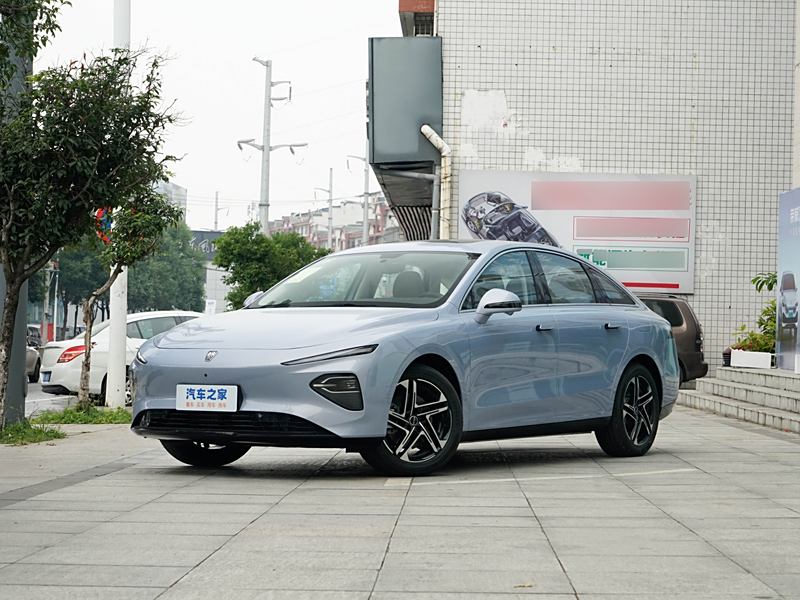
Price reduction information of FAW-Volkswagen CC in Shenzhen, with a discount of 48,000! limited in number

[car home-Shenzhen Preferential Promotion Channel] Recently, there was a car buying craze in Shenzhen market. At present, preferential activities of up to 48,000 yuan are being carried out, and the minimum starting price is only 201,900 yuan. Consumers may wish to seize this rare opportunity and click the "Check Car Price" button in the quotation form to strive for higher discounts.

深圳地区一汽-大众CC降价信息,优惠4.8万!数量有限

The design of FAW-Volkswagen CC is full of sporty and fashionable elements. Its front face design adopts a family-style design style, and the air intake grille of China Net is decorated with chrome plating, showing a sense of luxury and exquisiteness. The overall body lines are smooth, and with sharp headlights, it looks very dynamic. The overall style of FAW-Volkswagen CC is simple without losing the atmosphere, giving people a very fashionable feeling.

深圳地区一汽-大众CC降价信息,优惠4.8万!数量有限

FAW-Volkswagen CC is famous for its elegant body lines and spacious interior space. The dimensions of the car are 4865mm long, 1870mm wide, 1459mm high and the wheelbase is 2841mm, which ensures the ample and comfortable interior space. The side lines of the car are smooth, extending from the headlights to the rear of the car, showing the perfect combination of movement and elegance. The front and rear wheel tracks are 1586mm and 1572mm respectively, which keeps the stability of the vehicle. Tyre size equipped with 245/45 R18 and 18-inch wheels improve the handling and visual effect of driving.

深圳地区一汽-大众CC降价信息,优惠4.8万!数量有限

The interior of FAW-Volkswagen CC adopts a simple and scientific design style, and the central control part is equipped with a 9.2-inch touch screen, which supports the voice recognition control of multimedia system, navigation, telephone and air conditioning, bringing convenient operation experience to drivers and passengers. The steering wheel is made of genuine leather, with manual up-and-down and forward-and-backward adjustment functions to ensure that the driver can find the most comfortable position. The seat is made of leather /Alcantara mixed material. The main and auxiliary seats have the functions of front and rear adjustment, backrest adjustment, height adjustment (4-way) and lumbar support (4-way), and are equipped with heating function to improve the riding comfort. In addition, there are three USB ports and Type-C ports in the front row, and two USB ports and Type-C ports in the rear row, which meet the charging needs of passengers.

深圳地区一汽-大众CC降价信息,优惠4.8万!数量有限

FAW-Volkswagen CC is equipped with a 2.0T L4 engine with 186 horsepower, with a maximum power of 137 kW and a maximum torque of 320 Nm. This engine with 7-speed wet dual-clutch gearbox provides excellent power performance and fuel economy for the vehicle.

Car owners in car home think that the design of FAW-Volkswagen CC is very attractive, from the sharp headlights at the front of the car to the unique borderless windows, it shows its sense of modernity and grade. He particularly emphasized the overall curve and suspension system of the vehicle, which not only improved the fun of driving, but also ensured the comfort of riding, thus perfectly combining the two together, which made him feel very satisfied.

More dynamic The new Geely Binyue will be launched on August 14th.

  [car home Information] Recently, we learned from the government that,The new Geely Binyue will be officially launched on August 14th.As a mid-term redesigned model, the new car has been upgraded and optimized in appearance and configuration.

Geely Automobile Binyue 2021 260T DCT Xingyao

  In terms of appearance, the most remarkable change of the new car is that the front face adopts a black scattering design, which forms an overlapping shape with the headlight group, the front air intake grille and the front enclosure, which is visually very impactful. On the side of the car body, the waistline of the new car runs through the car body and adopts the design style of lifting, which brings a state of readiness. In addition, the front and rear fenders of the new car have been portrayed by lines, showing the shape of the car body slightly protruding, and with dense spokes and black wheels, the sense of movement is further highlighted.

Geely Automobile Binyue 2021 260T DCT Xingyao

  At the rear of the car, the new car is equipped with a dynamic rear spoiler, and the taillights on both sides are blackened and connected by a bright black decorative strip to form an integrated design. In addition, the rear enclosure of the new car is also equipped with a tail diffuser shape and an exhaust layout with four sides.

Geely Automobile Binyue 2021 260T DCT Xingyao

  In the interior part, the new car adopts the traditional pointer instrument panel with a three-spoke multi-function steering wheel. The central control multimedia display screen is suspended, and some physical buttons are reserved in the central aisle of the central control, with a wide electronic shift handle, which further enhances the interior fashion sense.

Geely Automobile Binyue 2021 260T DCT Xingyao

  In terms of power, the new car will provide a 1.4T four-cylinder turbocharged engine and a 1.5T three-cylinder turbocharged engine, with maximum power of 141 HP and 177 HP respectively and peak torque of 235 Nm and 255 Nm respectively. In terms of transmission, the 6-speed manual gearbox and 6-speed wet dual-clutch gearbox are matched with the 1.4T engine. Matching the 1.5T engine is a 7-speed wet dual-clutch gearbox. (Text/car home graduated)

Jiaozuo Roewe D7 price reduction news, the reserve price is 105,800! If you miss it, you won’t

Welcome to car home Jiaozuo preferential promotion channel to bring you the latest car information. At present, the car models that have attracted much attention are in a limited-time preferential activity, which brings tangible car purchase benefits to car buyers. In Jiaozuo area, this hot-selling model is enjoying a cash profit of up to 20,000 yuan, which has reduced the original starting price to 105,800 yuan, which is very attractive. Want to seize this preferential opportunity and explore the best car price that meets your budget? Please don’t miss it, just click the "Check Car Price" button in the quotation form, and let’s explore more preferential possibilities together.

焦作荣威D7降价消息,底价10.58万!错过就没有

焦作荣威D7降价消息,底价10.58万!错过就没有

Roewe D7 has smooth and powerful side lines, with a body size of 4890mm * 1872mm * 1510mm and a wheelbase of 2810mm, showing a steady body proportion. Both the front and rear wheel tracks are 1600mm, which ensures good stability. Tyre size is a 225/50 R18, with dynamic rim design, which further adds the sporty atmosphere of the vehicle. On the whole, the side design of Roewe D7 not only pays attention to practicality, but also pays attention to the harmony and unity of aesthetics and performance.

焦作荣威D7降价消息,底价10.58万!错过就没有

The interior design of Roewe D7 pays attention to texture and comfort, adopts modern minimalist style, and the spacious cockpit is clearly laid out, showing a sense of luxury. The steering wheel is made of leather, which provides a good grip and supports manual up and down+front and rear adjustment to ensure the driver’s comfortable driving posture. The central control panel is 12.3 inches in size, with clear display, integrated multimedia system, navigation, telephone, air conditioning and skylight control functions, and easy to operate. The seat is made of leather and suede, which provides good support and touch. Both the main seat and the auxiliary seat support front and rear adjustment, backrest adjustment and height adjustment (2-way) to meet the needs of different passengers. In addition, the car is equipped with USB and Type-C interfaces, three in the front row and one in the back row, which is convenient for passengers to connect electronic equipment to meet entertainment and charging needs. These configuration details reflect Roewe D7′ s careful consideration of the passenger experience.

焦作荣威D7降价消息,底价10.58万!错过就没有

Roewe D7 is equipped with a powerful engine, with a maximum power of 145 kW and an astonishing peak torque of 310 Nm, ensuring excellent driving performance and response speed. With its high efficiency and strong power, this engine brings users a carefree driving experience.

To sum up, as car home car owners said, Roewe D7 has won the favor of car owners with its unique design style, especially the attractiveness of the front and side faces. The durability of the car body has further improved the overall sense of quality and has become an important factor for consumers to choose this car. In a word, Roewe D7 has shown its extraordinary charm both in appearance and inside.

Internet TV

 China Internet TV is a new media video service of Internet TV under CCTV, which is operated by Future TV Co., Ltd., a holding subsidiary of CCTV. In March, 2010, it was the first company to obtain the license of Internet TV integration service and content service issued by the State Administration of Press, Publication, Radio, Film and Television. Future TV, as a specialized operator of CCTV’s Internet TV business, was registered in Tianjin in December 2011, with "China Internet TV" as the call sign, and launched Internet TV business all over the world. Relying on the strong resource advantages of CCTV and its own professional operation advantages, China Internet TV has achieved global coverage of 150 million users, and cooperated with more than 40 leading technology enterprises at home and abroad, such as Samsung, Hisense, Changhong, Xiaomi, Huawei, China Mobile, China Unicom and Telecom, leading the development trend of domestic Internet TV.More > > >

China’s dual-track progressive reform model is of world significance.

  Since the reform and opening up, China is the only country in the world that has not experienced financial and economic crisis.

  If we want to find a word to describe China’s economic achievements in the 40 years of reform and opening up, the most appropriate word is "miracle".

  At the beginning of the reform and opening up in 1978, China was one of the poorest countries in the world. According to the statistics of the World Bank, China’s per capita GDP in 1978 was only $156. It is generally believed that sub-Saharan African countries are the poorest regions in the world, but in 1978, the per capita GDP of sub-Saharan African countries was $490. Like other poor countries in the world, at that time, 81% of the population in China lived in rural areas, and 84% of the population lived below the international poverty line of $1.25 per day.

  At that time, China was also a very introverted economy, with exports accounting for only 4.1% of GDP and imports accounting for only 5.6%, which added up to only 9.7%. Moreover, more than 75% of the exported products are agricultural products or agricultural processed products.

  On such a weak basis, from 1978 to 2017, China’s economy has achieved an average annual growth rate of 9.5% for 39 consecutive years. In the history of human economy, no other country or region has seen such a high-speed growth for such a long time, and the average annual growth rate of China’s foreign trade has reached 14.5%. In the history of human economy, no other country can change from a closed economy to an open economy so quickly.

  At this growth rate, China’s economic scale surpassed that of Japan in 2009, becoming the second largest economy in the world. In 2010, China’s export volume surpassed that of Germany, becoming the largest exporter in the world, and more than 97% of its export products were manufactured products, so China was called "the factory of the world".

  The country that was once called the "world factory" was Britain after the Industrial Revolution. By the end of the 19th century and the first half of the 20th century, the "world factory" became the United States. After World War II, it became Germany, Japan and now China.

  In 2013, the total trade volume of China surpassed that of the United States and became the largest trading country in the world. In 2014, in terms of purchasing power parity, China’s economy surpassed the United States and became the largest economy in the world. Last year, China’s per capita GDP reached US$ 8,640, making it an upper-middle income country.

  In this process, more than 700 million people were lifted out of poverty according to the international poverty line, which contributed more than 70% to the world’s poverty reduction in the past 40 years. During this period, although China’s theory of economic collapse broke out one after another, China is the only country in the world that has not experienced financial and economic crisis since the reform and opening up.

  Why can China achieve such achievements in reform and opening up?

  To answer this question, we must first understand what is the essence of economic growth. On the surface, it is the continuous improvement of per capita income and the continuous enrichment of materials. However, the prerequisite for the improvement of per capita income is the continuous improvement of labor productivity. There are two main ways to improve labor productivity:

  One way is to carry out technological innovation in existing industries, so that workers can produce more and more good products; The other way is industrial upgrading, which allocates resources from industrial sectors with low added value to industrial sectors with high added value. For developed and developing countries, these two methods are the same.

  Developing countries have the possibility to achieve technological progress and industrial upgrading through introduction, digestion, absorption and re-innovation, which is called latecomer advantage. Taking advantage of this advantage, developing countries can achieve technological progress and industrial upgrading at lower cost and less risk, and achieve faster economic growth than developed countries.

  This is because the technology and industry of developed countries are at the forefront of the world, and only by inventing new technologies and industries can technological progress and industrial upgrading be realized. For developing countries, as long as the technology used in the next production activity is better than that in this period, it is technological progress; As long as the added value of new industries entered in the next period is higher than that in the current period, it is industrial upgrading.

  Because there is a gap between the advanced level of technology and the level of industrial added value, developing countries can introduce, digest, absorb and re-innovate mature technologies from developed countries, and realize industrial upgrading by entering industries with higher added value than the existing level and mature in developed countries.

  Of course, it is only a theoretical possibility to take advantage of the advantage of latecomers, and not all developing countries can take advantage of the advantage of latecomers to achieve rapid development.

  After the Second World War, 13 economies took advantage of their latecomers to achieve an average annual economic growth of 7% or more, which lasted for 25 years or more, greatly shortening the gap with developed countries. After the reform and opening up, China is the most eye-catching among the 13 economies, and it is also the fastest to catch up.

  Therefore, I believe that the main reason why China’s economy can achieve rapid growth after the reform and opening up is that China has made full use of the advantages of latecomers. Why didn’t China take advantage of the advantages of latecomers before the reform and opening up? The most important thing is that the way of thinking determines the way out.

  Why did China’s transformation succeed, while other countries failed in the same period?

  If we think that the market-oriented reform is the main reason for the economic disparity in China around 1978, why are most socialist countries in transition in the 1980s and 1990s, and many developing countries with other social natures are also undergoing the transition from planned economy or government-led economy to market economy, which is similar to China? They are in constant crisis, and the gap with developed countries is getting bigger and bigger, while we are developing steadily and rapidly?

  In the 1980s and 1990s, these socialist countries and other developing countries of social nature began to transform. At that time, it was believed that the poor economic benefits of these countries before the transformation were due to too much government intervention in the market and the failure to establish a modern market economic system as perfect as that of developed countries.

  At that time, the mainstream view of international academic circles believed that "shock therapy" must be implemented to realize economic transformation. According to the Washington Consensus, all government intervention should be abolished and privatization, marketization and liberalization should be promoted.

  Although the goal is good, this transformation idea ignores that the government intervention in the original system is to protect and subsidize heavy industries that do not have comparative advantages. If the protection subsidy is abolished, the result will inevitably be the bankruptcy of enterprises that lack viability, resulting in a large number of unemployment and a huge impact on social and political stability in the short term.

  Moreover, many industries in heavy industry are related to national defense and security. Even if they are privatized, the state cannot give up and must continue to give protection subsidies, while private entrepreneurs are more enthusiastic about asking the government to provide protection subsidies than state-owned enterprises. Rent-seeking and corruption are serious, but the efficiency is even lower.

  Why can China’s economy maintain stability and develop rapidly? We are pursuing the "old ways for the old and new ways for the new", and we will continue to give necessary protection subsidies to industries that are capital-intensive, large-scale and related to employment and national security during the transition period to maintain economic stability; For industries that were restrained in the past and were labor-intensive and in line with China’s comparative advantages, we should liberalize access, actively attract investment, and set up industrial parks and processing export zones in a pragmatic way to turn them into competitive advantages.

  With the rapid development of new industries that meet the comparative advantage, capital accumulates rapidly, and the comparative advantage changes. The industries that violated the comparative advantage have become China’s comparative advantage. Enterprises have become self-reliant from lack of viability, and protection subsidies have changed from "giving charcoal in the snow" to "icing on the cake". They can and should be abolished, so as to eradicate the problems of corruption breeding and widening income gap caused by market distortion and improper intervention in the process of gradual dual-track reform, and make China complete.

  In the 1980s and 1990s, the mainstream western economic theory thought that the gradual dual-track system adopted by China was the worst way of transformation, and advocated eliminating government intervention at one time. The practice of China’s reform and opening up has proved that the pragmatic gradual dual-track system is an important reason for China to maintain economic stability and rapid development.

  What is the significance of summing up China’s 40-year experience of reform and opening up to modern economics?

  After World War II, many developing countries got rid of colonial and semi-colonial status and devoted themselves to the industrialization and modernization of their own countries, but few successful economies. Since World War II, among nearly 200 developing economies, only two economies have moved from low income to high income, one is Taiwan Province, China, and the other is South Korea. In 2025, Chinese mainland is likely to become the third economy from low income to high income after World War II.

  By comparing a few successful and most unsuccessful economies after World War II, I found that so far no developing economy has succeeded in formulating policies according to mainstream western theories, and the common feature of a few successful economies is that their policies were wrong from the mainstream theory at that time when they were implemented.

  For example, in the 1950s and 1960s, all developing countries were pursuing national modernization and industrialization. At that time, the mainstream theory was structuralism. It was believed that developing countries should implement the import substitution strategy, allocate resources under the leadership of the government, and develop modern capital-intensive industries. The economies that implemented this strategy failed.

  A few successful East Asian economies, however, started from the traditional labor-intensive small-scale industries and pursued the export-oriented rather than import-substitution strategy. At that time, this development mode was considered wrong.

  In the 1980s and 1990s, all socialist and non-socialist countries turned to market economy from government-led development mode. At that time, the mainstream theory was neo-liberalism, which advocated "Washington Consensus" and "shock therapy" to eliminate all kinds of government intervention distortions at one time in order to establish a perfect market economy system. Countries that have transformed in this way have suffered from economic collapse, stagnation and constant crises, while a few economies, such as China, Viet Nam and Cambodia, have achieved rapid development, but they have adopted a dual-track and gradual reform model. Why is this so?

  Because the mainstream theory comes from the summary of the experience of developed countries and takes the conditions of developed countries as the premise of the theory, because the conditions of developing countries and developed countries are different, copying the mainstream theory from developed countries will inevitably encounter problems.

  From the perspective of economics, the theories we are adopting now are based on what developed countries have, such as structuralism, or what developed countries have done well, so that developing countries can copy them, such as neoliberalism.

  The market economy in developed countries is indeed relatively perfect. Because the governments of developing countries have a lot of intervention in the market, they advocate that developing countries adopt the institutional arrangements of developed countries. In fact, this theory ignores an important point, that is, it does not see the differences between the conditions of developing countries and developed countries.

  This is one of the reasons why I began to advocate the new jiegou after I came back from the World Bank in 2012. It is very different from the mainstream economics in the past, and it is the experience summed up in China’s own success or failure, as well as in developing countries and economies after World War II.

  Such a theory comes from developing countries and consciously takes the conditions of developing countries as the starting point, which can better explain why China is successful, what are its shortcomings and how to develop in the future. At the same time, this theory also has important reference value for other developing countries.

  I believe that as long as we continue to deepen along the road of reform and opening up, China will become the largest economy in the 21st century, and the economic phenomenon that happened in China will be the most important world economic phenomenon. The economic center of the world has always been the innovation center of economic theory, and most famous economists come from this. Therefore, when China becomes the world economic center in the 21st century, most of the world famous economists will come from China. As a developing country and a country in transition, China has similar conditions with other developing countries and countries in transition, and our theory will help other developing countries realize industrialization and modernization more than that from developed countries.

  Author: Professor Lin Yifu of Peking University

Bo Huang’s teenage photo exposure stars actually looked like this when they were young.

Original title: Bo Huang’s teenage photos exposed the five facial features and did not lose the red meat (Figure)

Recently, some netizens exposed the old photos of Huang Bo when he first made his debut. In the photos, although Bo Huang was dressed in ancient costume, a little fresh breath still came to his face. The young Bo Huang had a tender face and delicate facial features, and he didn’t lose the popular little fresh meat at all. Some netizens even commented that when he was young, Bo Huang bumped into a Korean model Kim Woo Bin!

Jerry Lee’s famous work "Soldiers Assault", a bookish and engaging little scholar, was impressed by the wooden students. A few years later, he saw Jerry Lee again in an unknown TV series. He was thinner and darker, not so pure, but he was still very likable and more manly.

A few days ago, an old photo of Won Bin, Han Xing was exposed. A Korean forum published an advertisement photo of Won Bin’s past endorsement of cowboy clothing, which was dug up by netizens. In the photo, Won Bin, though slightly green, does not lose the true colors of "beautiful boys".

According to South Korean media reports, Won Bin is likely to collaborate with Kim Tae-Hee, the "first beauty" in South Korea’s post-90s generation, in a new drama, starring in a new work by South Korean star screenwriter Noh Hee kyung. Like Zhang Dongjian, the predecessor of beautiful boys, Won Bin returned to the TV screen after 12 years.

The video exposure of some members of super junior, a popular Korean group, during the internship period, among which the video of member Donghai was exposed for the first time, which brought surprises to netizens.

Donghai, a member of super junior, is currently working with actress Yin Shengya to make a new drama "Miss Panda and Hedgehog". It is reported that Donghai has been practicing its skills for three months in order to interpret the role of a cake maker. According to the crew, Donghai’s cake-making skills are quite good, and at present, a variety of exquisite and delicious cakes can be made.

Lee Hyo Ri, the sexy queen of South Korea, has been taking the sexy route since she made her solo flight, and has also successfully occupied a place in the Korean music scene. A few days ago, some netizens uploaded photos of Lee Hyo Ri when she was a member of the girls’ group fin.k.l, which triggered a heated discussion among netizens. I didn’t expect that today’s sexy diva once had the shadow of Shen Jiayi in Giddens Ko’s work "The Girls We Chased Together in Those Years" directed by China Taiwan Province.

The youthful photos of Kim HeeChul, a member of South Korean men’s team sj, and Song Ji Hyo, a movie star, were exposed and became the focus of discussion among netizens.

Recently, some netizens uploaded the old photos of Kim HeeChul and Song Ji Hyo wearing lovers’ costumes and singing funny songs in the variety show "Popular Songs" of sbs TV station in the past. Netizens said that it was 2007, and they worked hand in hand as the host of popular songs of sbs for one year.

In the photo, two people are wearing gray lovers’ pullovers, and the green degree is obvious to everyone. Kim HeeChul has a blue heart on her clothes, and Song Ji Hyo has a pink heart on her clothes. In addition, she is wearing a pink schoolbag, which is very cute.

Netizens who have seen the photos said: Both of them are very cute, and Song Ji Hyo looks so young, like a student sister; Kim HeeChul is so gentlemanly, and he offered to get Song Ji Hyo a microphone.

I know her name is in the mainstream "Da Ming Gong Ci", but when I saw her, I was more impressed by the movie "Little Wife". The rich husband was detained or imprisoned. As soon as she passed the door, the little wife who didn’t know anything made a living alone. It was a very relaxed and jubilant film. It was also good to say that Zhou Xun played a comedy. It was many years later that I realized that my little wife and Taiping were actually the same person. It was really different in style. That movie was the kind of local film produced by a film studio that only the film channel would broadcast. It is really very different from our little Taiping.

Recently, some netizens exposed a group of pictures in the album of the same name released by Kevin Cheng when he first debuted. The "antique-level" old photos showed the elegance of Kevin Cheng as a singer in the lush era. Kevin Cheng in the photo is clean and clever, and his cute expression makes him look green, but his appearance is not much different from now.

Recently, a tape cover photo of Zhao Benshan’s early years was exposed on the Internet. This cover photo is a propaganda photo of Zhao Benshan and Huang Xiaojuan’s early sketch Mahjong Tofu. In the photo, Zhao Benshan is young and handsome, and his thick black hair can vaguely see his youth.

If you think the bangs in Song Dandan are the bright spot, it’s because you didn’t see Na Ying, who sells cute. If you think Na Ying, who sells cute, is the bright spot, it’s because you didn’t see the sad-looking Jinggang Mountain behind them.

International online entertainment reports that Lee Hyo Ri, the sexy queen of Korea, has been taking the sexy route since she made her solo flight, and has also successfully occupied a place in the Korean music scene. A few days ago, some netizens uploaded photos of Lee Hyo Ri when she was a member of the girls’ group Fin.k.l, which triggered a heated discussion among netizens. I didn’t expect that today’s sexy diva once had the shadow of Shen Jiayi in Giddens Ko’s work "Girls We Chased Together in Those Years" directed by China Taiwan Province.

Nicholas Tse has always been cool, but even the coolest star was a bit funny when he debuted that year. Some netizens uploaded a magazine cover photo of Nicholas Tse in 1997 in Weibo-Nicholas Tse wearing orange glasses is very green.